Alors que les beaux jours arrivent, serait-ce aussi le signe d’un renouveau pour la FoodTech ? À défaut d’avoir une vraie évolution positive des chiffres d’investissements (retrouvez ici notre mise à jour du premier trimestre 2026), il y a un vrai changement d’ambiance depuis quelques mois, avec quelques signes très visibles:
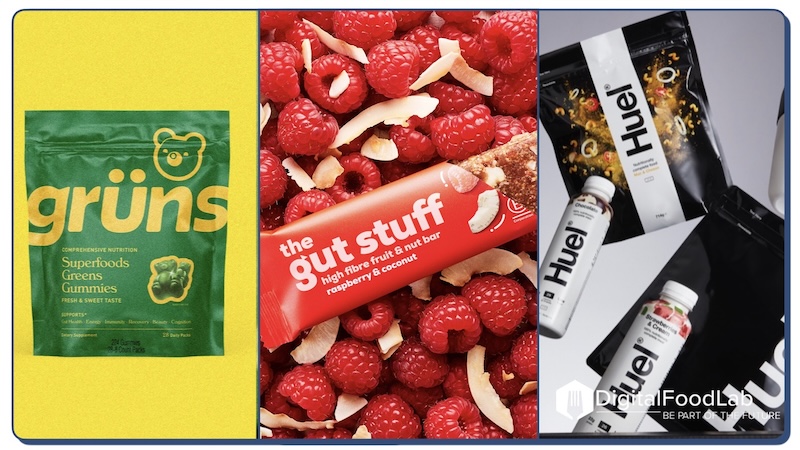
- Rachats de startups : c’est le signal le plus remarquable, avec les récents rachats de Grüns par Unilever et, surtout, de Huel par Danone (nous avons consacré un insight au sujet pour analyser le rationnel derrière cette acquisition).
- Hausse du nombre de partenariats impliquant de grands groupes et des startups. On constate qu’il s’agit d’un nombre réduit de leaders qui développent plus agressivement leur politique d’innovation. Cependant, nous nous attendons à ce que cela ait un effet d’entraînement (que nous mesurons déjà dans nos discussions avec nos clients).
- Résultats positifs communiqués par les startups : au-delà des startups DTC qui progressent et prennent des parts de marché aux grands groupes, c’est aussi le cas pour celles qui travaillent sur les ingrédients ou l’amont agricole. À défaut de résultats économiques, de nombreuses technologies “fondamentales” se rapprochent du moment où elles seront commercialisables.
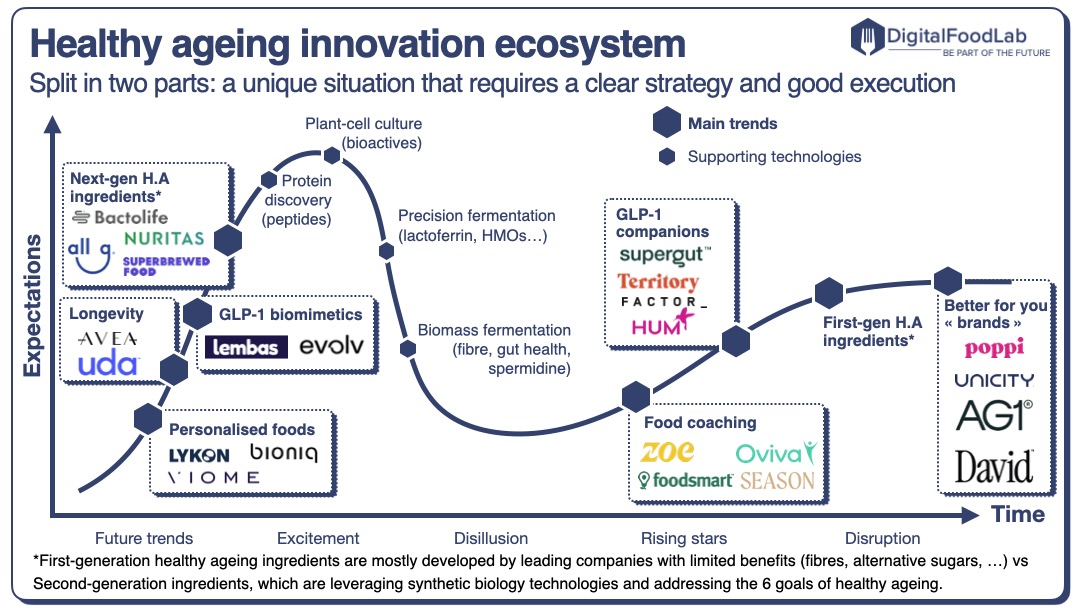
Sur ces deux derniers mois, nous avons publié de nombreux insights, notamment un focus sur le healthy ageing où nous partageons:
- Notre définition du healthy ageing, et des six objectifs poursuivis par les acteurs
- Un mapping des différents écosystèmes d’innovation le long de la trends curve
- Les différentes approches des industriels sur le sujet, du développement interne aux acquisitions
- Notre framework pour commencer à agir sur le sujet
Tous ces insights ont été repris et développés lors de notre dernier webinaire (replay ici).
Si le sujet vous intéresse et que vous souhaitez l’approfondir, que ce soit de façon ponctuelle via une conférence ou pour y définir la stratégie de votre entreprise, contactez-nous !
Nous avons aussi publié des notes sur:
- L’état des licornes FoodTech (les startups valorisées à plus d’un milliard). Ici encore, les nouvelles sont plutôt positives avec un nombre record de nouvelles licornes créées depuis 2022 et la fin du “pic d’excitation”.
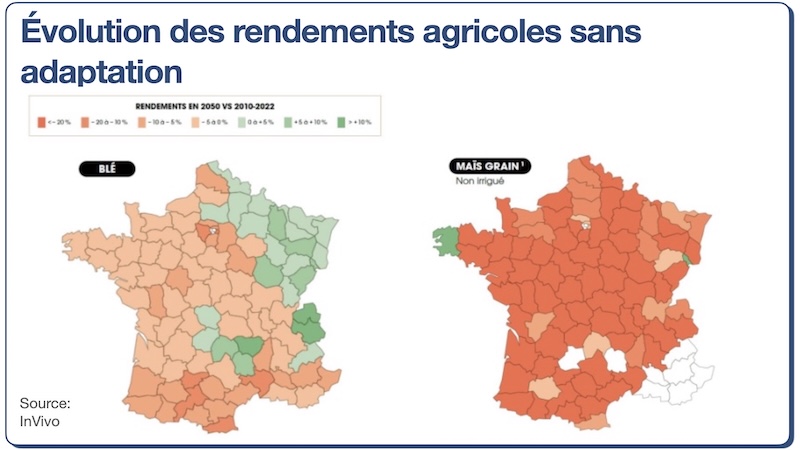
- Les fertilisants azotés, dont l’approvisionnement devient compliqué avec le blocage du détroit d’Hormuz : focus sur la situation et les solutions en développement, notamment autour des bio-intrants.
- La longévité, l’un des sous-sujets les plus “chauds” du healthy ageing, sur laquelle se portent beaucoup d’espoirs. Nous avons regardé quels leviers sont les plus intéressants à activer pour l’agroalimentaire.
45M€ levés par la FoodTech française en mars et avril
🧀 Standing Ovation a levé 25 M€, notamment auprès de BEL et Danone, pour commercialiser sa caséine produite par fermentation de précision.
🧬 Living Models a levé 7 M$ pour ses modèles fondamentaux d’IA entraînés sur des données biologiques végétales. La startup peut prédire quelles variations génétiques tester pour atteindre des objectifs tels qu’un meilleur rendement ou une meilleure résilience climatique.
🍽️ La Brigade de Véro, qui livre des box de repas précuits frais pour la perte de poids, a été acquise par Norac Foods, un industriel de la boulangerie. La startup a atteint 23,3 M€ de chiffre d’affaires en 2025.
🌿 baCta a levé 7 M€ pour produire des ingrédients à l’aide de micro-organismes modifiés. Sa première cible commerciale est l’astaxanthine (un ingrédient aux applications pigmentaires et en compléments alimentaires).
🌾🇫🇷 Amatera a levé 6 M€ pour accélérer le développement de cultures végétales.
Top 5 des levées FoodTech hors France
🚀🇩🇪 Flink a levé 100 M$ à une valorisation de 900 M$ pour sa plateforme de quick-commerce (livraison de courses en quelques minutes depuis des “dark stores” installés en centre-ville). Les fonds seront utilisés pour s’étendre en Allemagne et aux Pays-Bas. Loin d’être mort (et même en plein essor dans certaines géographies), le quick-commerce est-il sur le point de faire son retour en Europe ?
🍄🇨🇭 Planetary, une startup suisse, a levé 28 M$ pour développer sa production de mycoprotéines ainsi que sa plateforme de licensing technologique.
🍬🇱🇹 Pentasweet, une startup lituanienne, a posé la première pierre d’une unité de fermentation de précision de 65 M€, qui sera la première usine européenne de brazzéine, une protéine sucrante pouvant servir de substitut au sucre.
🏭🇩🇰 Unibio a signé une joint-venture de 373 M$ avec le Saudi Industrial Investment Group pour construire la plus grande usine mondiale de protéines à partir de gaz en Arabie Saoudite. L’installation convertira du méthane (un sous-produit de l’extraction gazière, souvent brûlé) en une source de protéines unicellulaires destinées à l’aquaculture.
🐄 🇳🇿 Halter, une startup Néo-Zélandaise, a levé 220 M$ à une valorisation de 2 Md$ pour déployer ses colliers de clôture virtuelle GPS pour bovins à l’échelle mondiale.
Top 5 des infos corporate et innovation hors France
💊🌍 Des versions génériques d’Ozempic et Wegovy ont commencé à apparaître en Inde, avec au moins une douzaine de fabricants proposant le produit à environ 14 $/mois (88% moins cher que le prix de la marque de Novo Nordisk). La Chine, le Brésil, la Turquie, l’Afrique du Sud et le Canada devraient suivre dans les prochains mois. Comme expliqué dans notre dernière analyse sur le sujet, cela pourrait être l’un des plus grands changements de la décennie, avec des milliards de consommateurs pouvant accéder à ces médicaments à très bas prix.
🫙🇨🇭🇬🇧 Hero Group, le géant alimentaire suisse, a acquis The Gut Stuff, la marque londonienne de snacks riches en fibres dédiée à la santé intestinale.
🧬🇧🇷 JBS, leader mondial de la viande animale, a inauguré un centre de R&D en agriculture cellulaire de 37 M$ dans le sud du Brésil.
💊🇬🇧🇺🇸 Unilever acquiert Grüns, une marque américaine de gommes vitaminées. Grüns vend 10 millions de gommes par jour et est également le premier fournisseur de “greens” (mélanges tout-en-un de compléments végétaux en poudre), en concurrence avec AG1, Bloom et IM8. La compétition est intense pour les acquisitions de startups à forte valeur. Cette opération fait suite à l’acquisition de Huel par Danone et marque une accélération du repositionnement d’Unilever, qui s’éloigne des catégories alimentaires à faible croissance pour se tourner vers des produits de consommation à plus forte marge dans la santé et le fonctionnel.
🍫🇩🇪 Nestlé vient de lancer son premier produit “chocolat” sans cacao, en partenariat avec la startup allemande Planet A Foods et son ingrédient ChoViva, pour une nouvelle gamme “Snack Vibes” lancée en Allemagne en avril. Les alternatives au cacao restent l’un des sujets les plus brûlants de l’écosystème agrifood, comme expliqué ici, même si les prix sont désormais en train de se normaliser.