Since we last proposed a definition of healthy ageing, 18 months ago, the space has matured and is now even more central to the agrifood innovation ecosystem. More importantly, it has become a battleground for the food industry. However, compared to other such competitive spaces, here the strategies are really diverse, and in many cases can give the impression of being blurry if not ill-defined.
That’s why we want to focus on it today through a detailed insight. Our goal is to examine how healthy ageing is structured through three lenses: the consumer, innovation, and large agrifood companies. We will also hold a dedicated webinar on the 23rd of April (you can sign up here), where we will review the categories listed below, present examples, and discuss future strategies.
1 – What does healthy ageing stand for in 2026?
Healthspan over lifespan: consumers seek solutions, which can be either new products or services, that could have an impact on their healthspan. In other words, an increasing number of consumers are willing to make efforts to age better. This is due to a combination of factors, among which are:
- The increase of non-communicable diseases, notably those related to our lifestyle, as they become more visible and understood, consumers are seeking solutions to avoid or alleviate their effects.
- Ageing: as the global population gets older (notably in Western and Asian countries), the awareness of age-related conditions and the fact that we may not enjoy our later years as much as anticipated makes some consumers seek solutions that don’t only focus on living longer but also living better.
- GLP-1: this class of weight-loss drugs is opening our collective mind with the idea that external, almost painless, medical intervention can have positive impacts in the short and long term.
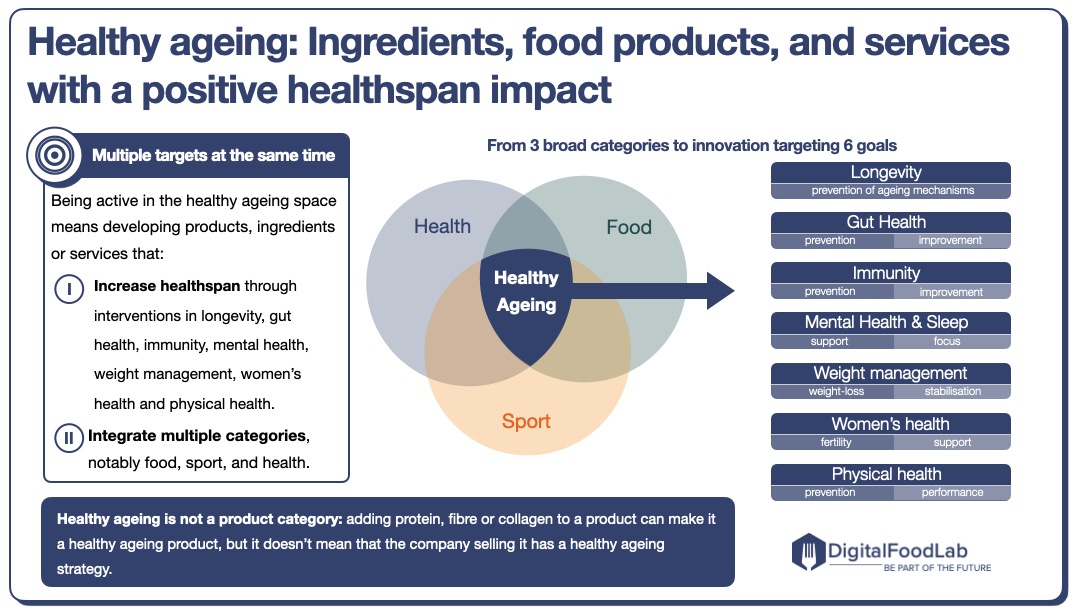
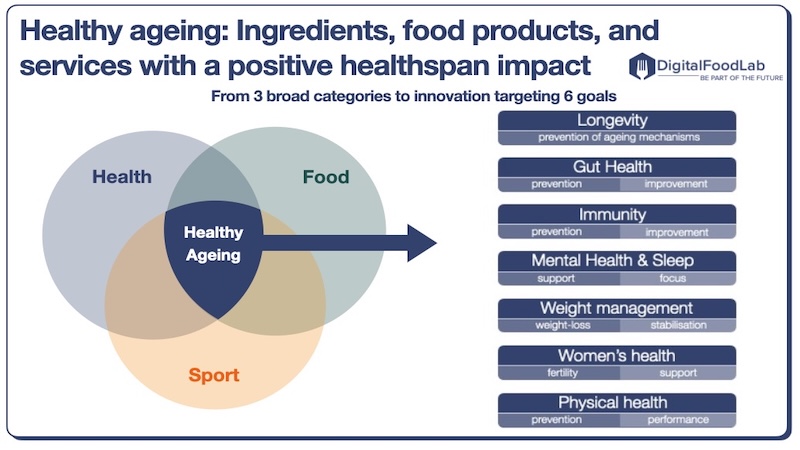
All these factors help to explain how intricate healthy ageing is. It starts from 3 broad categories (health, food, and sport), and then, by looking at what companies offer and what consumers seek, we can separate it into 6 consumer goals:
- Longevity: living longer remains a strong consumer concern.
- Gut Health: the most actionable health goal achievable through food products with both preventive and curative benefits.
- Immunity: prevention from illnesses and infections, increasingly supported by functional foods, supplements, and targeted nutritional solutions.
- Mental health and sleep, with multiple products supporting mood and focus.
- Weight management, notably around GLP-1 drugs.
- Women’s health: a developing category with an increasingly large number of dedicated players.
- Physical health, through the prevention of age-related conditions (e.g. sarcopenia) and performance.
2 – Who is interested in healthy ageing?
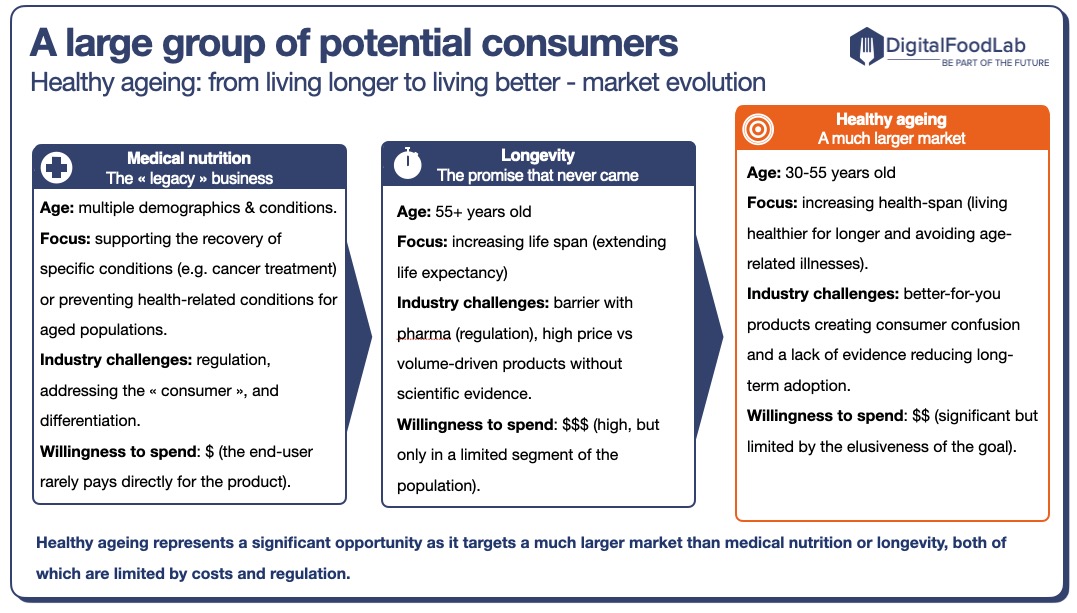
First, let’s be honest and direct: healthy ageing is not a goal for everybody. Many, if not most, consumers are driven primarily by price and taste when considering a food product, rather than by health-related benefits.
However, healthy ageing actually builds on a decade-long effort of the food industry to reach out to consumers with health concerns. It represents a significant opportunity as it targets a much larger market than medical nutrition or longevity, both of which are limited by cost and regulation.
3 – The healthy ageing innovation ecosystem
As shown on the innovation trends curve below (and this is obviously a simplification for this insight), the ecosystem can be split into 8 broad trends, and a handful of “supporting technologies”:
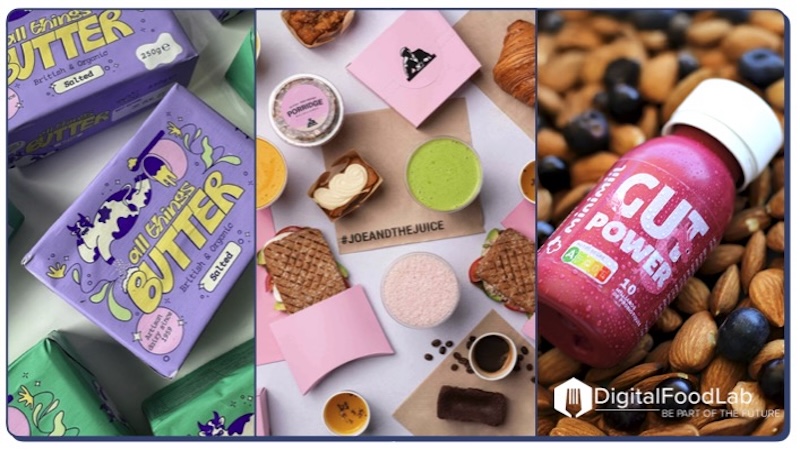
- Better for you brands: products that are developed as an answer to one or more of the 6 goals defined above, oftentimes with a marketing innovation rather than a new disruptive ingredient. Their collective success (combined, the revenue of the four brands listed was well above $1B in 2025) is a testimony to the already existing consumer appetite.
- First-generation healthy ageing ingredients, which are ingredients developed by leading companies and which are entering the market, mostly with gut-health benefits.
- GLP-1 companion food products developed by startups and large companies alike.
- Food coaching: services to support consumer questions and “what to eat” to achieve better health, either through the lens of a condition (e.g. diabetes) or broader goals (e.g. Zoe)
- Next-generation healthy ageing ingredients, mostly developed by startups, are supported by synthetic biology technologies (such as precision fermentation) and have potentially game-changing benefits.
- GLP-1 biomimetics: food-grade ingredients that could mimic or amplify the effect of GLP-1 drugs.
- Longevity and Personalised foods both have a very limited number of players.
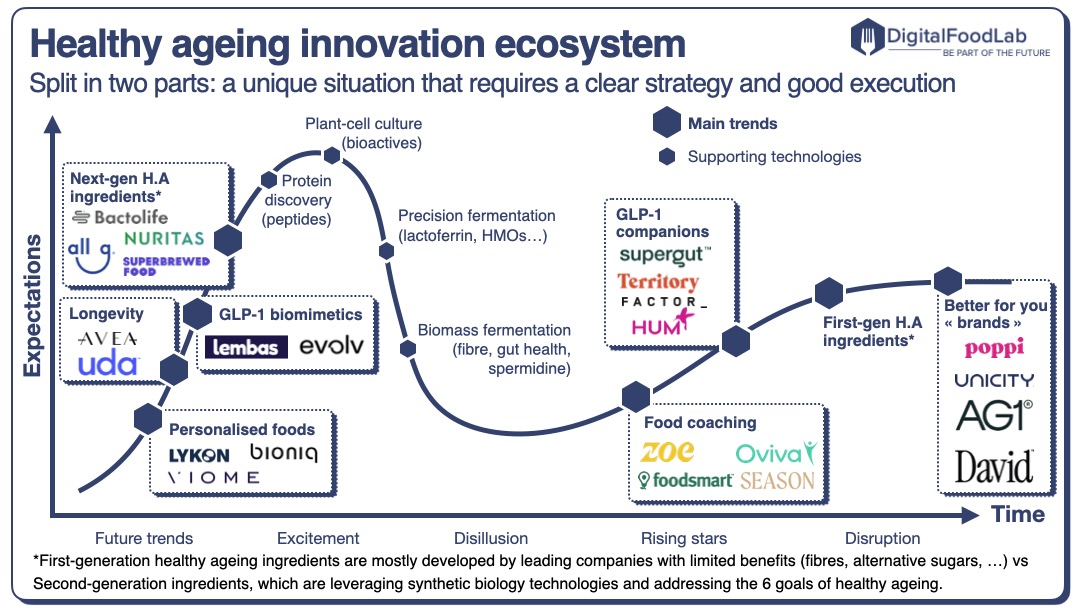
One of the lessons of the innovation trends curve on healthy ageing is that there is a divide between short and long-term, with almost nothing in the middle: this reflects a gap of almost a decade where the topic was somehow out of fashion.
4 – How are leading companies engaging with healthy ageing?
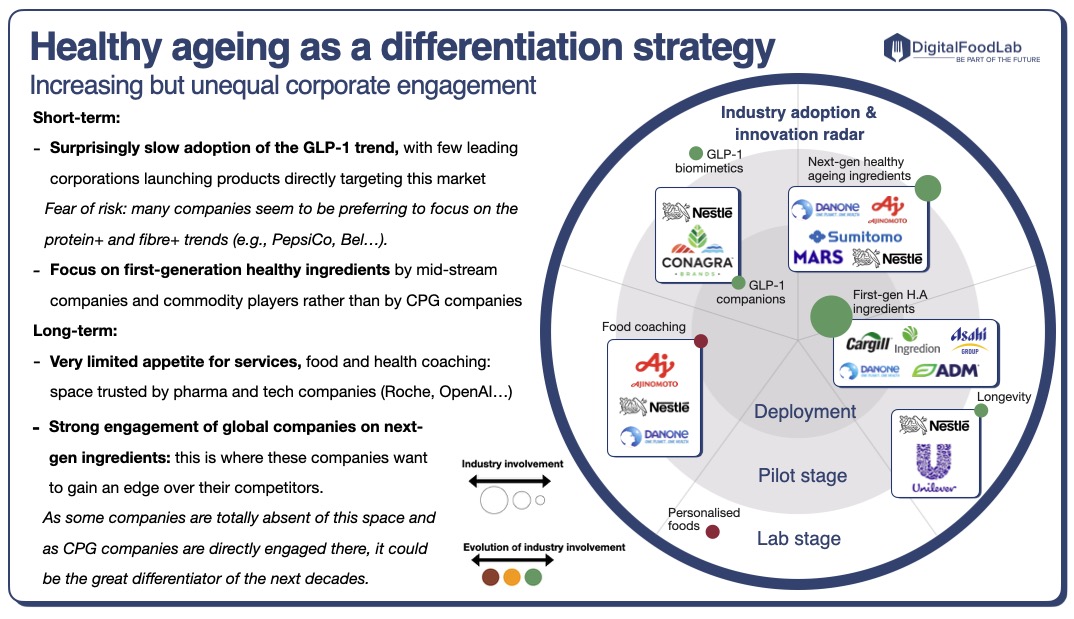
As for the innovation ecosystem, leading companies are spreading their bets and addressing the topic in multiple ways:
- Internal development: notably among the largest global CPG companies, which have long focused on health (and often on a medical nutrition business unit).
- Acquisitions and investments, with a clear short-term focus on better-for-you brands.
- Partnerships: the number of publicly available announcements remains limited but is increasing significantly, indicating a growing appetite to secure deals with the few “exciting candidates”.

Leading food companies are positioning themselves around healthy ageing, but adoption remains slow and uneven, with surprisingly slow adoption of the GLP-1 trend.
5 – So now, how to move forward and win the healthy ageing race?
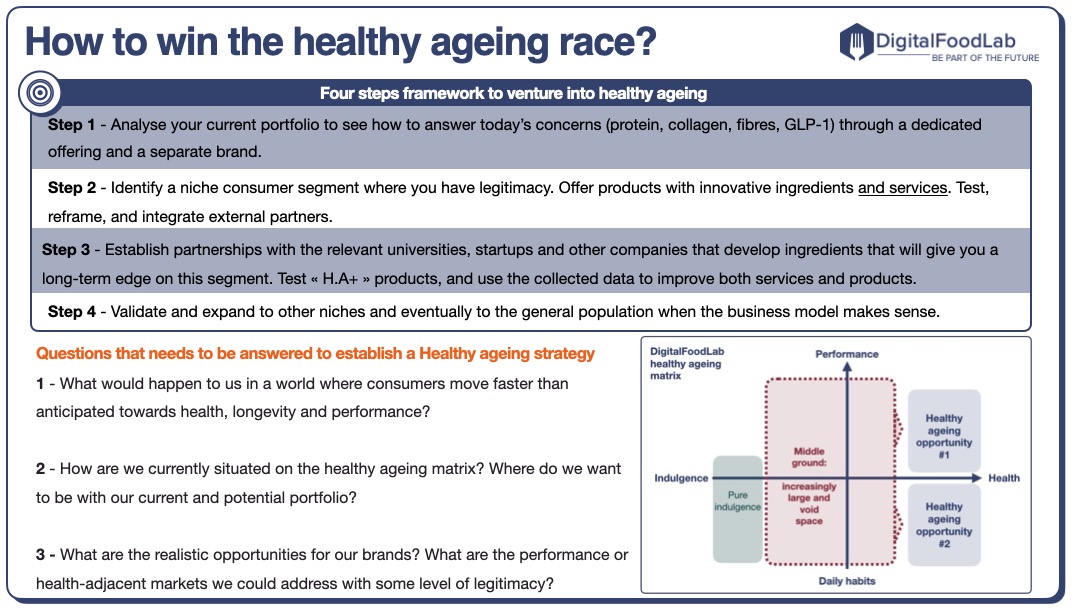
Based on the elements above and an analysis of many corporate attempts to venture into this space (with varying degrees of success), we have established a four-step framework to help companies determine how to approach this topic.
Out of this framework, the main takeaways are
- The implied lucidity that companies must have on their portfolio’s potential positioning. As illustrated by DigitalFoodLab’s matrix, for speciality ingredient suppliers and even more for CPG leaders, there is a growing “void space” between indulgence and the opportunities created by healthy ageing. This space is not void of consumers or products, but it is increasingly catered for by private labels.
- The need to experiment and take some risks. On the one hand, not all products and brands can evolve towards healthy ageing. This implies strategic acquisitions (notably of innovative DTC brands, but not only), as well as bets on services and collaborations across industries (with tech and potentially pharma companies).
In other words, for everything that currently sits in the middle ground, it is urgent to be absolutely clear if and how it can evolve towards a “safe space”.
Join us for a webinar on healthy ageing on the 23rd of April (4 pm CET, 10 am EST), we’ll take 45 minutes to:
- Define healthy ageing, notably based on consumer data.
- Look in depth at the different ecosystems, notably longevity, to better understand what is achievable through agrifood innovation (and what will remain in the realm of medicine).
- Analyse what leading companies are doing based on our framework.
- Discuss the future of the space, and answer your questions.
Interested in going beyond? Let’s have a look at how DigitalFoodLab could support you in:
- Better understanding the space through a dedicated presentation or workshop
- Identifying how to act on the space through an opportunity screening and a deep dive.