La FoodTech en juin 2024 : hybrides, 16€M levés et Danone se lance dans la fermentation de précision

Published on June 27, 2024

Cela fait plus de 5 ans que nous développons notre activité de conseil auprès des grands groupes, investisseurs et startups avec DigitalFoodLab.

Aujourd’hui, en parallèle de notre newsletter hebdomadaire en anglais (LIEN), nous sommes ravis de lancer cette newsletter mensuelle en français avec deux objectifs :

1 – en faire la vigie de l’écosystème FoodTech français et vous aider à savoir ce qu’il se passe ici, quelles sont les levées de fonds ou les partenariats impliquants industriels ou startups françaises.

2 – fournir une vision régulière, en français, du reste du monde et des actualités les plus marquantes.

Et bien sur, tout cela avec notre regard critique et notre décryptage !

Partagez cette newsletter avec vos contacts, transférez là ou invitez les à s’inscrire ici. (LIEN)

☕ La version expresso:

  • Les produits hybrides sont de retour, pour de bon cette fois ci ?
  • 16 M€ levés en juin par les startups FoodTech
  • Danone investit dans la fermentation de précision en ouvrant un centre de R&D à Clermont-Ferrand

Le condensé de la FoodTech en juin

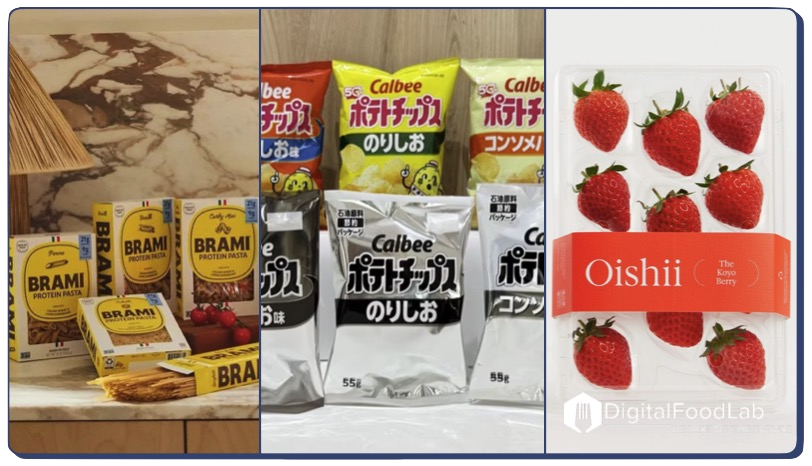
🍔 On se remet à parler des produits hybrides : nous observons un nombre croissant de startups (et d’acteurs plus installés) qui lancent à nouveau des produits hybrides. On peut distinguer 3 catégories :

  • les hybrides traditionnels: mélange de viande / produit laitier avec du végétal. Ils rencontrent un succès (très) modéré en retail mais ont un potentiel important en foodservice.
  • les nouveaux hybrides qui substituent tout ou partie d’un produit végétal “problématique” comme le cacao (environnement, prix) ou le sucre (calories, glucose, réglementation) par d’autres végétaux.
  • les hybrides du futur: il s’agira d’augmenter la qualité des produits plant-based en insérant des ingrédients issues de technologies comme la fermentation de précision ou l’agriculture cellulaire

Notre insight et le mapping complet ici

🌱 Molecular farming: la nouvelle technologie de protéines alternatives

Alors que les autres technologies “avancées” connaissent des difficultés, on voit apparaitre un nombre grandissant d’acteurs travaillant sur le molecular farming. En deux mots, il s’agit d’utiliser des plantes modifiées génétiquement pour produire les ingrédients (protéines) dont nous avons besoin.

Notre insight complet, avec des exemples et les usages potentiels ici

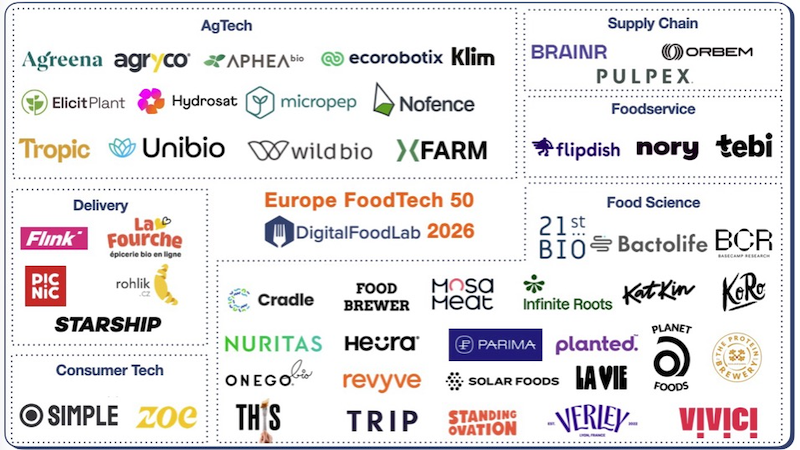
📊 La distribution des investissements FoodTech dans les pays Européens n’est pas uniforme

Entre l’écosystème FoodTech allemand très concentré sur la livraison de courses et ce qu’il se passe en France, on pourrait même parler d’image inversée. On peut aussi le voir comme des écosystèmes qui se complètent, mais qui compliquent la vie d’un industriel non Européen qui veut savoir où regarder en Europe.

Notre insight complet ici


16 millions levés par les startups françaises en juin

Petit mois pour la FoodTech française en juin avec assez peu de deals notables:

🇫🇷📱NectarGo a levé 1.8M€ (après un premier de 2 M€ en 2022) pour sa plateforme pour mieux connecter les fournisseurs et les distributeurs. Elle cherche à simplifier la logistique et à aider les détaillants à créer des offres différenciées basées sur des fournisseurs locaux.

🇫🇷🐈 Caats a levé 5M€ pour sa marque de nourriture pour animaux premium et personnalisée (dédiée aux chats).

🇫🇷🍷 Onafis a levé 6M€ pour son capteur qui permet aux vignerons de surveiller l’état de leur vin.

🇫🇷🥐 Otami a levé 800K€ pour sa plateforme de gestion dédiée aux boulangeries. Elle les aide notamment à mieux comprendre leurs coûts.

🇫🇷🌿 Mo.del a levé 2 M€ pour industrialiser son “Viti-Tunnel”, un dispositif de protection des vignobles contre les intempéries tout en réduisant l’utilisation de pesticides.


Top 5 des informations startups hors France

🇺🇸💥 SciFi, une startup américaine spécialisée dans l’agriculture cellulaire, ferme alors qu’elle n’a pas pu lever de fonds supplémentaires.

🇩🇰🍺 EvodiaBio, une startup danoise, a levé 7 M€ pour produire des arômes naturels grâce à la fermentation de précision. Son premier ingrédient est un arôme pour les bières sans alcool.

🇺🇸🔬 Prolific Machines, une startup américaine, a levé 55 M$ pour sa technologie de bioréacteur pour l’agriculture cellulaire. Elle permet d’améliorer la production en utilisant la lumière.

🇲🇦🌾 YoLa Fresh, une startup marocaine, a levé 7 M$ pour sa plateforme facilitant la relation entre les producteurs de produits frais et les acheteurs (dont les restaurants).

🇮🇳🚚 Zepto, une startup indienne de quick-commerce, a levé 665 M€. Qui a dit que le quick commerce était mort ? Il est en déclin dans les économies développées, mais il se porte très bien dans des pays en développement comme l’Inde, l’Amérique latine et l’Afrique.


Tendances et innovations des leaders

🇫🇷🥛 Danone, en partenariat avec d’autres, a annoncé un investissement de 16 M€ pour créer un centre de R&D axé sur la fermentation de précision en France. Il sera basé à Clermont-Ferrand.

🇪🇺 🛵 Uber Eats déploie en Europe ses outils pour augmenter la livraison de courses à domicile. Il s’agit d’outils qui vont permettre au consommateur de commander jusqu’à la dernière minute et d’aider le livreur à mieux sélectionner les produits en magasin.

🇨🇭👵 Face à la baisse des taux de natalité dans les économies développées, Nestlé souhaite se concentrer sur le nombre croissant de personnes âgées.

🇺🇸 💳 Les QR codes sur les tables remplaçant les menus sont de plus en plus abandonnés : dans de nombreux endroits, les clients se sont suffisamment plaints pour que les menus “à l’ancienne” soient réintroduits.

🇮🇹 🍫 Ferrero a annoncé qu’il lancera cette automne un Nutella à base de plantes en Italie.

On se revoit le mois prochain. D’ici là n’hésitez pas à nous partager vos informations, retours, et bien sur à partager cette newsletter avec vos contacts ou à les inscrire ici. LIEN

You're in a good company

Join the 60+ clients of Digital FoodLab: leading agrifood companies, retailers, banks, investors, startups, and public organisations.

Use case: project for a global F&B company looking to map its AgTech innovation ecosystem and the best startups to partner with

What we did:

  • Mapping of the AgTech ecosystem: startups, research regulators, and other leading companies.
  • Discussion to select areas to focus on.
  • Analysis of the information to reveal the trends and a model to analyse eventual partners.
  • A workshop to validate the opportunities based on our recommendations.
  • Scouting of relevant partners followed by introductions.

Results:

  • Mapping the different categories of innovations in AgTech that should be considered now to create long-term benefits for the business.
  • Identification of key partners (an incubator and a couple of startups).

Use case: project for a CPG company on the healthy ageing ecosystem

What we did:

  • Education of the board through a couple of workshops to define the perimeter
  • Identification of key opportunities and threats created by long-term evolutions (technologies, business models, behavioural changes).
  • Deep dives on each of the priority categories.
  • Co-construction of a vision on how the company should address these challenges.
  • Identification of partners (startups, incubators, funds) to move forward.

Results:

  • Creating a consensus on which categories to prioritise and how to address them.
  • Implementation of an open innovation strategy through the development of partnerships.

Use case: project for a global CPG company to develop a strategy on the healthy ageing ecosystem

What we do (ongoing mission on a subscription model):

  • Kick-off where we present an overview of the AgriFoodTech ecosystem to select with the client the categories to cover and for each, the level of information required.
  • Monthly newsletter: each month we send a newsletter with the articles that we have gathered ranked by relevance, their summaries, and a layer of analysis.
  • Database: we set up a personalised database that will be filled month after month with the information gathered on the companies identified for the watch.
  • Workshops: twice a year with the client’s innovation team and other “innovation curious” team members, we present an overview of the evolutions, key trends and a dashboard of the topics followed by the watch.

Results:

  • A clear, regular and evolutive tool to follow what is happening in terms of innovation on key topics.
  • A forum (through the workshops) to discuss innovation trends and new opportunities.

Use case: opportunity screening for an ingredient company

What we did:

  • Kick-off to define the perimeter of the ecosystem studied.
  • Mapping of the different trends shaping the innovation ecosystem of the client.
  • Analysis of the trends on DigitalFoodLab’s trend curve and other relevant frameworks.
  • Workshop to discuss DigitalFoodLab’s recommendations on key trends to prioritise

Results:

  • Shared view of the innovation ecosystem for the client with a view of the trends to prioritize.
  • Clear document (personalised trend curve) that can be easily shared internaly to explain the company’s innovation choices and which can be then updated each year.

Use case: scouting for an agriculture coop

What we did:

  • Kick-off to define the perimeter of the client, the goals of the scouting (partnerships) and the criteria on which startups should be evaluated.
  • Set-up scouting: we selected the first batch of 20+ key startups following the criteria of the client.
  • On-going scouting: then we set up a quarterly scouting of about ten startups.
  • For each scouted startup, we created an ID card with key information such as the business and technological maturity, funding, and corporate partnerships. We also added an explanation of why we selected this startup.

Results:

  • An ongoing and evolutive scouting are matching the client's criteria and its capabilities in terms of deal flow.

Use case: working on an acquisition process for a CPG company

What we did:

  • Kick-off to define what the client is seeking, notably in terms of maturity.
  • Workshop with the client based on a mapping of the different innovation ecosystems adjacent to its activities to select some priorities and discuss inspiring examples of startup acquisition stories.
  • Identification of 20+ targets.
  • Workshop to select the most relevant to engage with.
  • DigitalFoodLab worked as a sparing partner during the acquisition process, notably to help design how the acquired startup could be integrated into the overall company’s strategy.

Results:

  • Different results from traditional M&A processes with a focus on the client’s innovation strategy.
  • Identification of a good match for an acquisition.

Use case: market due diligence on sugar alternatives

What we did:

  • Kick-off with the client to discuss its interest on this category, its expectations and existing level of information (notably on the target company).
  • Mapping of the ecosystem to analyse the different existing alternatives and technologies to compare them.
  • Interview (calls) with relevant startups made by our internal biotechnology expert.
  • Recommendation on whether to invest or not.

Results:

  • Clear view of the ecosystem and of the reasons to believe (or not) in each sub-category.
  • Enforceable recommendations based on facts and expertise.