Investissez dans la FoodTech (VIDEO FR)

Published on September 15, 2020

À l’occasion d’un webinar organisé par le Clubster NSL et l’incubateur de startup Euralimentaire, j’ai pu présenter un état des lieux de la FoodTech en France, en Europe et dans le monde après le COVID 19, notamment du point de vue d’un investisseur hésitant qui chercherait à savoir dans quels domaines (de la FoodTech) s’investir.

Vous trouverez dans cette vidéo :

1 – une définition de la FoodTech à jour avec des exemples pour chacune des catégories

  • AgTech : startup améliorant la productivité des fermes actuelles (Naïo Technologies et ses robots), inventant les fermes urbaines de demain (Plenty) ou produisant de nouvelles sources de protéines (Solar Foods)
  • Foodscience : nouveaux produits alimentaires et packagings (Apeel) répondant aux nouvelles attentes des consommateurs (Soylent, Beyond Meat)
  • Foodservice : digitalisation (Choco) des restaurants, notamment autour du paiement (Tiller, Toast) et robotisation (Pazzi)
  • Coaching : personnalisation de l’acte d’achat en fonction de l’offre (Yuka), des objectifs (Foodvisor) ou du génome (Genopalate)
  • Delivery : livraison de plats de restaurants (Deliveroo) et surtout de courses par la création de nouveaux distributeurs intégrés (Picnic) ou l’ubérisation (Instacart)
  • Retail : Transparence (Provenance), digitalisation de la supply chain (Alkemics) et ubérisation du transport logistique (Fliit)

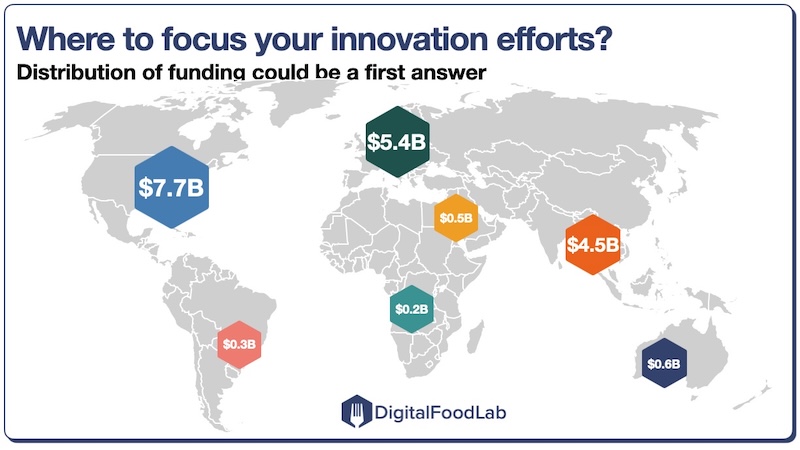
2 – un état des lieux des investissements dans la FoodTech dans le monde, en Europe et en France. Un focus sur l’écosystème français permet d’en voir les forces et faiblesses :

  • forces : 2 catégories leaders en AgTech (notamment les alternatives à base d’insecte pour l’alimentation animale) et Foodservice (notamment le paiement)
  • faiblesses : trop peu de nouvelles startups, faiblesse dans les startups de livraison et nouveaux produits alimentaire (notamment plant-based)

3 – un focus sur les opportunités d’investissements dans la FoodTech et l’impact du covid sur les différentes catégories de startup :

  • AgTech : peu d’impact à court terme et intérêt renforcé à moyen terme pour l’urban farming et les protéines alternatives (relocalisation de la production).
  • Foodscience : impact modéré, les startups avec une “vraie communauté” ont bien tenu le choc et sortent renforcé.
  • Foodservice : impact fort et plutôt négatif sur l’ensemble des startups travaillant sur la digitalisation de la restauration. Les startups de robotique ou de cloud kitchens sortent renforcées et apparaissent encore plus prometteuses aujourd’hui.
  • Coaching : peu d’impact sur un secteur non développé localement.
  • Delivery : impact modéré sur les startups de livraison de restaurant (baisse des commissions) et impact très positif pour les startups cherchant à réinventer la distribution.
  • Retail : petit secteur, peu impacté.
You're in a good company

Join the 60+ clients of Digital FoodLab: leading agrifood companies, retailers, banks, investors, startups, and public organisations.

Use case: project for a global F&B company looking to map its AgTech innovation ecosystem and the best startups to partner with

What we did:

  • Mapping of the AgTech ecosystem: startups, research regulators, and other leading companies.
  • Discussion to select areas to focus on.
  • Analysis of the information to reveal the trends and a model to analyse eventual partners.
  • A workshop to validate the opportunities based on our recommendations.
  • Scouting of relevant partners followed by introductions.

Results:

  • Mapping the different categories of innovations in AgTech that should be considered now to create long-term benefits for the business.
  • Identification of key partners (an incubator and a couple of startups).

Use case: project for a CPG company on the healthy ageing ecosystem

What we did:

  • Education of the board through a couple of workshops to define the perimeter
  • Identification of key opportunities and threats created by long-term evolutions (technologies, business models, behavioural changes).
  • Deep dives on each of the priority categories.
  • Co-construction of a vision on how the company should address these challenges.
  • Identification of partners (startups, incubators, funds) to move forward.

Results:

  • Creating a consensus on which categories to prioritise and how to address them.
  • Implementation of an open innovation strategy through the development of partnerships.

Use case: project for a global CPG company to develop a strategy on the healthy ageing ecosystem

What we do (ongoing mission on a subscription model):

  • Kick-off where we present an overview of the AgriFoodTech ecosystem to select with the client the categories to cover and for each, the level of information required.
  • Monthly newsletter: each month we send a newsletter with the articles that we have gathered ranked by relevance, their summaries, and a layer of analysis.
  • Database: we set up a personalised database that will be filled month after month with the information gathered on the companies identified for the watch.
  • Workshops: twice a year with the client’s innovation team and other “innovation curious” team members, we present an overview of the evolutions, key trends and a dashboard of the topics followed by the watch.

Results:

  • A clear, regular and evolutive tool to follow what is happening in terms of innovation on key topics.
  • A forum (through the workshops) to discuss innovation trends and new opportunities.

Use case: opportunity screening for an ingredient company

What we did:

  • Kick-off to define the perimeter of the ecosystem studied.
  • Mapping of the different trends shaping the innovation ecosystem of the client.
  • Analysis of the trends on DigitalFoodLab’s trend curve and other relevant frameworks.
  • Workshop to discuss DigitalFoodLab’s recommendations on key trends to prioritise

Results:

  • Shared view of the innovation ecosystem for the client with a view of the trends to prioritize.
  • Clear document (personalised trend curve) that can be easily shared internaly to explain the company’s innovation choices and which can be then updated each year.

Use case: scouting for an agriculture coop

What we did:

  • Kick-off to define the perimeter of the client, the goals of the scouting (partnerships) and the criteria on which startups should be evaluated.
  • Set-up scouting: we selected the first batch of 20+ key startups following the criteria of the client.
  • On-going scouting: then we set up a quarterly scouting of about ten startups.
  • For each scouted startup, we created an ID card with key information such as the business and technological maturity, funding, and corporate partnerships. We also added an explanation of why we selected this startup.

Results:

  • An ongoing and evolutive scouting are matching the client's criteria and its capabilities in terms of deal flow.

Use case: working on an acquisition process for a CPG company

What we did:

  • Kick-off to define what the client is seeking, notably in terms of maturity.
  • Workshop with the client based on a mapping of the different innovation ecosystems adjacent to its activities to select some priorities and discuss inspiring examples of startup acquisition stories.
  • Identification of 20+ targets.
  • Workshop to select the most relevant to engage with.
  • DigitalFoodLab worked as a sparing partner during the acquisition process, notably to help design how the acquired startup could be integrated into the overall company’s strategy.

Results:

  • Different results from traditional M&A processes with a focus on the client’s innovation strategy.
  • Identification of a good match for an acquisition.

Use case: market due diligence on sugar alternatives

What we did:

  • Kick-off with the client to discuss its interest on this category, its expectations and existing level of information (notably on the target company).
  • Mapping of the ecosystem to analyse the different existing alternatives and technologies to compare them.
  • Interview (calls) with relevant startups made by our internal biotechnology expert.
  • Recommendation on whether to invest or not.

Results:

  • Clear view of the ecosystem and of the reasons to believe (or not) in each sub-category.
  • Enforceable recommendations based on facts and expertise.