Fiber, hunger and plant-based reality

Published on May 5, 2026

Today, I’d like to share three graphs that recently caught our attention because they highlight the underlying trends shaping the future of food, in the short, medium and long-term.

1 – Consumers are seeking information on fiber and gut health

In a recent insight note, we shared a US consumer survey showing that adding more protein to their diet was the most-mentioned goal, and adding fibre saw the fastest increase compared to last year.

This is confirmed by this graph on internet search trends for “fiber”. While it was far from nonexistent, it has risen quite dramatically over the past year, and even more since the start of 2026.

Interestingly, the pattern is exactly the same for “gut health”, showing a correlation between the two topics in the mind of consumers.
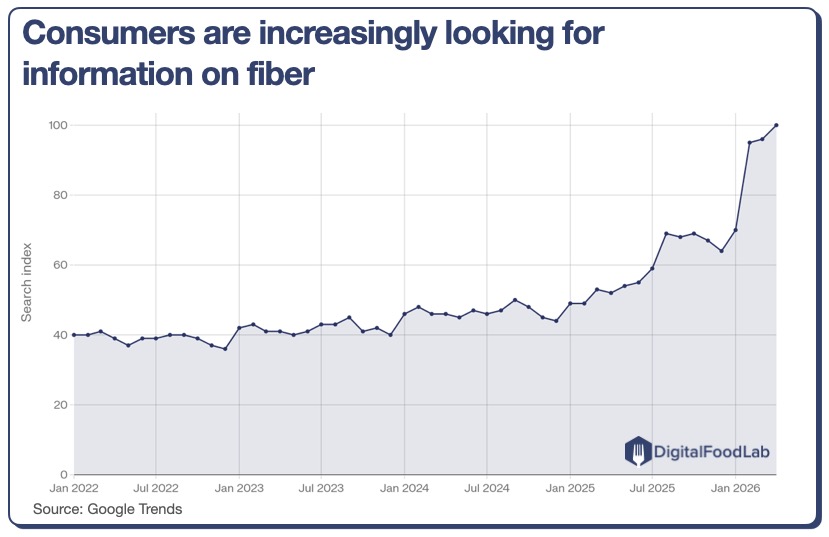
Fiber-google-trends-DigitalFoodLab


The question now is about the strength of this trend: is it transitory or is it here to stay? In our opinion, it is quite the opposite; we are only at the start of a much larger trend. Indeed:

  • Fiber is only a part of something bigger. Fiber is with gut health one of the core sub-goals to achieve healthy ageing (as defined in our insight on this topic).
  • Fiber, as proteins, are the “household names” that consumers are seeking as easy answers, but with time, and as they get more educated, they will become more demanding.
  • Innovation is booming: alongside the trends curve, there are fiber and gut health innovations that are getting closer to the market, notably around the category we call “next generation ingredients).

2 – The share of undernourished people is increasing again in Africa

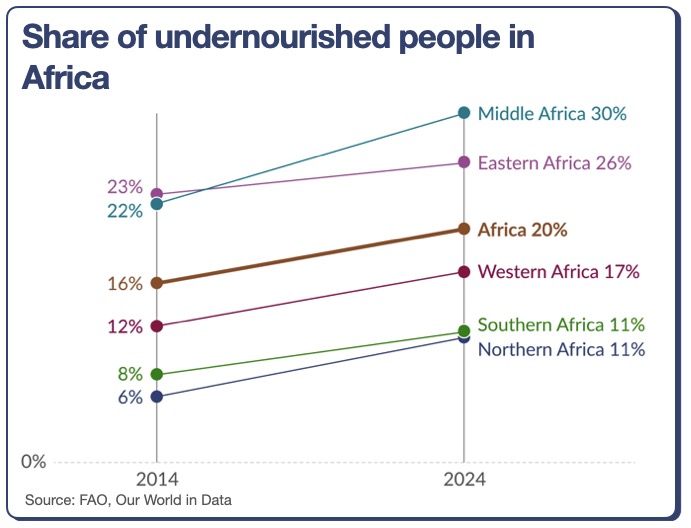
This graph is quite depressing. After a decade-long decline in the number of people suffering from famine globally and billions of people being lifted out of poverty, the past decade has seen a reversal of this trend in Africa.
Share-of-undernourished-people-in-Africa


The increase is particularly noticeable in Central Africa, where almost a third of the population lacks sufficient food to maintain a normal, healthy life. This is even more concerning as it is one of the world’s regions with the highest fertility rates, and hence with many children affected suffering from stunting. This, in turn, will hinder these countries’ future development and growth potential.

Unfortunately, the war in Iran and the rise in chemical fertiliser prices will likely worsen this situation, as African farmers will probably be the first to be priced out of the fertiliser market.

3 – Better-tasting products claim a higher share of plant-based products

That won’t be a surprise, but better products sell more. For plant-based food, especially, we know that one of the reasons things didn’t go as planned in terms of sales was that many products were just not good (and oftentimes, just tasted awfully bad).

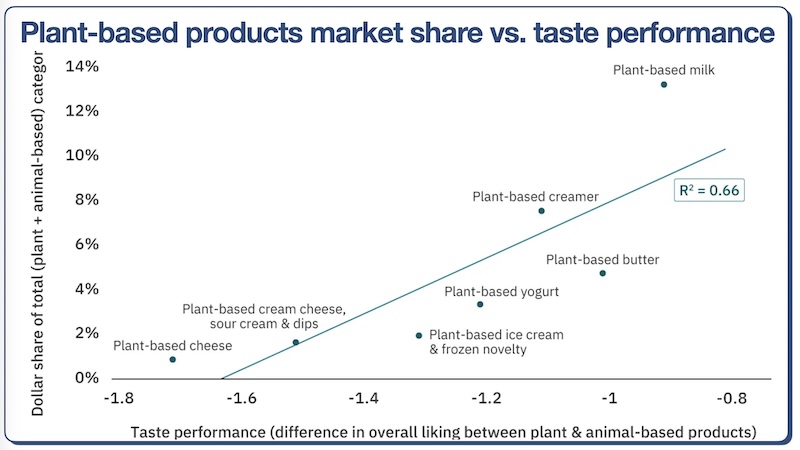
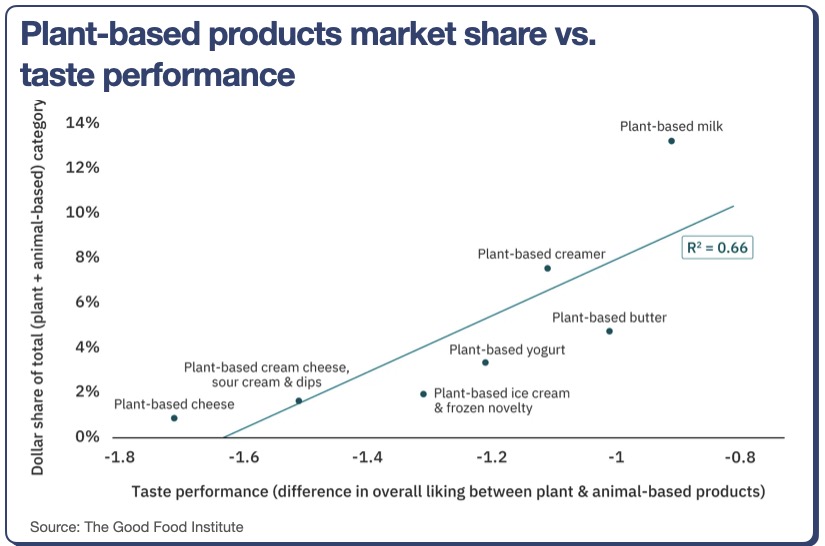
What’s interesting with this study is the fact that there is an apparently direct correlation between the market share an alternative can take on the market (how much it is replacing the “real thing”) when compared to how it performs in terms of taste.
Plant-based-products-market-share-vs.-taste-performance-DigitalFoodLab

The extremes are quite telling. Plant-based milk is the product most widely acknowledged as tasting closest to milk, while plant-based cheese is the farthest from it (with limited progress in this category over the past decade). This directly translates into market shares.

While price is a very important metric to follow, the main opportunity for the plant-based category remains taste. Closing the gap with animal products in terms of the experience they offer is a good way to gain market share.

You're in a good company

Join the 60+ clients of Digital FoodLab: leading agrifood companies, retailers, banks, investors, startups, and public organisations.

Use case: project for a global F&B company looking to map its AgTech innovation ecosystem and the best startups to partner with

What we did:

  • Mapping of the AgTech ecosystem: startups, research regulators, and other leading companies.
  • Discussion to select areas to focus on.
  • Analysis of the information to reveal the trends and a model to analyse eventual partners.
  • A workshop to validate the opportunities based on our recommendations.
  • Scouting of relevant partners followed by introductions.

Results:

  • Mapping the different categories of innovations in AgTech that should be considered now to create long-term benefits for the business.
  • Identification of key partners (an incubator and a couple of startups).

Use case: project for a CPG company on the healthy ageing ecosystem

What we did:

  • Education of the board through a couple of workshops to define the perimeter
  • Identification of key opportunities and threats created by long-term evolutions (technologies, business models, behavioural changes).
  • Deep dives on each of the priority categories.
  • Co-construction of a vision on how the company should address these challenges.
  • Identification of partners (startups, incubators, funds) to move forward.

Results:

  • Creating a consensus on which categories to prioritise and how to address them.
  • Implementation of an open innovation strategy through the development of partnerships.

Use case: project for a global CPG company to develop a strategy on the healthy ageing ecosystem

What we do (ongoing mission on a subscription model):

  • Kick-off where we present an overview of the AgriFoodTech ecosystem to select with the client the categories to cover and for each, the level of information required.
  • Monthly newsletter: each month we send a newsletter with the articles that we have gathered ranked by relevance, their summaries, and a layer of analysis.
  • Database: we set up a personalised database that will be filled month after month with the information gathered on the companies identified for the watch.
  • Workshops: twice a year with the client’s innovation team and other “innovation curious” team members, we present an overview of the evolutions, key trends and a dashboard of the topics followed by the watch.

Results:

  • A clear, regular and evolutive tool to follow what is happening in terms of innovation on key topics.
  • A forum (through the workshops) to discuss innovation trends and new opportunities.

Use case: opportunity screening for an ingredient company

What we did:

  • Kick-off to define the perimeter of the ecosystem studied.
  • Mapping of the different trends shaping the innovation ecosystem of the client.
  • Analysis of the trends on DigitalFoodLab’s trend curve and other relevant frameworks.
  • Workshop to discuss DigitalFoodLab’s recommendations on key trends to prioritise

Results:

  • Shared view of the innovation ecosystem for the client with a view of the trends to prioritize.
  • Clear document (personalised trend curve) that can be easily shared internaly to explain the company’s innovation choices and which can be then updated each year.

Use case: scouting for an agriculture coop

What we did:

  • Kick-off to define the perimeter of the client, the goals of the scouting (partnerships) and the criteria on which startups should be evaluated.
  • Set-up scouting: we selected the first batch of 20+ key startups following the criteria of the client.
  • On-going scouting: then we set up a quarterly scouting of about ten startups.
  • For each scouted startup, we created an ID card with key information such as the business and technological maturity, funding, and corporate partnerships. We also added an explanation of why we selected this startup.

Results:

  • An ongoing and evolutive scouting are matching the client's criteria and its capabilities in terms of deal flow.

Use case: working on an acquisition process for a CPG company

What we did:

  • Kick-off to define what the client is seeking, notably in terms of maturity.
  • Workshop with the client based on a mapping of the different innovation ecosystems adjacent to its activities to select some priorities and discuss inspiring examples of startup acquisition stories.
  • Identification of 20+ targets.
  • Workshop to select the most relevant to engage with.
  • DigitalFoodLab worked as a sparing partner during the acquisition process, notably to help design how the acquired startup could be integrated into the overall company’s strategy.

Results:

  • Different results from traditional M&A processes with a focus on the client’s innovation strategy.
  • Identification of a good match for an acquisition.

Use case: market due diligence on sugar alternatives

What we did:

  • Kick-off with the client to discuss its interest on this category, its expectations and existing level of information (notably on the target company).
  • Mapping of the ecosystem to analyse the different existing alternatives and technologies to compare them.
  • Interview (calls) with relevant startups made by our internal biotechnology expert.
  • Recommendation on whether to invest or not.

Results:

  • Clear view of the ecosystem and of the reasons to believe (or not) in each sub-category.
  • Enforceable recommendations based on facts and expertise.