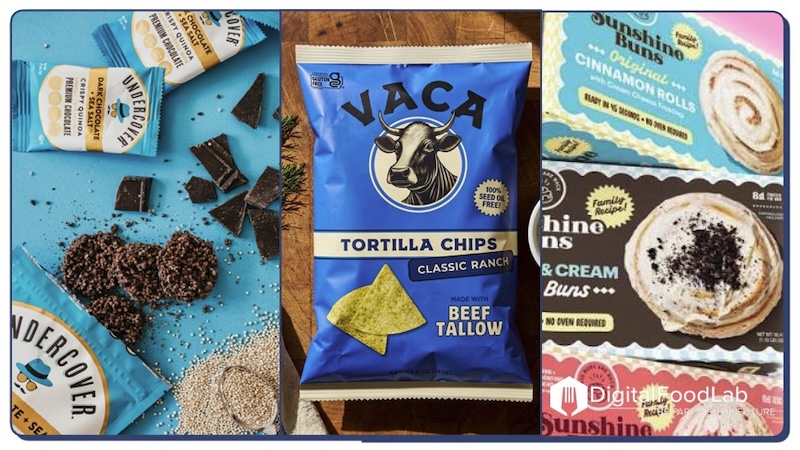
This week, I’d like to explore the growing overlap between convenience and nutrition, and the inevitable contradictions it creates. Consumers want food that takes less effort to prepare, tastes good and helps them meet their health goals.
This creates opportunities for food players all along the value chain, from new ingredients and food products providing the right taste, convenience, and health benefits required to be successful.
This challenge is now mostly tackled by emerging brands, which are growing faster than ever, raising large sums of money, and then getting acquired by leading companies. This raises many questions: is this sustainable, notably when talking about proteins, and will it also benefit new ingredients beyond brand innovation?
The five-minute food opportunity
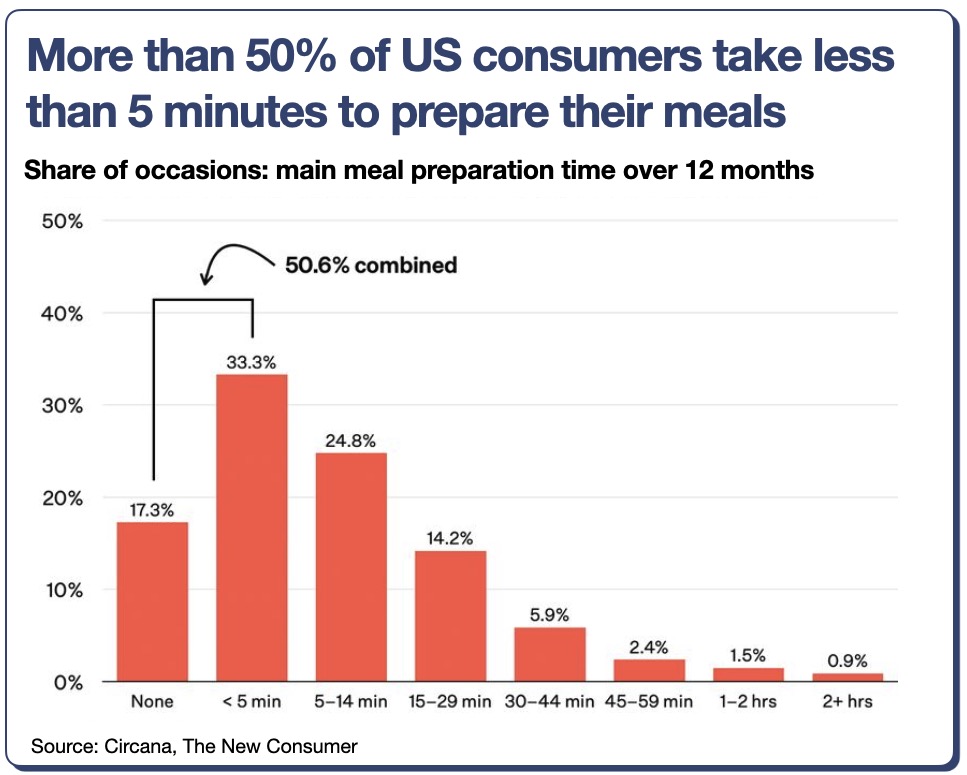
As shown in the graph below, meals requiring less than five minutes of preparation, including those requiring none, now account for around half of US meal occasions.
The figures illustrate a gradual evolution: meals prepared in less than five minutes rose from 32.7% in 2021 to 33.3% in 2026, excluding meals requiring no preparation. This comes in a context where the number of consumption moments (e.g. more snacking, less “big meals”) is increasing.
Other markets point in a similar direction, even in European countries associated with long meals such as Spain and France. Affordability can, however, reverse this shift: British households spent slightly longer preparing meals in 2025, as cooking from scratch became a way to save money.
Beyond ready-to-eat meals, two approaches stand out among the companies featured in our recent insight roundups:
1 – More flavour, fewer steps: sauces, marinades and seasoning mixes that make home cooking easier and more fun:
- EZ Bombs, which raised $25M, puts the seasoning base for Mexican dishes into a single “bomb”. It removes much of the preparation and measuring involved in cooking a complex dish.
- Gymkhana Fine Foods brings sauces and marinades developed in its restaurant kitchen into home cooking. Its proposition starts with flavour and the pleasure of making a good meal with fewer steps.
2 – Better building blocks for everyday meals: ready-to-eat ingredients with a twist
- Bare Beans, which offers ready-to-eat beans, making a familiar source of protein and fibre easier to add to everyday meals.
- Goodles, which was acquired by Barilla for $750M, sells high-protein mac-and-cheese pasta.
Always more protein in our snacks
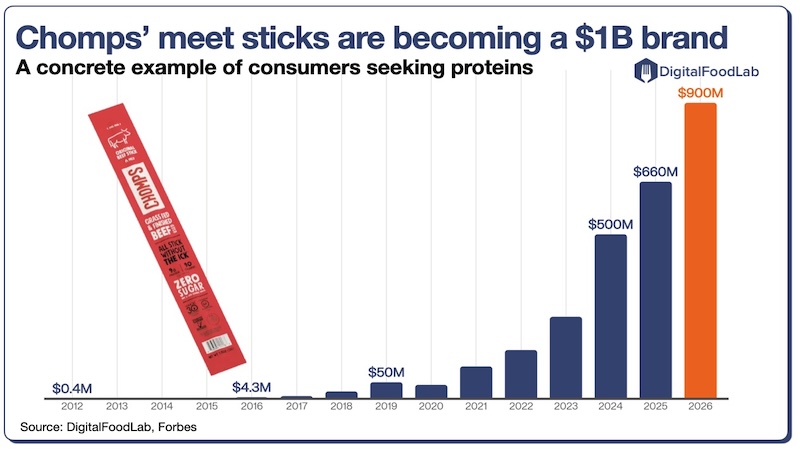
As mentioned, another angle of the five-minute meal is the fact of the rise of snacking globally. This, combined with the insatiable appetite for protein, can be seen in many examples, but none is as revealing as Chomps.
Chomps, which sells meat sticks, has grown from a tiny brand into a giant whose revenue should exceed $900M in 2026. It has become so massive that leading companies are now running after it. PepsiCo launched Good Warrior in March, a copycat product.
And this is far from being an isolated story, other recent examples include:
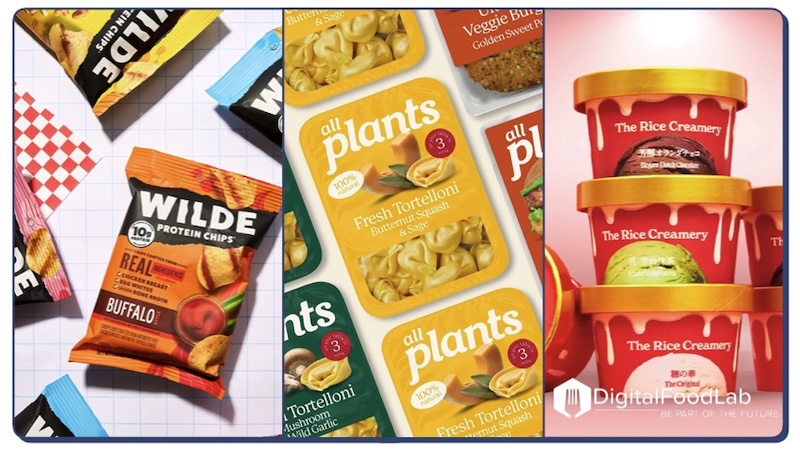
- Wilde, which makes chips from chicken breast, egg whites and bone broth. It has announced a $40M investment and reported more than $100M in sales.
- Clio turns Greek yoghurt into chocolate-coated bars and generates around $100M in annual revenue. Stride Consumer Partners recently acquired a majority stake in the brand.
- David Protein built its initial proposition around a bar delivering 28 grams of protein for 150 calories. It raised $250M in September and is said to be on the path to $300M in revenue in 2026.
What connects all these products and innovations is the effort they remove from everyday eating. Some simplify cooking while others turn familiar foods into convenient products with a nutritional proposition consumers can easily understand.
This creates a wave of opportunities for leading food companies (through portfolio optimisation, notably with some brand extension and the acquisition of emerging brands), and for ingredient suppliers to create the ingredients that will combine the health claims and convenience that consumers are ready to pay for.