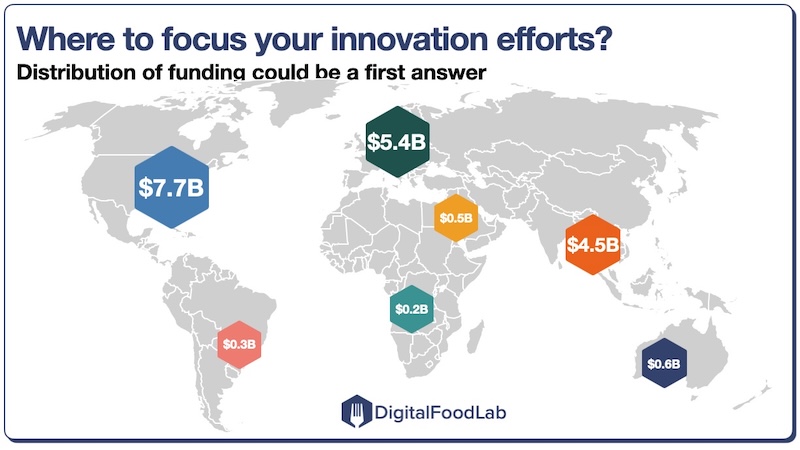
Where should agrifood companies and investors focus their search for new opportunities? Two charts from our latest Global FoodTech Investment Report offer a geographical perspective. We’ll explore these findings and their implications in our upcoming webinar on October 20 (11 am CET). Register here.
1 – North America leads, but the investment map has changed
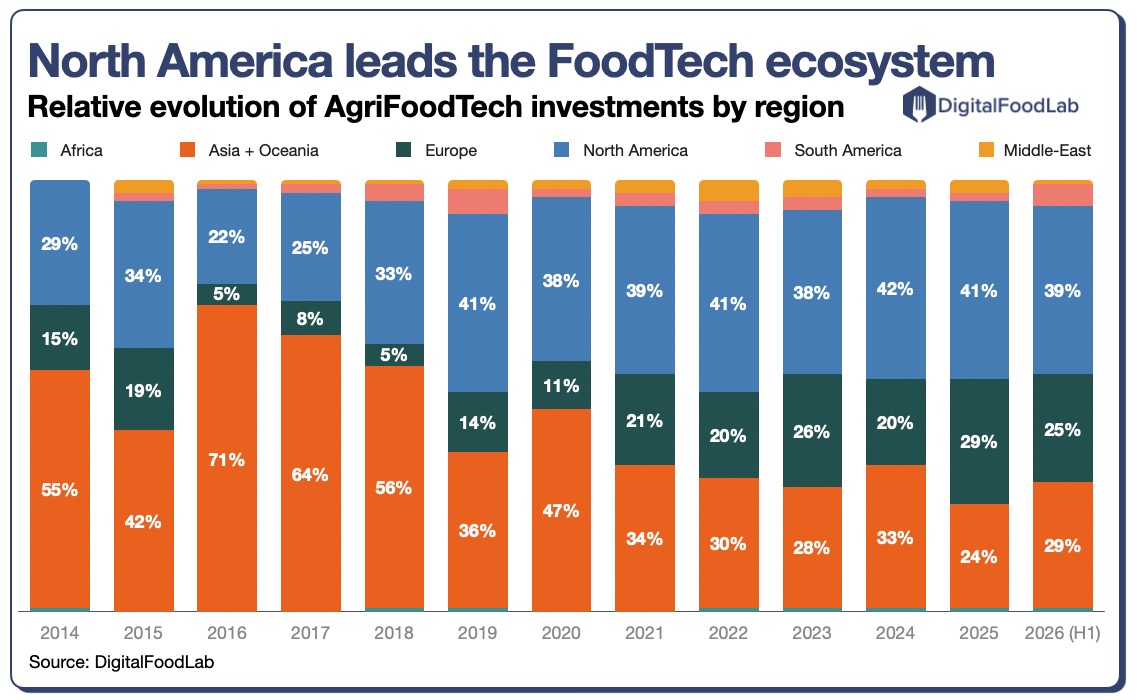
Despite wide swings in AgriFoodTech funding, North America, driven by the U.S., has attracted around 40% of global investment each year since 2019. Yet this stable share masks changes elsewhere in the ecosystem:
- Europe has gained weight: its share has risen from single digits to about 25% over the past few years. This is linked to an increase in the quality of the European FoodTech ecosystem, and to a decrease in funding for Asian delivery startups (especially Chinese restaurant and grocery delivery companies which raised huge amounts of money before Covid).
- Innovation opportunities extend well beyond the U.S: in our work with clients, we have seen the emergence of distinctive and relevant ecosystems across Europe, Asia-Pacific and other regions. The U.S. remains a major hub, but looking there alone would miss relevant potential partners.
If the United States remains the largest national funding destination, followed by India and China, five European countries feature in the top 10: the United Kingdom (4th), the Netherlands (5th), France (6th), Germany (7th) and Switzerland (8th). New Zealand and Canada complete the ranking.
2 – Scout globally, build connections locally
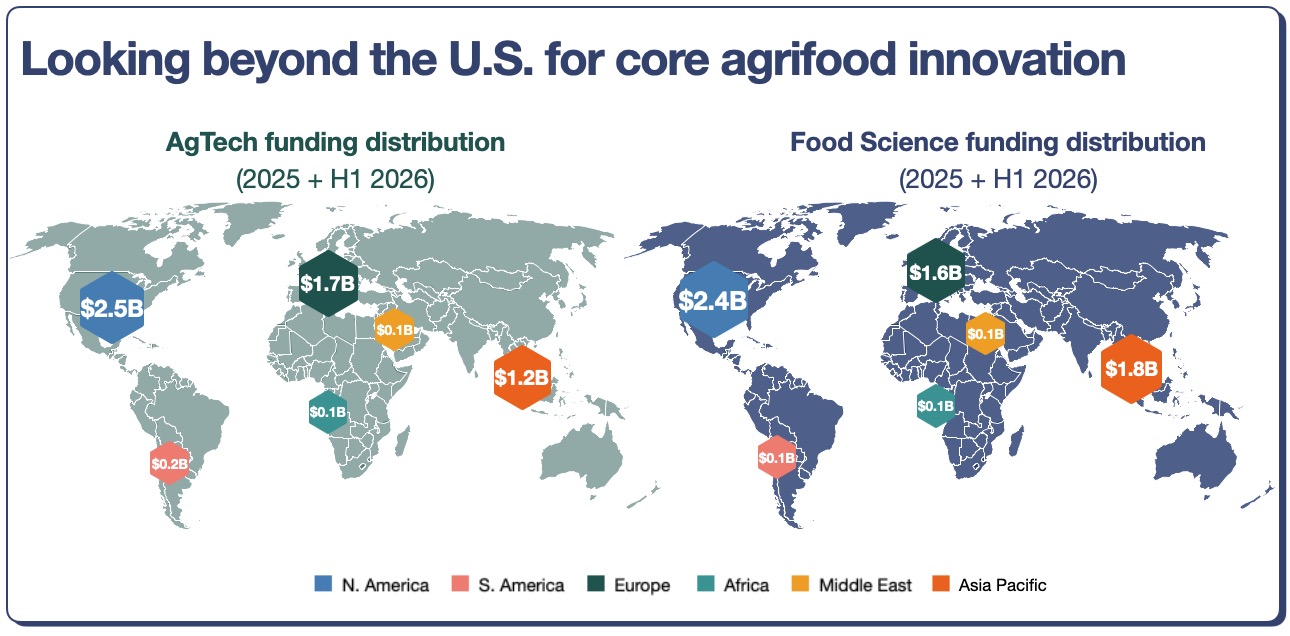
Looking specifically at AgTech and Food Science, we can see that it is increasingly relevant to combine both a global scouting and an ability to deal with “close-to-home” players:
- Scouting innovation globally to spot trends: both for AgTech and Food Science (including new food, beverage & wellness brands, as well as new ingredients relying on alternative protein technologies), funding is increasingly spread globally. AgTech regional hubs include Oceania and South America. Interesting brands can be found in the UK and in South East Asia, while new ingredient companies keep emerging in Israel, continental Europe and Canada.
- Look locally for opportunities to test and deploy. For pilots and projects targeting near-term results, proximity can make collaboration easier. Identify which nearby startups address the trends you have prioritised, and where you need to look further afield.
Our takeaway: keep a global view, then prioritise what is relevant to your business. Build a portfolio of near-term projects and longer-term opportunities, and seek the partners best suited to each.
What does this mean for 2027 and beyond?
Join our upcoming webinar to explore the report’s key findings, the trends we are watching and their implications for innovation and investment priorities. Register for the webinar