16 FoodTech insights and deals to know this week (2026 – week #38)

Published on September 14, 2026

💸 Funding News


🍅🇺🇸 ProducePay, a US company, raised $140M for its shift towards data and technology services for the fresh-produce supply chain, in addition to its financing model. It expects to advance $1B to growers in 2027.


🎙️🇫🇷 Tellia, a French startup, raised €4.3M for its voice-AI interface that lets farmers and agronomists capture and structure field data simply by speaking.


🌱🇳🇱 Gravity Gardens, a Dutch startup, raised €2.6M to industrialise its dry, chemical-free seed activation technology, which aims to improve crop establishment without water, chemicals or seed coatings.


🥬🇸🇬 N&E Innovations, a Singaporean startup, raised $1.73M for its antimicrobial ingredient derived from agricultural waste such as cashew husks. It can be incorporated into packaging or applied directly to produce, and extends fresh-produce shelf life by up to four times.


🍽️🇳🇿 First Table, a New Zealand startup, raised $7.2M for its restaurant-booking platform in Australia. The platform offers diners up to 50% off food at off-peak times and already has more than 3.9M users and 5,000 participating restaurants across 65+ cities globally.


🥗🇮🇹 Foorban, an Italian foodtech startup, raised €7.2M to expand its workplace food offering in Italy and abroad. It combines centrally prepared meals with smart fridges as an alternative to conventional corporate canteens.


💳🇫🇷 Olenbee, a French startup, raised €7M for its employee benefits platform. It lets employees use their normal bank cards for expenses such as meals, then automatically identifies and reimburses eligible purchases.


🧬🇧🇷 Doroth, a Brazilian startup, raised $4.5M for its molecular diagnostics technology. Its devices automate testing for pathogens and resistance genes across crops, seeds, grains, milk and meat.


✅🇮🇹 Biorsaf, an Italian startup, raised €5.2M and acquired Cooki to build an integrated food safety platform spanning quality, traceability, nutrition, costing and labelling.


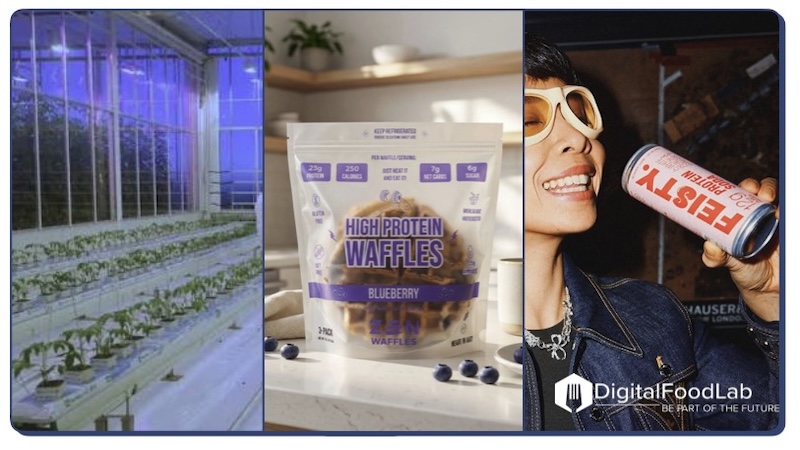
🥤🇬🇧 Feisty, a British startup, raised £500k for its plant-based protein sodas. The drinks contain 10g of protein per can, illustrating how the protein trend is moving beyond bars and shakes into mainstream beverages.


🍮🇺🇸 Petit Pot, a US company, raised a seven-figure amount for its French-inspired premium refrigerated desserts to accelerate product innovation and widen distribution.


🍔🇮🇳 Swish, an Indian startup, raised $24M to expand its 10-minute food-delivery network into new cities and strengthen its supply chain. It plans to build a network of over 1,000 kitchens during the next five years.


⭐ Bankruptcies & partnerships


🥚🇫🇮 Onego Bio partnered with US brand Zen Waffles to supply its white protein produced through precision fermentation for high-protein waffles.


🪰🇫🇷 The Agronutris insect-production facility was placed under judicial restructuring less than a year after the business was rescued by the arrival of La Compagnie des Insectes. The industrial project produces insect-derived ingredients for aquaculture and pet food, making the latest difficulties another illustration of the challenging economics of Europe’s insect industry.


📊 Macro trends


🥬🇨🇳 China’s latest food-safety scandal shows the limits of technology alone, after traders were filmed dipping cabbage in formaldehyde to prolong freshness. Despite major investments in AI, blockchain and traceability, China’s highly fragmented food system remains difficult to monitor: digital tools can make records more traceable, but they cannot guarantee that the information entered into them is accurate.


☕🇺🇸 Starbucks is investing more than $1B to turn its coffee shops back into social spaces, adding armchairs, rugs, books and more seating to as many as 9,000 North American cafés. The strategy reverses years of optimisation around fast digital transactions and bets that physical experience and human connection can differentiate Starbucks from faster-growing competitors.

You're in a good company

Join the 60+ clients of Digital FoodLab: leading agrifood companies, retailers, banks, investors, startups, and public organisations.

Use case: project for a global F&B company looking to map its AgTech innovation ecosystem and the best startups to partner with

What we did:

  • Mapping of the AgTech ecosystem: startups, research regulators, and other leading companies.
  • Discussion to select areas to focus on.
  • Analysis of the information to reveal the trends and a model to analyse eventual partners.
  • A workshop to validate the opportunities based on our recommendations.
  • Scouting of relevant partners followed by introductions.

Results:

  • Mapping the different categories of innovations in AgTech that should be considered now to create long-term benefits for the business.
  • Identification of key partners (an incubator and a couple of startups).

Use case: project for a CPG company on the healthy ageing ecosystem

What we did:

  • Education of the board through a couple of workshops to define the perimeter
  • Identification of key opportunities and threats created by long-term evolutions (technologies, business models, behavioural changes).
  • Deep dives on each of the priority categories.
  • Co-construction of a vision on how the company should address these challenges.
  • Identification of partners (startups, incubators, funds) to move forward.

Results:

  • Creating a consensus on which categories to prioritise and how to address them.
  • Implementation of an open innovation strategy through the development of partnerships.

Use case: project for a global CPG company to develop a strategy on the healthy ageing ecosystem

What we do (ongoing mission on a subscription model):

  • Kick-off where we present an overview of the AgriFoodTech ecosystem to select with the client the categories to cover and for each, the level of information required.
  • Monthly newsletter: each month we send a newsletter with the articles that we have gathered ranked by relevance, their summaries, and a layer of analysis.
  • Database: we set up a personalised database that will be filled month after month with the information gathered on the companies identified for the watch.
  • Workshops: twice a year with the client’s innovation team and other “innovation curious” team members, we present an overview of the evolutions, key trends and a dashboard of the topics followed by the watch.

Results:

  • A clear, regular and evolutive tool to follow what is happening in terms of innovation on key topics.
  • A forum (through the workshops) to discuss innovation trends and new opportunities.

Use case: opportunity screening for an ingredient company

What we did:

  • Kick-off to define the perimeter of the ecosystem studied.
  • Mapping of the different trends shaping the innovation ecosystem of the client.
  • Analysis of the trends on DigitalFoodLab’s trend curve and other relevant frameworks.
  • Workshop to discuss DigitalFoodLab’s recommendations on key trends to prioritise

Results:

  • Shared view of the innovation ecosystem for the client with a view of the trends to prioritize.
  • Clear document (personalised trend curve) that can be easily shared internaly to explain the company’s innovation choices and which can be then updated each year.

Use case: scouting for an agriculture coop

What we did:

  • Kick-off to define the perimeter of the client, the goals of the scouting (partnerships) and the criteria on which startups should be evaluated.
  • Set-up scouting: we selected the first batch of 20+ key startups following the criteria of the client.
  • On-going scouting: then we set up a quarterly scouting of about ten startups.
  • For each scouted startup, we created an ID card with key information such as the business and technological maturity, funding, and corporate partnerships. We also added an explanation of why we selected this startup.

Results:

  • An ongoing and evolutive scouting are matching the client's criteria and its capabilities in terms of deal flow.

Use case: working on an acquisition process for a CPG company

What we did:

  • Kick-off to define what the client is seeking, notably in terms of maturity.
  • Workshop with the client based on a mapping of the different innovation ecosystems adjacent to its activities to select some priorities and discuss inspiring examples of startup acquisition stories.
  • Identification of 20+ targets.
  • Workshop to select the most relevant to engage with.
  • DigitalFoodLab worked as a sparing partner during the acquisition process, notably to help design how the acquired startup could be integrated into the overall company’s strategy.

Results:

  • Different results from traditional M&A processes with a focus on the client’s innovation strategy.
  • Identification of a good match for an acquisition.

Use case: market due diligence on sugar alternatives

What we did:

  • Kick-off with the client to discuss its interest on this category, its expectations and existing level of information (notably on the target company).
  • Mapping of the ecosystem to analyse the different existing alternatives and technologies to compare them.
  • Interview (calls) with relevant startups made by our internal biotechnology expert.
  • Recommendation on whether to invest or not.

Results:

  • Clear view of the ecosystem and of the reasons to believe (or not) in each sub-category.
  • Enforceable recommendations based on facts and expertise.