Everyone wants to reduce sugar. Almost no one has figured out how. While this topic is top of mind for consumers, CPG companies and ingredient manufacturers alike, it remains “aspirational”. Indeed, significantly reducing or replacing sugar is much more complex than we often think. However, things are moving behind the scenes, with many alternatives being developed, some of which are almost ready to disrupt our daily food products. Let’s explore what’s happening and, more importantly, how agrifood companies can leverage these innovations in their strategy.
1 – Where does the will to reduce sugar come from?
Sugar has been the enemy for years, since it has replaced fat as the ingredient associated with obesity and weight gain. However, things have evolved quite noticeably in the minds of consumers recently:
- Consumers have started to ask more questions about sugar, sugar reduction, and sugar-free diets, leading more than 80% to seek to reduce sugar.
- Living longer and healthier is the first goal associated with sugar reduction, instead of weight management.
- GLP-1 is creating a wave of consumers keener to reduce “empty” calories and to seek solutions. This also makes sugar a topic to be read alongside the craze for proteins and fibres.
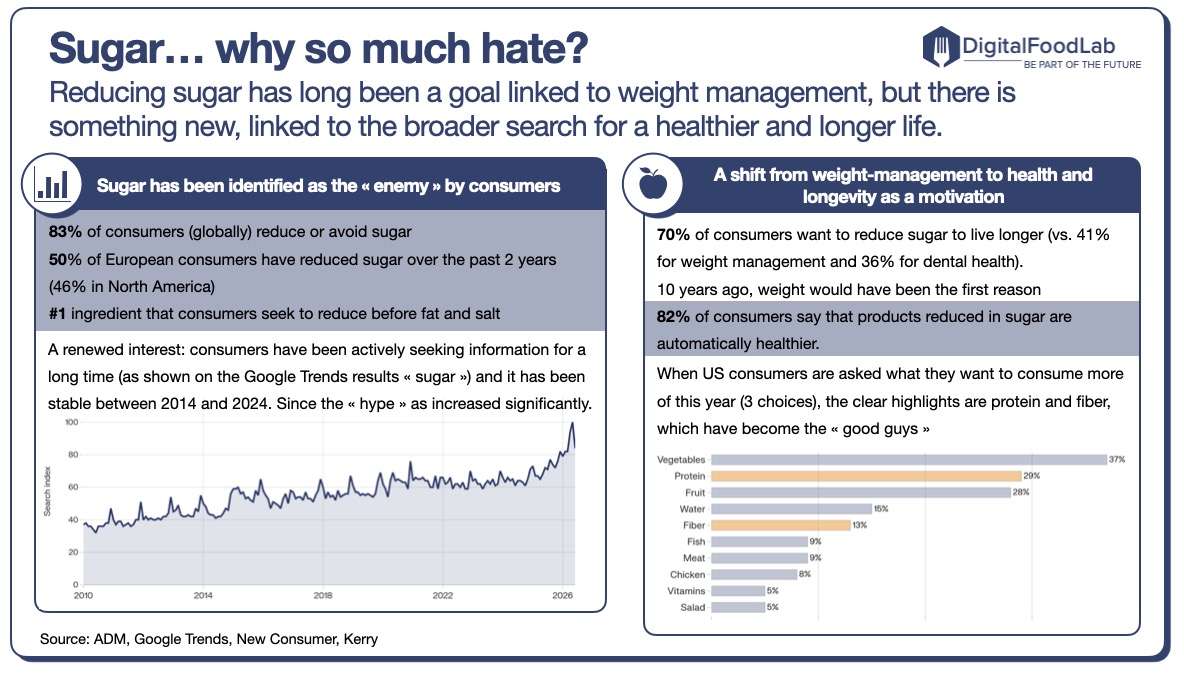
For now, this is benefiting all “sugar-reduced” products, including those with sweeteners, but consumers are increasingly seeking “natural” solutions.
Put simply, it is not just a need to replace sugar with “something else”, but rather to find solutions bespoke to the needs of each product category and consumer, while aligning with the broader healthy ageing trend.
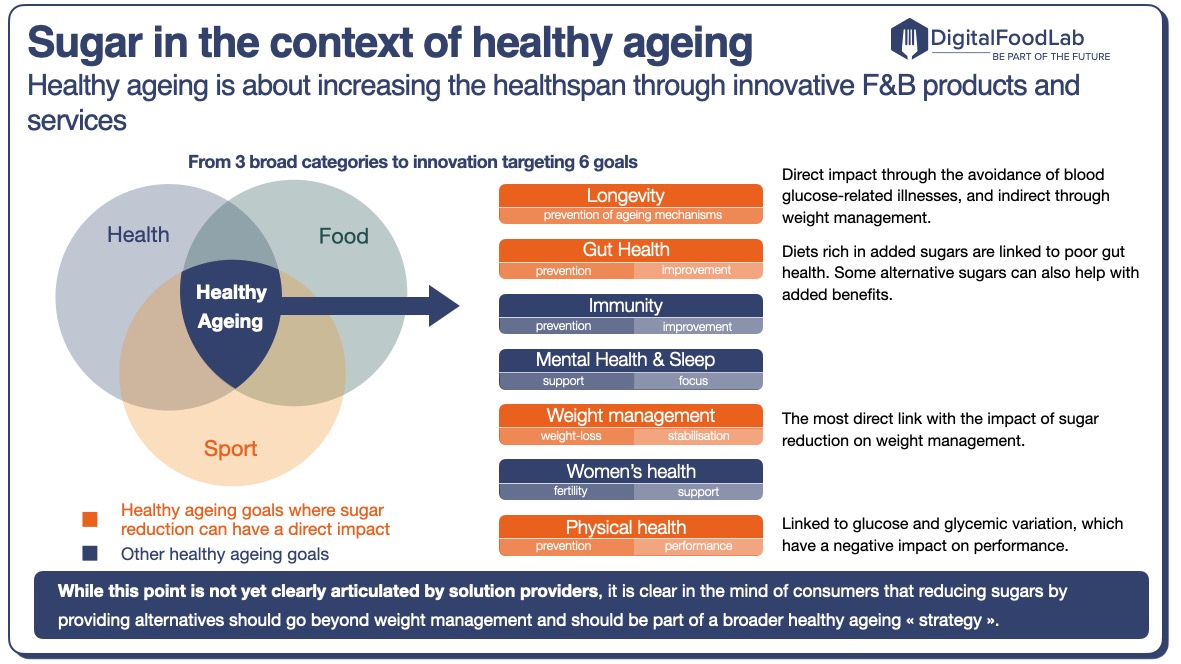
Indeed, this blends well with our recent insights on healthy ageing and longevity. We can see that there is a deep integration between these topics.
2 – The sugar alternative innovation ecosystem
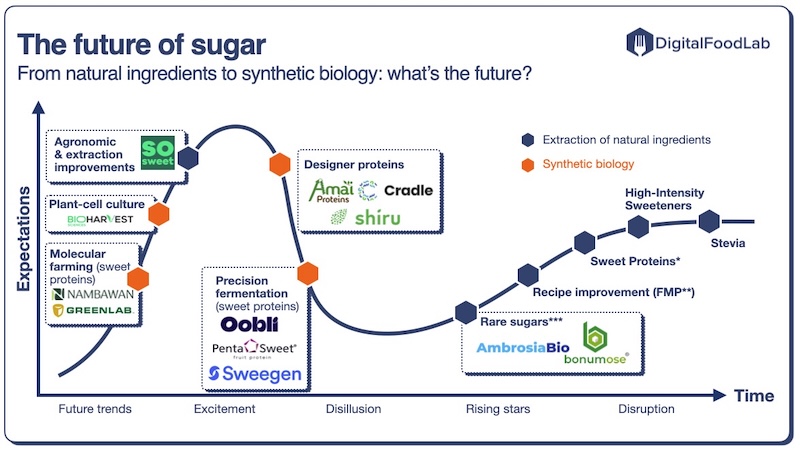
As shown in the innovation trends curve below (this is obviously a simplification for this insight; each molecule could be represented separately), the ecosystem can be split into 10 categories. We separated them into “natural ingredients” extracted from plants and ingredients derived from synthetic biology, a key distinction, as consumers are seeking naturalness.
Established categories, with natural ingredients which are for most of them already commercially available, even if at a limited scale:
- Stevia: well-known, but still with active research to improve yields and taste.
- High-intensity sweeteners range from monk fruit to more “exotic” ingredients like yacon. Each has interesting benefits but also comes with trade-offs in terms of price, taste, regulation…
- Sweet Proteins: highly interesting proteins from tropical plants with extreme sweetness (from hundreds to thousands of times sweeter than sugar), including thaumatin, brazzein and monellin. However, these plants are complex to cultivate (in West Africa), and prices remain too high for mass adoption.
- Recipe improvement: ingredients that improve sweetness perception in flavour blends, without being sweeteners.
- Rare Sugars: monosaccharides with low caloric density, including tagatose and allulose. These are finally getting available, but still at a limited scale.
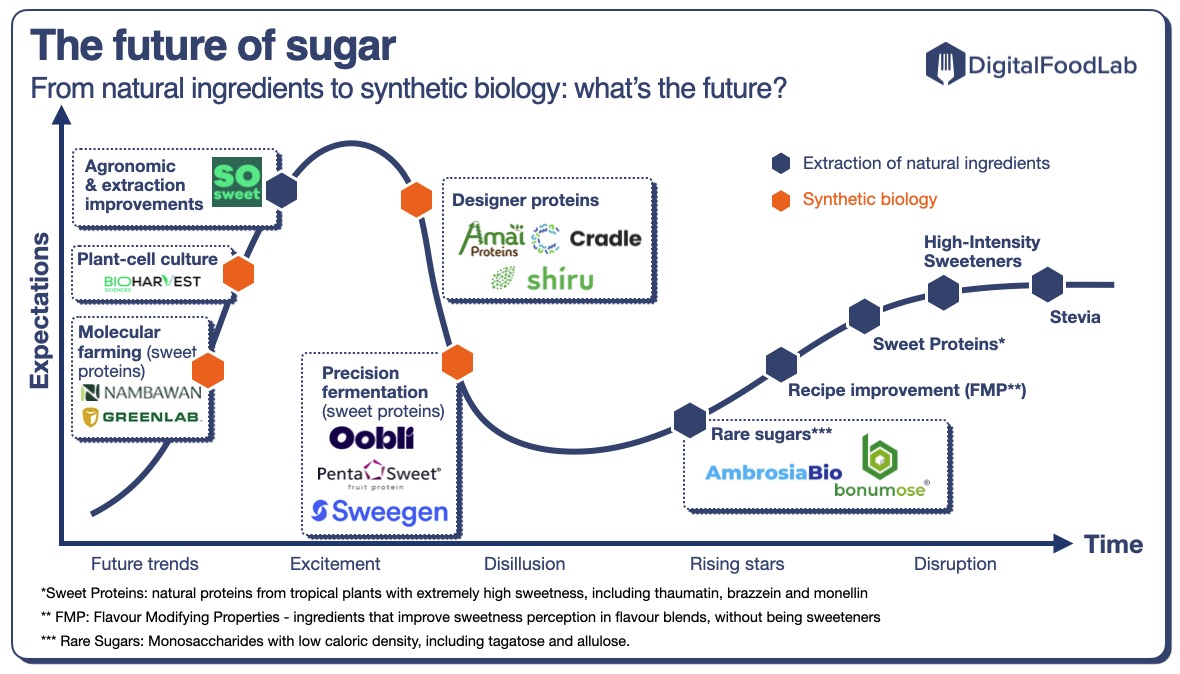
Emerging innovations that represent the “future of sugar”:
- Sweet proteins made through precision fermentation: companies like Oobli are developing equivalents to proteins such as brazzein and are seeking to scale production to make them more widely available than those currently on the market via extraction.
- Designer proteins: beyond replicating proteins that already exist in nature, companies like Amaï leverage artificial intelligence and large databases to create next-generation sweeteners that align with industry needs.
- Agronomic & extraction improvement for sweet proteins: a small space of companies seeking to improve on how the exotic plants producing sweet proteins are cultivated.
- Plant-cell culture and molecular farming: companies leveraging cellular agriculture (for plants) or using plants as bioreactors to produce sweet proteins at scale.
Regulation is a key element that can boost or hinder the development of any sugar alternative. Nowadays, while many sweet proteins (from Oobli, Sweegen) and designer proteins (from Amaï) are authorised in the US, they can’t yet be commercialised in most of the rest of the world. This limits their market potential to brands focused on the American market (as global brands will prefer a single ingredient list).
3 – Are leading companies engaging with sugar alternatives?
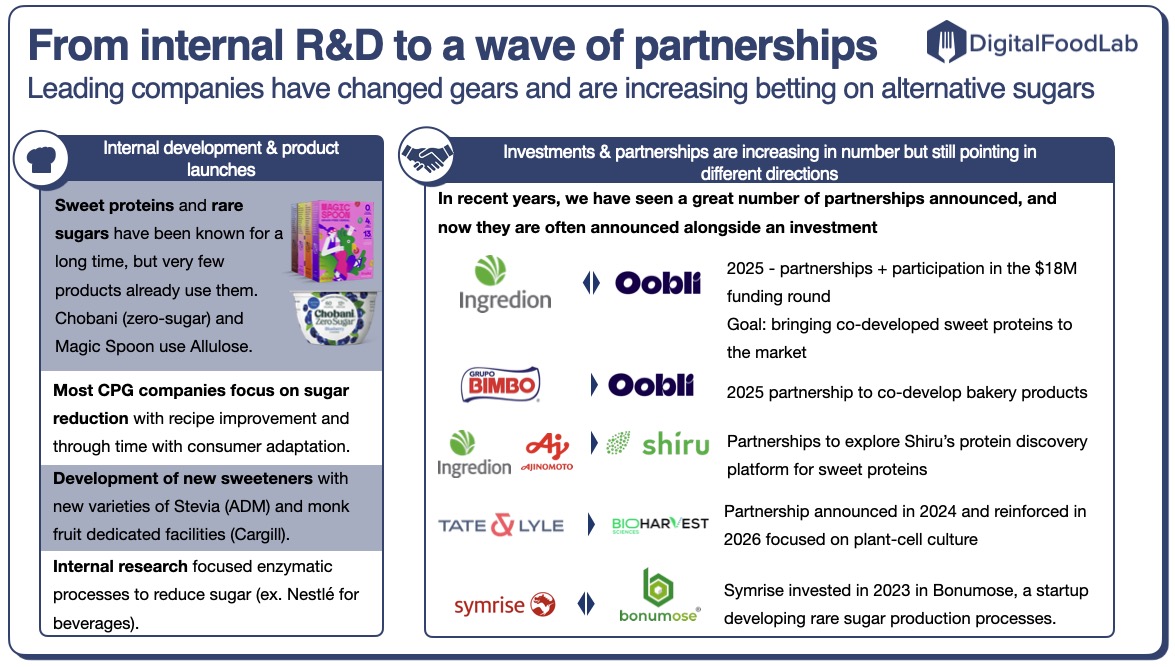
As for the innovation ecosystem, leading companies are spreading their bets and addressing the topic in multiple ways:
- Internal development, which is mostly focused on recipe improvements and sugar reduction over time. Very few players have already introduced sweet proteins or rare sugars in their recipes.
- Investment and partnerships, which are both increasing, notably those involving ingredient (with Ingredion and Oobli being the perfect example) companies seeking to secure access to differentiated sweet proteins. This rising corporate involvement supports investors’ appetite for the space, which is remarkably high in an otherwise depressed FoodTech ecosystem.
4 – So now, how to leverage the sugar alternative opportunity?
There is clearly an opportunity in this space for most agrifood companies, from ingredient suppliers to F&B CPG brands. However, as explained above, the first step is probably to understand that there won’t be any single “magical” alternative. Beyond taste and sweetness, sugar is a natural preservative and a source of texture that will be hard to replace with a single ingredient, let alone one that works in multiple recipes.
Then, there is the question of timing:
- Some solutions are already on the market, and despite their respective challenges, they should be given more attention, notably rare sugars.
- Other solutions, including sweet proteins produced via precision fermentation, will become available at scale within 5 to 10 years.
- Finally, long-term bets also deserve consideration as potentially game-changing alternatives.
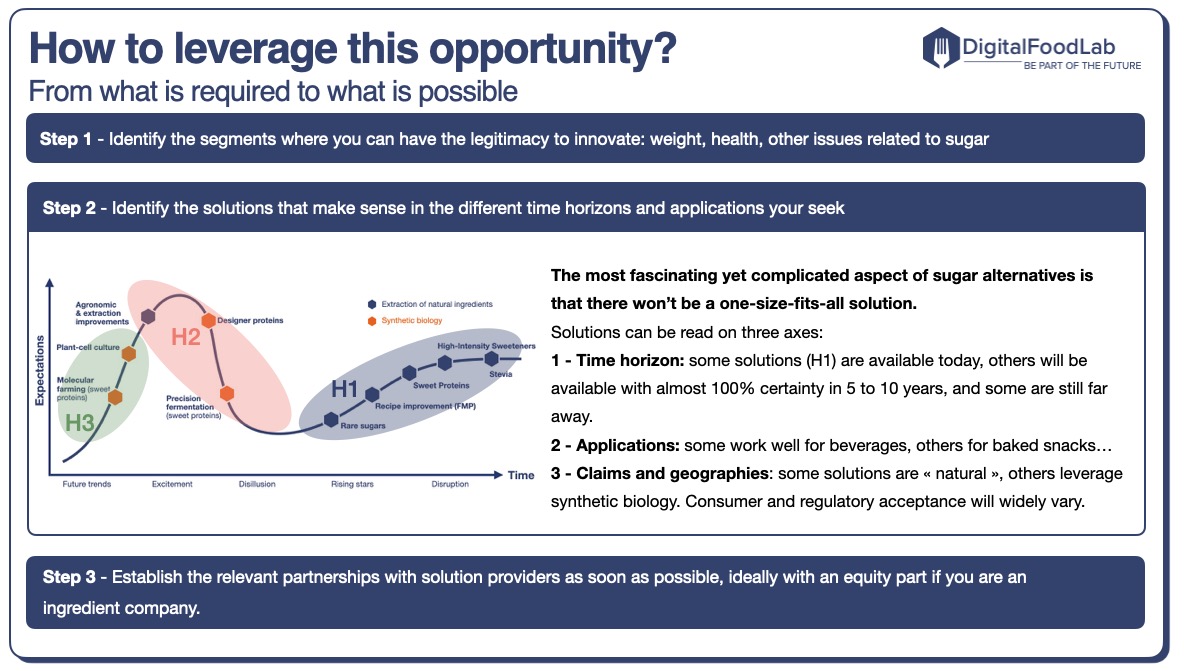
For each company, the goal is to:
- Identify what it seeks in a sugar alternative and which goals are the most aligned with its markets, values, and strategies.
- Map the existing innovations, establish priorities and identify the right partners and solution providers.
If this is relevant to your strategy, let’s have a look at how DigitalFoodLab could support you in:
- Mapping opportunities using our FutureTrends approach
- Identifying how to act on the space
- Scout relevant partners