14 FoodTech insights and deals to know this week (2026 – week #27)

Published on June 29, 2026

💸 Funding News


🍄🇳🇱 The Protein Brewery, a Dutch startup, raised €18M in an extension of its Series B to scale production of its mycelium ingredient, following EU Novel Food authorisation. Total funding now exceeds €70M.


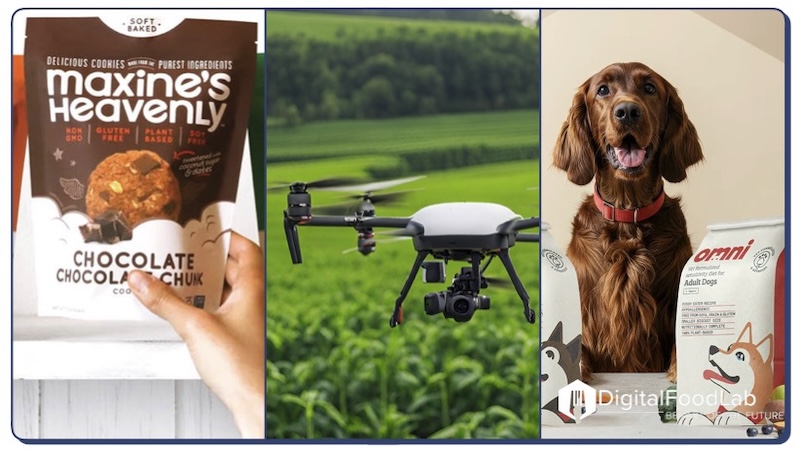
🐕🇬🇧 Omni, a British startup, raised £11M for its vegan pet food range for dogs and to launch a weight-loss supplement for dogs.


🦠🇬🇧 Myota, a British startup, raised $4.5M for its prebiotic fibre blends for gut health. It is positioning its products as a GLP-1 companion for metabolic health.


🍪🇺🇸 Maxine’s Heavenly, a US startup, raised $2.86M for its creme sandwich cookies.


🌵🇸🇦 Terraxy, a Saudi startup, raised $3M for its soil enhancer for arid and sandy environments that improves water and nutrient retention and can increase plant yields by up to 70%.


🤖🇹🇳 RoboCare, a Tunisian startup, raised a six-figure round for its precision agriculture platform to help farmers with early disease detection and resource optimisation.


💧🇸🇪 Wayout International, a Swedish startup, raised €2.42M for its decentralised drinking water infrastructure platform, which purifies water locally through advanced filtration, mineralisation, smart dispensing, and digital monitoring.


⭐ Acquisitions, Regulation, Bankruptcies & Partnerships


🍽️🇸🇦🇬🇷 Foodics, a Saudi restaurant SaaS platform, acquired Norma AI, a Greek data intelligence startup for the hospitality industry.


🥇 Leading Companies


🌿🇩🇪 Bayer won a US Supreme Court ruling blocking lawsuits over glyphosate (Roundup). The decision could shield Bayer from thousands of pending cancer-related suits. It sent its shares up 16%.


🥛🇫🇷🇦🇺 Danone announced the acquisition of Made Group, an Australian health-focused food and beverage company with annual sales exceeding €300M, to strengthen its APAC footprint.


🍺🇯🇵 Kirin’s president said that beer can provide “spiritual or mental” health benefits, pushing back against the WHO’s stance that no amount of alcohol is safe. This underscores Kirin’s bet-the-company pivot: as Japanese alcohol consumption declines, it is repositioning itself as a health science company through acquisitions and leveraging its expertise in fermentation expertise for supplements and probiotics.


📊 Macro Trends


🧠🇺🇸 Big Food is shifting from scale to intelligence: consolidation and cost-cutting alone no longer generate growth for large food manufacturers. As private labels gain traction, Gen Z’s low loyalty levels, and GLP-1 pressures, the next competitive edge will come from AI, data analytics, consumer insight, and rapid innovation.


🛵🇮🇳 India’s quick-commerce race is accelerating: Flipkart has reached 1,000 dark stores across 130 cities, with 5x year-on-year order growth and Gen Z accounting for 40% of its user base. Amazon Now is expanding from 100 to 300 cities.


🥤🇺🇸 McDonald’s is diversifying its beverages beyond Coca-Cola after 70 years of near-exclusive partnership. It has launched refreshers, crafted sodas, and is testing Red Bull-based drinks to target younger consumers and follow the speciality drinks trend.


You're in a good company

Join the 60+ clients of Digital FoodLab: leading agrifood companies, retailers, banks, investors, startups, and public organisations.

Use case: project for a global F&B company looking to map its AgTech innovation ecosystem and the best startups to partner with

What we did:

  • Mapping of the AgTech ecosystem: startups, research regulators, and other leading companies.
  • Discussion to select areas to focus on.
  • Analysis of the information to reveal the trends and a model to analyse eventual partners.
  • A workshop to validate the opportunities based on our recommendations.
  • Scouting of relevant partners followed by introductions.

Results:

  • Mapping the different categories of innovations in AgTech that should be considered now to create long-term benefits for the business.
  • Identification of key partners (an incubator and a couple of startups).

Use case: project for a CPG company on the healthy ageing ecosystem

What we did:

  • Education of the board through a couple of workshops to define the perimeter
  • Identification of key opportunities and threats created by long-term evolutions (technologies, business models, behavioural changes).
  • Deep dives on each of the priority categories.
  • Co-construction of a vision on how the company should address these challenges.
  • Identification of partners (startups, incubators, funds) to move forward.

Results:

  • Creating a consensus on which categories to prioritise and how to address them.
  • Implementation of an open innovation strategy through the development of partnerships.

Use case: project for a global CPG company to develop a strategy on the healthy ageing ecosystem

What we do (ongoing mission on a subscription model):

  • Kick-off where we present an overview of the AgriFoodTech ecosystem to select with the client the categories to cover and for each, the level of information required.
  • Monthly newsletter: each month we send a newsletter with the articles that we have gathered ranked by relevance, their summaries, and a layer of analysis.
  • Database: we set up a personalised database that will be filled month after month with the information gathered on the companies identified for the watch.
  • Workshops: twice a year with the client’s innovation team and other “innovation curious” team members, we present an overview of the evolutions, key trends and a dashboard of the topics followed by the watch.

Results:

  • A clear, regular and evolutive tool to follow what is happening in terms of innovation on key topics.
  • A forum (through the workshops) to discuss innovation trends and new opportunities.

Use case: opportunity screening for an ingredient company

What we did:

  • Kick-off to define the perimeter of the ecosystem studied.
  • Mapping of the different trends shaping the innovation ecosystem of the client.
  • Analysis of the trends on DigitalFoodLab’s trend curve and other relevant frameworks.
  • Workshop to discuss DigitalFoodLab’s recommendations on key trends to prioritise

Results:

  • Shared view of the innovation ecosystem for the client with a view of the trends to prioritize.
  • Clear document (personalised trend curve) that can be easily shared internaly to explain the company’s innovation choices and which can be then updated each year.

Use case: scouting for an agriculture coop

What we did:

  • Kick-off to define the perimeter of the client, the goals of the scouting (partnerships) and the criteria on which startups should be evaluated.
  • Set-up scouting: we selected the first batch of 20+ key startups following the criteria of the client.
  • On-going scouting: then we set up a quarterly scouting of about ten startups.
  • For each scouted startup, we created an ID card with key information such as the business and technological maturity, funding, and corporate partnerships. We also added an explanation of why we selected this startup.

Results:

  • An ongoing and evolutive scouting are matching the client's criteria and its capabilities in terms of deal flow.

Use case: working on an acquisition process for a CPG company

What we did:

  • Kick-off to define what the client is seeking, notably in terms of maturity.
  • Workshop with the client based on a mapping of the different innovation ecosystems adjacent to its activities to select some priorities and discuss inspiring examples of startup acquisition stories.
  • Identification of 20+ targets.
  • Workshop to select the most relevant to engage with.
  • DigitalFoodLab worked as a sparing partner during the acquisition process, notably to help design how the acquired startup could be integrated into the overall company’s strategy.

Results:

  • Different results from traditional M&A processes with a focus on the client’s innovation strategy.
  • Identification of a good match for an acquisition.

Use case: market due diligence on sugar alternatives

What we did:

  • Kick-off with the client to discuss its interest on this category, its expectations and existing level of information (notably on the target company).
  • Mapping of the ecosystem to analyse the different existing alternatives and technologies to compare them.
  • Interview (calls) with relevant startups made by our internal biotechnology expert.
  • Recommendation on whether to invest or not.

Results:

  • Clear view of the ecosystem and of the reasons to believe (or not) in each sub-category.
  • Enforceable recommendations based on facts and expertise.