19 FoodTech insights and deals to know this week (2026 – week #26)

Published on June 22, 2026

💸 Funding News


🦠🇫🇮 Solar Foods, a Finnish startup, obtained a €77.8M grant and loan package from Business Finland to build its second factory and scale production of Solein, its protein grown from captured CO₂.


🥛🇳🇱 Vivici, a Dutch startup, raised €12.5M from the European Innovation Council (EIC) to scale its production of dairy proteins through precision fermentation.


🌱🇩🇪 Seqana, a German startup, raised €3.2M (including a grant from ESA, the European Space Agency) for its satellite-based carbon and soil health platform. This confirms the trend we highlighted in a recent insight on the convergence of space-tech and AgriFoodTech.


🌽🇧🇪 Rainbow Crops, a Belgian startup, raised €9.7M for its gene-editing platform that improves yield and climate resilience in corn and other key crops.


🦐🇮🇳 Aquapulse, an Indian startup, raised ~$476K for its platform supporting shrimp farming with the goal to increase market access.


🧬🇺🇸 Neion Bio, a US startup, raised $23M for its genetic engineering platform to turn chicken eggs into production systems for complex glycosylated proteins (biologics). It targets applications in innovative medicines and animal health.


🌾🇨🇦 Picketa, a Canadian startup, raised $1.5M for its portable spectroscopy device that measures crop nutrients in minutes directly in the field.


🌿🇨🇭 OneSoil, a Swiss startup, raised €1M for its precision farming platform and AI assistant for farmers, which enables field monitoring, productivity analysis…


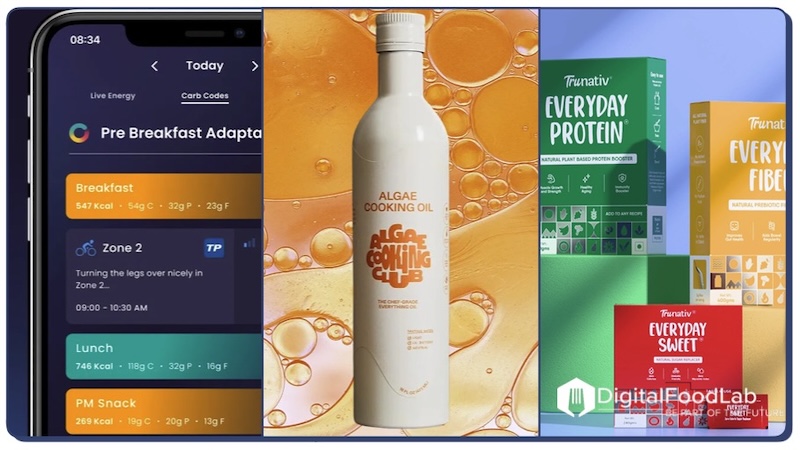
💪 🇮🇪 Hexis, an Irish startup, raised $2.1M for its personalised nutrition app for athletes. The platform integrates with wearables and fitness trackers to generate customised plans based on training data.


💊🇮🇳 TruNativ, an Indian startup, raised $30M for its D2C nutrition brand focused on everyday protein and fibre supplements that can be mixed into cooking.


🪸🇺🇸 Algae Cooking Club, a US startup, raised $11.6M for its cooking oils made from algae, featuring a high smoke point of 535°F and an omega-9 fat profile.


🍽️🇮🇹 Bestie Bite, an Italian startup, raised €1.5M for its video reviews app, which helps users discover restaurants.


🚚🇸🇦 Pickappo, a Saudi startup, raised $530K for its logistics technology platform, which provides digital infrastructure connecting delivery providers, merchants, and restaurants.


⭐ Acquisitions, Regulation, Bankruptcies & Partnerships


🥬🇺🇸 AeroFarms, a US vertical farming startup, was acquired by Palm Ventures for undisclosed terms. AeroFarms had previously filed for bankruptcy in 2023 and was part of the wave of vertical/indoor farming players going bust as they were unable to reach profitability.


🥩🇪🇺 The EU Parliament passed a ban on meat-related terms for plant-based and cultivated products by a large majority. The regulation reserves terms like “beef,” “steak,” “chicken,” or “breast” exclusively for animal-derived products, though “burger,”

“nuggets,” and “sausage” remain available to plant-based producers. The text still needs EU Council approval before entering into force.


🍫🇬🇧 Nukoko, a British cocoa-free chocolate startup, was acquired by Döhler, the German ingredients group.


🥇 Leading Companies


🍴🇫🇷 TripAdvisor agreed to sell TheFork to American Express for $700M. TheFork is Europe’s leading restaurant reservation platform, operating across 12 countries. This follows multiple deals in previous years where Amex acquired similar platforms in the US to pursue its strategy of offering exclusive deals and experiences to its cardholders.


🍕🇺🇸 Yum Brands sold Pizza Hut for $2.7bn to refocus on its key brands KFC and Taco Bell. Private equity firm LongRange Capital will acquire the global operations (ex-China) for $1.5bn, while Yum China buys the Chinese arm for $1.2bn, a market where Pizza Hut has been growing steadily, while the US business is declining.


🥛🇸🇪 Oatly, the Swedish oat milk brand, shifted its marketing strategy away from its signature wordy billboards toward a digital-first approach centred on live cultural events and beverage experiences targeting Gen Z and Gen Alpha. First, this has helped the company to reduce advertising. Also, it shows a bigger shift: Oatly doesn’t want to be the sole driver of change and the category educator.

You're in a good company

Join the 60+ clients of Digital FoodLab: leading agrifood companies, retailers, banks, investors, startups, and public organisations.

Use case: project for a global F&B company looking to map its AgTech innovation ecosystem and the best startups to partner with

What we did:

  • Mapping of the AgTech ecosystem: startups, research regulators, and other leading companies.
  • Discussion to select areas to focus on.
  • Analysis of the information to reveal the trends and a model to analyse eventual partners.
  • A workshop to validate the opportunities based on our recommendations.
  • Scouting of relevant partners followed by introductions.

Results:

  • Mapping the different categories of innovations in AgTech that should be considered now to create long-term benefits for the business.
  • Identification of key partners (an incubator and a couple of startups).

Use case: project for a CPG company on the healthy ageing ecosystem

What we did:

  • Education of the board through a couple of workshops to define the perimeter
  • Identification of key opportunities and threats created by long-term evolutions (technologies, business models, behavioural changes).
  • Deep dives on each of the priority categories.
  • Co-construction of a vision on how the company should address these challenges.
  • Identification of partners (startups, incubators, funds) to move forward.

Results:

  • Creating a consensus on which categories to prioritise and how to address them.
  • Implementation of an open innovation strategy through the development of partnerships.

Use case: project for a global CPG company to develop a strategy on the healthy ageing ecosystem

What we do (ongoing mission on a subscription model):

  • Kick-off where we present an overview of the AgriFoodTech ecosystem to select with the client the categories to cover and for each, the level of information required.
  • Monthly newsletter: each month we send a newsletter with the articles that we have gathered ranked by relevance, their summaries, and a layer of analysis.
  • Database: we set up a personalised database that will be filled month after month with the information gathered on the companies identified for the watch.
  • Workshops: twice a year with the client’s innovation team and other “innovation curious” team members, we present an overview of the evolutions, key trends and a dashboard of the topics followed by the watch.

Results:

  • A clear, regular and evolutive tool to follow what is happening in terms of innovation on key topics.
  • A forum (through the workshops) to discuss innovation trends and new opportunities.

Use case: opportunity screening for an ingredient company

What we did:

  • Kick-off to define the perimeter of the ecosystem studied.
  • Mapping of the different trends shaping the innovation ecosystem of the client.
  • Analysis of the trends on DigitalFoodLab’s trend curve and other relevant frameworks.
  • Workshop to discuss DigitalFoodLab’s recommendations on key trends to prioritise

Results:

  • Shared view of the innovation ecosystem for the client with a view of the trends to prioritize.
  • Clear document (personalised trend curve) that can be easily shared internaly to explain the company’s innovation choices and which can be then updated each year.

Use case: scouting for an agriculture coop

What we did:

  • Kick-off to define the perimeter of the client, the goals of the scouting (partnerships) and the criteria on which startups should be evaluated.
  • Set-up scouting: we selected the first batch of 20+ key startups following the criteria of the client.
  • On-going scouting: then we set up a quarterly scouting of about ten startups.
  • For each scouted startup, we created an ID card with key information such as the business and technological maturity, funding, and corporate partnerships. We also added an explanation of why we selected this startup.

Results:

  • An ongoing and evolutive scouting are matching the client's criteria and its capabilities in terms of deal flow.

Use case: working on an acquisition process for a CPG company

What we did:

  • Kick-off to define what the client is seeking, notably in terms of maturity.
  • Workshop with the client based on a mapping of the different innovation ecosystems adjacent to its activities to select some priorities and discuss inspiring examples of startup acquisition stories.
  • Identification of 20+ targets.
  • Workshop to select the most relevant to engage with.
  • DigitalFoodLab worked as a sparing partner during the acquisition process, notably to help design how the acquired startup could be integrated into the overall company’s strategy.

Results:

  • Different results from traditional M&A processes with a focus on the client’s innovation strategy.
  • Identification of a good match for an acquisition.

Use case: market due diligence on sugar alternatives

What we did:

  • Kick-off with the client to discuss its interest on this category, its expectations and existing level of information (notably on the target company).
  • Mapping of the ecosystem to analyse the different existing alternatives and technologies to compare them.
  • Interview (calls) with relevant startups made by our internal biotechnology expert.
  • Recommendation on whether to invest or not.

Results:

  • Clear view of the ecosystem and of the reasons to believe (or not) in each sub-category.
  • Enforceable recommendations based on facts and expertise.