Today, I’d like to share three graphs that recently caught our attention because they highlight the underlying trends shaping the future of food, in the short, medium and long-term.
1 – Consumers are seeking information on fiber and gut health
In a recent insight note, we shared a US consumer survey showing that adding more protein to their diet was the most-mentioned goal, and adding fibre saw the fastest increase compared to last year.
This is confirmed by this graph on internet search trends for “fiber”. While it was far from nonexistent, it has risen quite dramatically over the past year, and even more since the start of 2026.
Interestingly, the pattern is exactly the same for “gut health”, showing a correlation between the two topics in the mind of consumers.
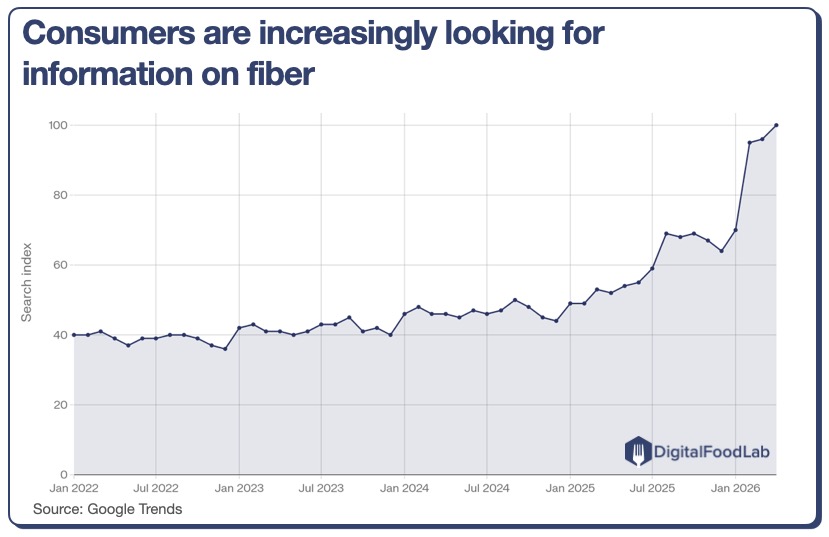
The question now is about the strength of this trend: is it transitory or is it here to stay? In our opinion, it is quite the opposite; we are only at the start of a much larger trend. Indeed:
- Fiber is only a part of something bigger. Fiber is with gut health one of the core sub-goals to achieve healthy ageing (as defined in our insight on this topic).
- Fiber, as proteins, are the “household names” that consumers are seeking as easy answers, but with time, and as they get more educated, they will become more demanding.
- Innovation is booming: alongside the trends curve, there are fiber and gut health innovations that are getting closer to the market, notably around the category we call “next generation ingredients).
2 – The share of undernourished people is increasing again in Africa
This graph is quite depressing. After a decade-long decline in the number of people suffering from famine globally and billions of people being lifted out of poverty, the past decade has seen a reversal of this trend in Africa.
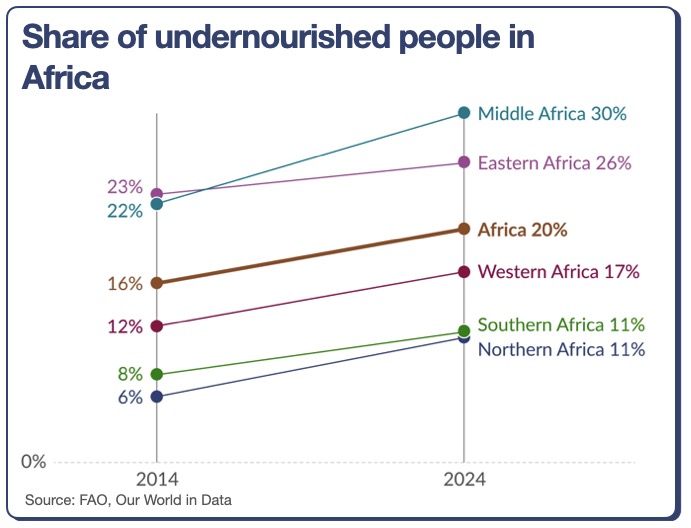
The increase is particularly noticeable in Central Africa, where almost a third of the population lacks sufficient food to maintain a normal, healthy life. This is even more concerning as it is one of the world’s regions with the highest fertility rates, and hence with many children affected suffering from stunting. This, in turn, will hinder these countries’ future development and growth potential.
Unfortunately, the war in Iran and the rise in chemical fertiliser prices will likely worsen this situation, as African farmers will probably be the first to be priced out of the fertiliser market.
3 – Better-tasting products claim a higher share of plant-based products
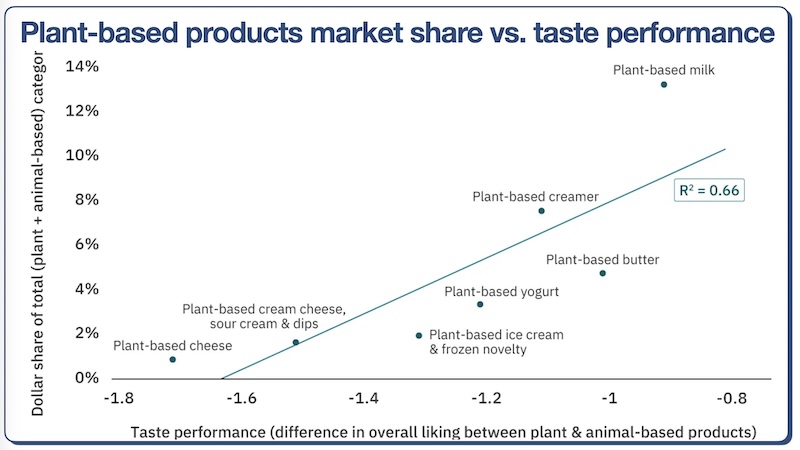
That won’t be a surprise, but better products sell more. For plant-based food, especially, we know that one of the reasons things didn’t go as planned in terms of sales was that many products were just not good (and oftentimes, just tasted awfully bad).
What’s interesting with this study is the fact that there is an apparently direct correlation between the market share an alternative can take on the market (how much it is replacing the “real thing”) when compared to how it performs in terms of taste.
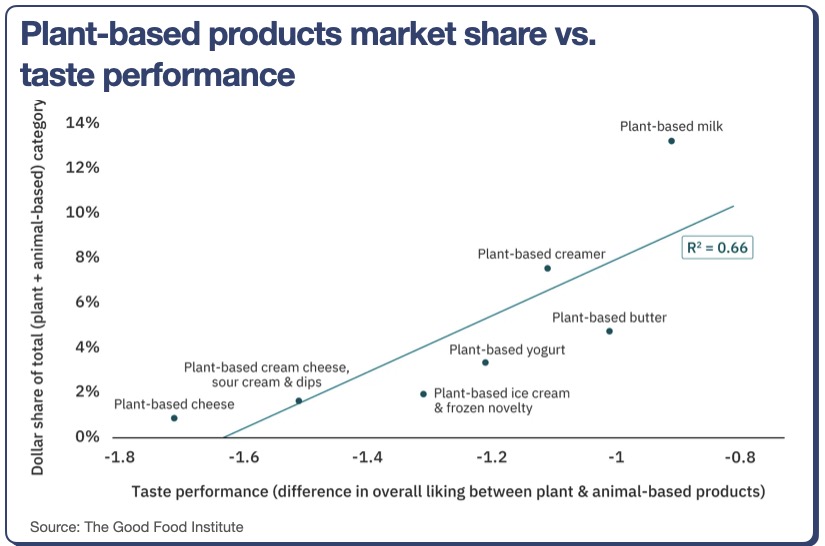
The extremes are quite telling. Plant-based milk is the product most widely acknowledged as tasting closest to milk, while plant-based cheese is the farthest from it (with limited progress in this category over the past decade). This directly translates into market shares.
While price is a very important metric to follow, the main opportunity for the plant-based category remains taste. Closing the gap with animal products in terms of the experience they offer is a good way to gain market share.