15 FoodTech insights and deals to know this week (2026 – week #12)

Published on March 16, 2026

💸 Funding News

🍌🇬🇧 Tropic, a UK startup, raised $105M for its gene-edited banana platform. Commercial products already include non-browning and extended-shelf-life bananas, approved in the US, Canada, the Philippines, Colombia, and Honduras.


🌱🇬🇧 CytoTrait, a UK startup, raised £3M to develop its gene editing platform that targets plant organelles with potential applications in improving plant yields, resistance, or introducing new food traits.


🧬🇫🇷 Living Models, a French startup, raised $7M for its AI foundation models trained on plant biological data. It can predict which genetic variations to test to achieve goals such as increased yields or climate resilience.


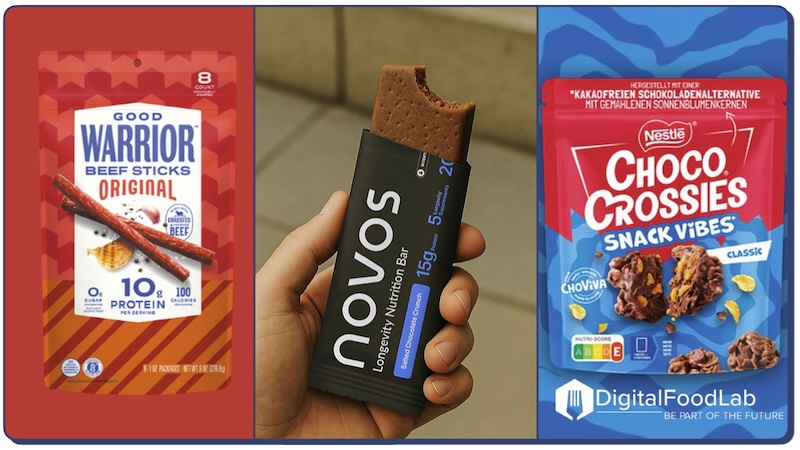
🧬 🇺🇸 NOVOS, a US longevity biotech brand, received a minority investment from Unilever Ventures. NOVOS sells a supplement targeting all 12 hallmarks of ageing. It’s another signal of the growing appetite among leading corporations for the healthy ageing and longevity markets.


🛒🇺🇸 The Open Food Company, a US startup, opened $3M for its “radically transparent” pantry food brand.


🧴🇨🇭 Seprify, a Swiss startup, raised CHF 12.25M, notably from the IKEA group, to scale its cellulose-based replacement for titanium dioxide across food, cosmetics and coatings (often used as a whitening agent).


🥦🇬🇧 UPP (Upcycled Plant Power), a UK startup, raised £1.5M to commercialise its broccoli side-stream protein and fibre ingredients.


🤖🇺🇸 Chowbus, a US startup, raised $81M to scale its restaurant management and delivery platform, with a focus on Asian restaurants.


🛒🇱🇹 Saltz, a Lithuanian, raised €20M for the European expansion of its B2B food marketplace connecting professional kitchens directly with verified food suppliers.


🤖🇺🇸 Anchr, a US-based startup, raised $5.8M for its operating system for food distributors. It adds autonomous AI agents on top of legacy systems to automate order management, procurement, inventory, customer support and finance.


📊 Leading Companies & Macro Trends

🌾🇨🇳 China’s 15th Five-Year Plan (2026–2030) explicitly includes “new protein sources” in its national food security strategy. It develops China’s Big Food Concept of producing food from non-traditional sources, and calls for developing synthetic biology, expanding microbial and cultivated proteins


🧪🇺🇸 South Dakota has become the eighth US state to ban cultivated meat, signing a five-year moratorium. This remains quite strange, as cellular agriculture is nowhere near the stage where it could pose a threat to livestock (notably in a context where demand is increasing rapidly).


🥩🇺🇸 PepsiCo is launching its Good Warrior meat snacks. There is a growing demand for meat and meat products in the US alongside the rise of GLP-1 drugs. This translates into many meat product brands (beef jerky, meat “sticks” like Chomps) growing extremely fast.


🍫🇩🇪 Nestlé just launched its first cocoa-free “chocolate” product, partnering with German startup Planet A Foods and its ChoViva ingredient for a new “Snack Vibes” range launching in Germany in April. Cocoa alternatives remain one of the hottest topics in the agrifood ecosystem, as explained here, even if prices are now normalising.


🥫 🇯🇵 Japan’s iconic vending machine industry is shrinking as inflation, cheaper convenience-store drinks, and labour shortages undermine the economics of operating machines. Operators are cutting networks and shifting strategy as a once-ubiquitous retail channel becomes harder to sustain.

You're in a good company

Join the 60+ clients of Digital FoodLab: leading agrifood companies, retailers, banks, investors, startups, and public organisations.

Use case: project for a global F&B company looking to map its AgTech innovation ecosystem and the best startups to partner with

What we did:

  • Mapping of the AgTech ecosystem: startups, research regulators, and other leading companies.
  • Discussion to select areas to focus on.
  • Analysis of the information to reveal the trends and a model to analyse eventual partners.
  • A workshop to validate the opportunities based on our recommendations.
  • Scouting of relevant partners followed by introductions.

Results:

  • Mapping the different categories of innovations in AgTech that should be considered now to create long-term benefits for the business.
  • Identification of key partners (an incubator and a couple of startups).

Use case: project for a CPG company on the healthy ageing ecosystem

What we did:

  • Education of the board through a couple of workshops to define the perimeter
  • Identification of key opportunities and threats created by long-term evolutions (technologies, business models, behavioural changes).
  • Deep dives on each of the priority categories.
  • Co-construction of a vision on how the company should address these challenges.
  • Identification of partners (startups, incubators, funds) to move forward.

Results:

  • Creating a consensus on which categories to prioritise and how to address them.
  • Implementation of an open innovation strategy through the development of partnerships.

Use case: project for a global CPG company to develop a strategy on the healthy ageing ecosystem

What we do (ongoing mission on a subscription model):

  • Kick-off where we present an overview of the AgriFoodTech ecosystem to select with the client the categories to cover and for each, the level of information required.
  • Monthly newsletter: each month we send a newsletter with the articles that we have gathered ranked by relevance, their summaries, and a layer of analysis.
  • Database: we set up a personalised database that will be filled month after month with the information gathered on the companies identified for the watch.
  • Workshops: twice a year with the client’s innovation team and other “innovation curious” team members, we present an overview of the evolutions, key trends and a dashboard of the topics followed by the watch.

Results:

  • A clear, regular and evolutive tool to follow what is happening in terms of innovation on key topics.
  • A forum (through the workshops) to discuss innovation trends and new opportunities.

Use case: opportunity screening for an ingredient company

What we did:

  • Kick-off to define the perimeter of the ecosystem studied.
  • Mapping of the different trends shaping the innovation ecosystem of the client.
  • Analysis of the trends on DigitalFoodLab’s trend curve and other relevant frameworks.
  • Workshop to discuss DigitalFoodLab’s recommendations on key trends to prioritise

Results:

  • Shared view of the innovation ecosystem for the client with a view of the trends to prioritize.
  • Clear document (personalised trend curve) that can be easily shared internaly to explain the company’s innovation choices and which can be then updated each year.

Use case: scouting for an agriculture coop

What we did:

  • Kick-off to define the perimeter of the client, the goals of the scouting (partnerships) and the criteria on which startups should be evaluated.
  • Set-up scouting: we selected the first batch of 20+ key startups following the criteria of the client.
  • On-going scouting: then we set up a quarterly scouting of about ten startups.
  • For each scouted startup, we created an ID card with key information such as the business and technological maturity, funding, and corporate partnerships. We also added an explanation of why we selected this startup.

Results:

  • An ongoing and evolutive scouting are matching the client's criteria and its capabilities in terms of deal flow.

Use case: working on an acquisition process for a CPG company

What we did:

  • Kick-off to define what the client is seeking, notably in terms of maturity.
  • Workshop with the client based on a mapping of the different innovation ecosystems adjacent to its activities to select some priorities and discuss inspiring examples of startup acquisition stories.
  • Identification of 20+ targets.
  • Workshop to select the most relevant to engage with.
  • DigitalFoodLab worked as a sparing partner during the acquisition process, notably to help design how the acquired startup could be integrated into the overall company’s strategy.

Results:

  • Different results from traditional M&A processes with a focus on the client’s innovation strategy.
  • Identification of a good match for an acquisition.

Use case: market due diligence on sugar alternatives

What we did:

  • Kick-off with the client to discuss its interest on this category, its expectations and existing level of information (notably on the target company).
  • Mapping of the ecosystem to analyse the different existing alternatives and technologies to compare them.
  • Interview (calls) with relevant startups made by our internal biotechnology expert.
  • Recommendation on whether to invest or not.

Results:

  • Clear view of the ecosystem and of the reasons to believe (or not) in each sub-category.
  • Enforceable recommendations based on facts and expertise.