25 FoodTech news to know this week (2026 – week #2)

Published on January 5, 2026

💸 Funding news

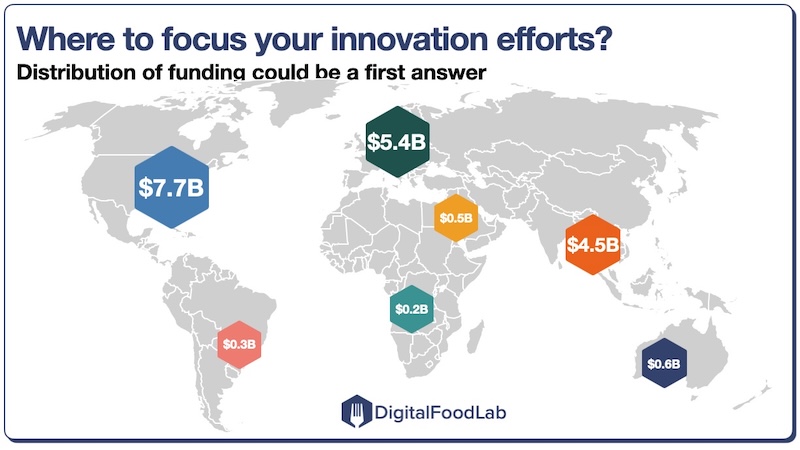
Quite a lot of funding over the past couple of weeks: the signal is not the amounts (which remain quite small) but that, for many startups, announcing new funding is becoming less important and can be announced at a time when few people will care. As seen over and over in 2025, what counts now are proofs of scale, notably through meaningful partnerships with industry leaders.


Mixed bag for the cellular agriculture industry

🇳🇱 🥩 Meatable, a Dutch startup, is shutting down its operations. This follows similar news from Believer Meat, an Israeli startup. Both were among the “first wave” of players in a category which is facing existential doubts.


🇺🇸 🐟 BlueNalu, a US startup, raised $11M to scale the production of its cultivated bluefin tuna and hopes to receive regulatory approval in the US soon.


🇳🇱 🥩 Mosa Meat, a Dutch startup, raised €15 M while claiming a 99.999% cost reduction since its first burger.


Other ingredient news: focus on fermentation

🇸🇪 🧈 Melt & Marble, a Swedish startup, raised $8M for its fat alternative made through precision fermentation.


🇳🇱 🧀 Those Vegan Cowboys, a Dutch startup, raised $6.25 M to scale the production of its caseins (for dairy applications, notably in cheese), made through precision fermentation


🇩🇰 🧬 EvodiaBio, a Danish startup, raised €6M for its fermentation technology enabling the production of volatile aroma molecules sustainably, notably for applications in food and beverages (such as in non alcoholic beers).


Agtech & supply chain infrastructure

🇮🇳 🌾 Arya.ag, an Indian startup, raised over $80 M to scale post-harvest infrastructure and farmer financing


🇦🇺 🧪 MEQ Solutions, an Australian startup, raised $23M (~15M USD) to scale rapid food-testing and biosecurity diagnostics for meat.


🇨🇦 🌾 BinSentry, a North American startup, raised $25M (after a $50M last summer) to scale its AI-powered grain-bin monitoring.


🇫🇷 🚜 Agreenculture, a French startup, raised €6 M for its farming robots.


Consumer, pet food & wellness

🇬🇧 🐱 KatKin, a UK startup, raised $50M to grow its range of fresh cat food across the country. Year after year, pet food remains one of the “healthiest” categories in terms of innovation, with significant untapped potential.


🇺🇸 🌸 Biologica, a US startup, raised $7 M to develop women’s health supplements addressing specific stages of their lives (such as reproductive stage, post-menopause…)


🇺🇸 🧘 NextFoods, a US startup, raised $10 M to expand its functional wellness portfolio of brands (including GoodBelly).


🇺🇸 🍝 Hoboken Farms, a US startup, raised $4 M with celebrity backing to expand better-for-you comfort foods.


🇺🇸 💧 A new California bottled water brand is launching with $6M in capital amid growing safety and contamination concerns in the category.


⭐ Acquisitions, bankruptcies, and partnerships

🇸🇪 🥛 Ikea corporate VC took a majority stake in The Green Dairy, a Swedish plant-based milk producer and invested $8.5M.


🇺🇸 🌱 AeroFarms, a US startup producing microgreens through vertical farming, will cease operations following investor withdrawal.


🇵🇹 🏪 Sensei, a Portuguese startup working on automated stores, launched an autonomous pharmacy store in Lisbon, making it the first of its kind in Europe. After an initial wave of excitement, autonomous stores have largely disappeared due to technical limitations, but as technology advances, they should return gradually over the next decade.


🇫🇮 🤖 Starship Technologies, a robot delivery startup, deployed delivery robots for Christmas in Lapland (the “home” of Father Christmas).


🇺🇸 🍝 Olive Garden, a US chain of restaurants well-known for its very generous portions (it is hard to find items on the menu with less than a thousand Kcal), boosted sales via “lighter portions” menu items. In the new world shaped by GLP-1, portion control could become a key driver of traffic and profitability for restaurants.


📊 Leading companies & macro trends

🇮🇳 🧃 Reliance Industries, a large Indian conglomerate, is using a mix of price incentives and nationalist branding messages to challenge Coca-Cola and Pepsi in India via the Campa Cola brand. It has already gained 7% market share, up from about 2% in 2024. Could this be replicated in other parts of the food industry?


🇨🇭 🍫 Barry Callebaut is reportedly considering splitting its cocoa business from its chocolate manufacturing operations. From an innovation standpoint, this could be beneficial for players offering cocoa alternatives.


🇬🇧 🍺 Alcohol consumption in the UK has fallen to its lowest level on record, driven by a combination of factors including health concerns, ageing, and cost-of-living.


🇬🇧 🦞 The UK will ban live boiling of crustaceans.


🇺🇸 🌾 Global food systems face a productivity reckoning as yields struggle under climate pressure.

You're in a good company

Join the 60+ clients of Digital FoodLab: leading agrifood companies, retailers, banks, investors, startups, and public organisations.

Use case: project for a global F&B company looking to map its AgTech innovation ecosystem and the best startups to partner with

What we did:

  • Mapping of the AgTech ecosystem: startups, research regulators, and other leading companies.
  • Discussion to select areas to focus on.
  • Analysis of the information to reveal the trends and a model to analyse eventual partners.
  • A workshop to validate the opportunities based on our recommendations.
  • Scouting of relevant partners followed by introductions.

Results:

  • Mapping the different categories of innovations in AgTech that should be considered now to create long-term benefits for the business.
  • Identification of key partners (an incubator and a couple of startups).

Use case: project for a CPG company on the healthy ageing ecosystem

What we did:

  • Education of the board through a couple of workshops to define the perimeter
  • Identification of key opportunities and threats created by long-term evolutions (technologies, business models, behavioural changes).
  • Deep dives on each of the priority categories.
  • Co-construction of a vision on how the company should address these challenges.
  • Identification of partners (startups, incubators, funds) to move forward.

Results:

  • Creating a consensus on which categories to prioritise and how to address them.
  • Implementation of an open innovation strategy through the development of partnerships.

Use case: project for a global CPG company to develop a strategy on the healthy ageing ecosystem

What we do (ongoing mission on a subscription model):

  • Kick-off where we present an overview of the AgriFoodTech ecosystem to select with the client the categories to cover and for each, the level of information required.
  • Monthly newsletter: each month we send a newsletter with the articles that we have gathered ranked by relevance, their summaries, and a layer of analysis.
  • Database: we set up a personalised database that will be filled month after month with the information gathered on the companies identified for the watch.
  • Workshops: twice a year with the client’s innovation team and other “innovation curious” team members, we present an overview of the evolutions, key trends and a dashboard of the topics followed by the watch.

Results:

  • A clear, regular and evolutive tool to follow what is happening in terms of innovation on key topics.
  • A forum (through the workshops) to discuss innovation trends and new opportunities.

Use case: opportunity screening for an ingredient company

What we did:

  • Kick-off to define the perimeter of the ecosystem studied.
  • Mapping of the different trends shaping the innovation ecosystem of the client.
  • Analysis of the trends on DigitalFoodLab’s trend curve and other relevant frameworks.
  • Workshop to discuss DigitalFoodLab’s recommendations on key trends to prioritise

Results:

  • Shared view of the innovation ecosystem for the client with a view of the trends to prioritize.
  • Clear document (personalised trend curve) that can be easily shared internaly to explain the company’s innovation choices and which can be then updated each year.

Use case: scouting for an agriculture coop

What we did:

  • Kick-off to define the perimeter of the client, the goals of the scouting (partnerships) and the criteria on which startups should be evaluated.
  • Set-up scouting: we selected the first batch of 20+ key startups following the criteria of the client.
  • On-going scouting: then we set up a quarterly scouting of about ten startups.
  • For each scouted startup, we created an ID card with key information such as the business and technological maturity, funding, and corporate partnerships. We also added an explanation of why we selected this startup.

Results:

  • An ongoing and evolutive scouting are matching the client's criteria and its capabilities in terms of deal flow.

Use case: working on an acquisition process for a CPG company

What we did:

  • Kick-off to define what the client is seeking, notably in terms of maturity.
  • Workshop with the client based on a mapping of the different innovation ecosystems adjacent to its activities to select some priorities and discuss inspiring examples of startup acquisition stories.
  • Identification of 20+ targets.
  • Workshop to select the most relevant to engage with.
  • DigitalFoodLab worked as a sparing partner during the acquisition process, notably to help design how the acquired startup could be integrated into the overall company’s strategy.

Results:

  • Different results from traditional M&A processes with a focus on the client’s innovation strategy.
  • Identification of a good match for an acquisition.

Use case: market due diligence on sugar alternatives

What we did:

  • Kick-off with the client to discuss its interest on this category, its expectations and existing level of information (notably on the target company).
  • Mapping of the ecosystem to analyse the different existing alternatives and technologies to compare them.
  • Interview (calls) with relevant startups made by our internal biotechnology expert.
  • Recommendation on whether to invest or not.

Results:

  • Clear view of the ecosystem and of the reasons to believe (or not) in each sub-category.
  • Enforceable recommendations based on facts and expertise.