20 FoodTech insights and deals to know this week (2026 – week #20)

Published on May 11, 2026

💸 Startup News

☕ 🇺🇸 Green Coffee Company, an American startup, raised $5M from 2,000 investors via equity crowdfunding for its fully integrated coffee business, from coffee cultivation in Colombia to distribution in the US. The funding round was mostly intended as a community-building strategy to convert consumers into shareholders with an active interest in advocating for the brand. This is a strategy that many brands (notably in Europe’s plant-based products sector) are deploying, and it can be a valuable marketing lever.


🍺🇺🇸 Crazy Mountain Brewing, a US startup backed by George Clooney, raised $15M to scale its premium non-alcoholic beer portfolio.


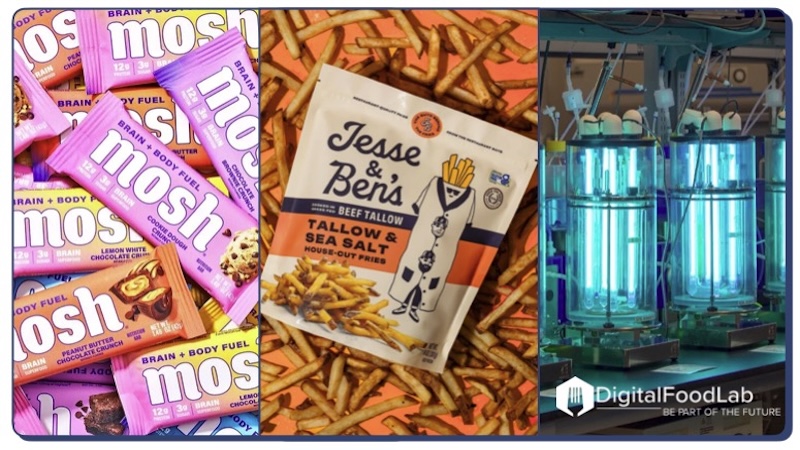
🍟🇺🇸 Jesse & Ben’s, an American startup, closed a $10M for its seed-oil-free frozen french fry brand, made with beef tallow. The anti-seed oil campaign in the US is creating a wave of opportunities for new brands, but it is hard to tell which will survive in the long-term, notably if the “trend” fades away.


💧🇦🇹 Waterdrop, an Austrian startup, raised €11M for its solid hydration microdrink brand.


🧠🇺🇸 MOSH, a US startup, raised $13M for its brain health brand, marketing protein bars enriched with creatine and what it calls its “brain blend” (including functional mushrooms such as Lion’s Mane).


🐔🇬🇧 Meatly, a British cellular agriculture startup focused on pet food, raised £10.4M to build Europe’s largest cultivated meat facility, with a 20,000-litre pilot site in London.


🦠🇩🇪 mbiomics, a German startup, raised an additional €12M for its microbiome therapeutics derived from the human gut microbiota, targeting conditions including cancer, metabolic disease, and inflammatory bowel disease.


🧫 🇺🇸 Biosphere, a US startup, was awarded a $9M US Army contract to develop a bioreactor capable of producing ready-to-eat protein rations from air, water and electricity alone.


🛒🇺🇸 Vori, an American startup, raised $22M for its operating system for independent grocery shops, covering ordering, inventory, analytics and supplier payments. It targets the independent US grocery operators who lack the tech infrastructure of giants like Walmart.


🍽️🇺🇸 Dishio, an American startup, raised $2.5M to build a guest data and CRM platform for restaurants, turning transactional data into personalised marketing and loyalty programs.


🤖🇬🇧 Corvera, a British startup, raised $4.2M for its operating system for CPG supply chains, automating demand planning, inventory, logistics and financial workflows via AI agents that act autonomously.


🌽🇺🇸 Pacific Hybreed, a US startup, raised $1M for its aquaculture hatchery operations to meet growing demand from shellfish farmers in Hawaii.


🥬🇳🇱 vGreens, a Dutch startup, raised €2M for its vertical farming operating system, using computer vision and sensors to optimise yield, energy and water use.


🦠🇮🇱 NanoStruct, an Israeli startup, raised €2.6M for its same-day pathogen detection platform for the food industry.


⭐ Leading companies

🧒🇫🇷 Bel Group has acquired Brainac, a US functional snacking brand for children and families, with a focus on brain health.


🥛🇩🇪 Müller, Germany’s second-largest dairy company, is acquiring Berief Food, one of Germany’s oldest plant-based dairy companies.


🍔🇺🇸 McDonald’s reported Q1 2026 global comparable sales growth of +3.8%, beating all estimates. While consumer spending is “getting a little bit worse,” McDonald’s is leaning further into value to stay ahead of any downturn.


🍺🇧🇪🇩🇰 Carlsberg and AB InBev, two major brewers, reported positive Q1 2026 results, both with volume growth above 5%. Sales were notably boosted by new drinks, including RTD (ready-to-drink) beverages (including cocktails) and non-alcoholic options.


📊 Macro Trends

🥢🇯🇵 What explains Japan’s obesity rate of 4% vs. 42% in the US? It’s not genetics but a constellation of food culture factors: smaller-portion norms, higher food prices, a universal school meal system that teaches children to eat diverse and balanced meals, a deeply embedded culture of eating to 80% full, and built-in daily physical activity.


🛑 🇳🇱 Amsterdam is banning advertising for meat (and fossil fuels). This is the first capital city to implement such a measure for meat, and all fossil fuel-related categories (including airlines).

You're in a good company

Join the 60+ clients of Digital FoodLab: leading agrifood companies, retailers, banks, investors, startups, and public organisations.

Use case: project for a global F&B company looking to map its AgTech innovation ecosystem and the best startups to partner with

What we did:

  • Mapping of the AgTech ecosystem: startups, research regulators, and other leading companies.
  • Discussion to select areas to focus on.
  • Analysis of the information to reveal the trends and a model to analyse eventual partners.
  • A workshop to validate the opportunities based on our recommendations.
  • Scouting of relevant partners followed by introductions.

Results:

  • Mapping the different categories of innovations in AgTech that should be considered now to create long-term benefits for the business.
  • Identification of key partners (an incubator and a couple of startups).

Use case: project for a CPG company on the healthy ageing ecosystem

What we did:

  • Education of the board through a couple of workshops to define the perimeter
  • Identification of key opportunities and threats created by long-term evolutions (technologies, business models, behavioural changes).
  • Deep dives on each of the priority categories.
  • Co-construction of a vision on how the company should address these challenges.
  • Identification of partners (startups, incubators, funds) to move forward.

Results:

  • Creating a consensus on which categories to prioritise and how to address them.
  • Implementation of an open innovation strategy through the development of partnerships.

Use case: project for a global CPG company to develop a strategy on the healthy ageing ecosystem

What we do (ongoing mission on a subscription model):

  • Kick-off where we present an overview of the AgriFoodTech ecosystem to select with the client the categories to cover and for each, the level of information required.
  • Monthly newsletter: each month we send a newsletter with the articles that we have gathered ranked by relevance, their summaries, and a layer of analysis.
  • Database: we set up a personalised database that will be filled month after month with the information gathered on the companies identified for the watch.
  • Workshops: twice a year with the client’s innovation team and other “innovation curious” team members, we present an overview of the evolutions, key trends and a dashboard of the topics followed by the watch.

Results:

  • A clear, regular and evolutive tool to follow what is happening in terms of innovation on key topics.
  • A forum (through the workshops) to discuss innovation trends and new opportunities.

Use case: opportunity screening for an ingredient company

What we did:

  • Kick-off to define the perimeter of the ecosystem studied.
  • Mapping of the different trends shaping the innovation ecosystem of the client.
  • Analysis of the trends on DigitalFoodLab’s trend curve and other relevant frameworks.
  • Workshop to discuss DigitalFoodLab’s recommendations on key trends to prioritise

Results:

  • Shared view of the innovation ecosystem for the client with a view of the trends to prioritize.
  • Clear document (personalised trend curve) that can be easily shared internaly to explain the company’s innovation choices and which can be then updated each year.

Use case: scouting for an agriculture coop

What we did:

  • Kick-off to define the perimeter of the client, the goals of the scouting (partnerships) and the criteria on which startups should be evaluated.
  • Set-up scouting: we selected the first batch of 20+ key startups following the criteria of the client.
  • On-going scouting: then we set up a quarterly scouting of about ten startups.
  • For each scouted startup, we created an ID card with key information such as the business and technological maturity, funding, and corporate partnerships. We also added an explanation of why we selected this startup.

Results:

  • An ongoing and evolutive scouting are matching the client's criteria and its capabilities in terms of deal flow.

Use case: working on an acquisition process for a CPG company

What we did:

  • Kick-off to define what the client is seeking, notably in terms of maturity.
  • Workshop with the client based on a mapping of the different innovation ecosystems adjacent to its activities to select some priorities and discuss inspiring examples of startup acquisition stories.
  • Identification of 20+ targets.
  • Workshop to select the most relevant to engage with.
  • DigitalFoodLab worked as a sparing partner during the acquisition process, notably to help design how the acquired startup could be integrated into the overall company’s strategy.

Results:

  • Different results from traditional M&A processes with a focus on the client’s innovation strategy.
  • Identification of a good match for an acquisition.

Use case: market due diligence on sugar alternatives

What we did:

  • Kick-off with the client to discuss its interest on this category, its expectations and existing level of information (notably on the target company).
  • Mapping of the ecosystem to analyse the different existing alternatives and technologies to compare them.
  • Interview (calls) with relevant startups made by our internal biotechnology expert.
  • Recommendation on whether to invest or not.

Results:

  • Clear view of the ecosystem and of the reasons to believe (or not) in each sub-category.
  • Enforceable recommendations based on facts and expertise.