🏛️🥗 The politics of alternative proteins

Published on January 31, 2024

These days, it seems that things are moving faster on the regulatory front than on the business side of things for alternative proteins. While some startups have received regulatory approval on key markets, we observe many red flags. Many politicians are trying to pre-emptively ban some technologies from appearing on their market.

Let’s start with startups receiving regulatory approval:

  • Aleph Farms recently had its cultivated beef approved in Israel (a first for the country and a global first for beef).
  • Last Summer, two startups (Good Meat and Upside Foods) received regulatory approval for their cultivated chicken in the US. Good Meat was already approved in Singapore.
  • Several precision fermentation startups working on whey protein received approval in the US (most recently, Imagindairy).
  • Some have already launched products under their brands or in partnership with leading CPG companies. That’s notably the case of Solar Foods’ protein (made through fermentation of captured-CO2) being used by Fazer (a Finnish confectionery company) for a new chocolate bar in Singapore.

As you can see, this is still quite limited. Others are facing delays or had their applications refused. Further, very few of these products are actually widely available. Most can only be found at upscale restaurants, where they are presented as rarities.

Observing this, we can’t say that the current state of the alternative protein industry is a threat to the traditional meat and dairy players. Many years will pass before alternative proteins can absorb the global growth in demand for meat and dairy products. However, in today’s tense political context, we observe a surge in the number of attempts to ban or limit the growth of alternative proteins, primarily by :

  • Limiting the growth potential of plant-based alternatives by regulating namings
  • Pre-emptively banning more advanced technologies such as cellular agriculture and precision fermentation.

In November, Italy banned cultivated meat. This decision didn’t make much sense, considering it should have been made at the EU level. Several US states are considering similar laws. Now, Italy and France are leading a coalition of 13 countries that want the EU Commission to launch a discussion about cellular agriculture at the EU level.

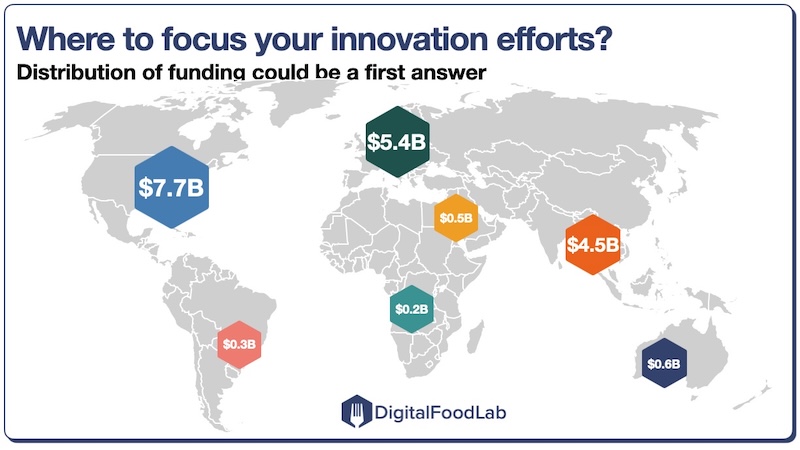
But things are not that bad. In the meantime, there has been a steep increase in public funding for research and infrastructure building around alternative proteins. That’s notably the case in the US, the EU, multiple EU states, and the UK.

All this gives a complicated image of what is happening. In our view, it is possible to divide countries into four groups:

  1. The traditionalists / pro-meat countries: These are countries that are clearly opposed to the development of any threat to their meat and dairy industry (lobby). Italy is an obvious example. We could add some of the countries that are part of the coalition mentioned above and many of the countries that are trying to ban the use of meaty (and cheesy) names for plant-based products, such as South Africa or Turkey.
  2. The hypocrites: countries which are both showing signs of support for alternative proteins and are also acting against the development of the industry. France, to my great disappointment, is a good example: you can find many alternative proteins with substantial public support (through public funding and grants), and in the meantime, both naming regulations for plant-based and multiple public figures seeking ways to ban cultivated meat. At the end of the day, all the money poured into these startups will only lead them to build their facilities and grow in another location.
  3. The careful supporters/realists are countries that have to manage a strong meat and dairy industry but seek to become leaders of tomorrow’s bioeconomy. The number and importance of the countries in this category can only be a source of optimism. The US, UK, China, and some EU countries such as Denmark or The Netherlands can be placed here.
  4. The enthusiasts are countries that are heavily betting on alternative proteins to build resilience in their food supply chain and eventually transform it into a source of influence abroad. Israel, Singapore, and some Gulf countries looking to host production facilities are clearly in this group.

Companies must consider much more than “mere” regulation regarding the right to sell alternative protein products. Indeed, the politics of some countries may evolve and make production there impossible while others are creating the conditions (with incentives) to produce in their countries without intending to let their consumers access the product. Finally, some startups are blurring the lines and announcing things that are not factually true. In conclusion, in this mess, investors, entrepreneurs, and leading companies need to tread carefully and plan well ahead.

You're in a good company

Join the 60+ clients of Digital FoodLab: leading agrifood companies, retailers, banks, investors, startups, and public organisations.

Use case: project for a global F&B company looking to map its AgTech innovation ecosystem and the best startups to partner with

What we did:

  • Mapping of the AgTech ecosystem: startups, research regulators, and other leading companies.
  • Discussion to select areas to focus on.
  • Analysis of the information to reveal the trends and a model to analyse eventual partners.
  • A workshop to validate the opportunities based on our recommendations.
  • Scouting of relevant partners followed by introductions.

Results:

  • Mapping the different categories of innovations in AgTech that should be considered now to create long-term benefits for the business.
  • Identification of key partners (an incubator and a couple of startups).

Use case: project for a CPG company on the healthy ageing ecosystem

What we did:

  • Education of the board through a couple of workshops to define the perimeter
  • Identification of key opportunities and threats created by long-term evolutions (technologies, business models, behavioural changes).
  • Deep dives on each of the priority categories.
  • Co-construction of a vision on how the company should address these challenges.
  • Identification of partners (startups, incubators, funds) to move forward.

Results:

  • Creating a consensus on which categories to prioritise and how to address them.
  • Implementation of an open innovation strategy through the development of partnerships.

Use case: project for a global CPG company to develop a strategy on the healthy ageing ecosystem

What we do (ongoing mission on a subscription model):

  • Kick-off where we present an overview of the AgriFoodTech ecosystem to select with the client the categories to cover and for each, the level of information required.
  • Monthly newsletter: each month we send a newsletter with the articles that we have gathered ranked by relevance, their summaries, and a layer of analysis.
  • Database: we set up a personalised database that will be filled month after month with the information gathered on the companies identified for the watch.
  • Workshops: twice a year with the client’s innovation team and other “innovation curious” team members, we present an overview of the evolutions, key trends and a dashboard of the topics followed by the watch.

Results:

  • A clear, regular and evolutive tool to follow what is happening in terms of innovation on key topics.
  • A forum (through the workshops) to discuss innovation trends and new opportunities.

Use case: opportunity screening for an ingredient company

What we did:

  • Kick-off to define the perimeter of the ecosystem studied.
  • Mapping of the different trends shaping the innovation ecosystem of the client.
  • Analysis of the trends on DigitalFoodLab’s trend curve and other relevant frameworks.
  • Workshop to discuss DigitalFoodLab’s recommendations on key trends to prioritise

Results:

  • Shared view of the innovation ecosystem for the client with a view of the trends to prioritize.
  • Clear document (personalised trend curve) that can be easily shared internaly to explain the company’s innovation choices and which can be then updated each year.

Use case: scouting for an agriculture coop

What we did:

  • Kick-off to define the perimeter of the client, the goals of the scouting (partnerships) and the criteria on which startups should be evaluated.
  • Set-up scouting: we selected the first batch of 20+ key startups following the criteria of the client.
  • On-going scouting: then we set up a quarterly scouting of about ten startups.
  • For each scouted startup, we created an ID card with key information such as the business and technological maturity, funding, and corporate partnerships. We also added an explanation of why we selected this startup.

Results:

  • An ongoing and evolutive scouting are matching the client's criteria and its capabilities in terms of deal flow.

Use case: working on an acquisition process for a CPG company

What we did:

  • Kick-off to define what the client is seeking, notably in terms of maturity.
  • Workshop with the client based on a mapping of the different innovation ecosystems adjacent to its activities to select some priorities and discuss inspiring examples of startup acquisition stories.
  • Identification of 20+ targets.
  • Workshop to select the most relevant to engage with.
  • DigitalFoodLab worked as a sparing partner during the acquisition process, notably to help design how the acquired startup could be integrated into the overall company’s strategy.

Results:

  • Different results from traditional M&A processes with a focus on the client’s innovation strategy.
  • Identification of a good match for an acquisition.

Use case: market due diligence on sugar alternatives

What we did:

  • Kick-off with the client to discuss its interest on this category, its expectations and existing level of information (notably on the target company).
  • Mapping of the ecosystem to analyse the different existing alternatives and technologies to compare them.
  • Interview (calls) with relevant startups made by our internal biotechnology expert.
  • Recommendation on whether to invest or not.

Results:

  • Clear view of the ecosystem and of the reasons to believe (or not) in each sub-category.
  • Enforceable recommendations based on facts and expertise.