GLP-1 goes mainstream: the food shock ahead

Published on November 25, 2025

We’ve been talking a lot about GLP-1 this year. This class of weight-loss drugs is having visible effects not only on the faces and waistlines of many influencers, but it is also impacting the sales of many food companies. However, while adoption is rising, what if it’s only the beginning? What if the real mass adoption of these drugs was in front of us? Then what could be the consequences, and what are the potential answers for the food industry?

1- Why 2026 could be the year where GLP-1 becomes mainstream?

We recently shared data showing that about 12% of the US population has already tried these drugs, with a few percentages of them using them regularly. While it is complicated to make any long-term projections, we could be in a situation where about 10% of the population uses them by 2030. Three new elements should help this movement:

  • Reduced price in the US: while the main players are currently pricing their product at above $1000 per month, a deal signed between them and Donald Trump will make them available at a much lower price, starting at $149/month. This, and increased competition between pharma companies will enable millions of consumers to potentially access the first generation of drugs. It also encourages these companies to keep innovating on new, more differentiating drugs that they will be able to sell at higher prices.
  • New formats: oral pills are arriving sonner than expected. Phase 3 trial results have been recently published for the first pills and they are quite promising. Switching to pills will be a game changer for many users that are not confortable using weekly injectables.
  • 2 billion more consumers: in key developing markets including India, China, and Brazil, semaglutide patents will expire in 2026. Clinical trials for generics are already underway, with a large part of them already focused on pills rather than injectable. In these countries, with a fast-rising rate of obesity (more than 10% of Chinese are already obese), a sudden price drop could open up the market. Indeed, the price could drop as low as $30/month, making it affordable to tens of millions of new users.

Alongside this list, there will be the entrance of new high-end drugs with more potent effects (up to 30% of weight loss compared to about 20% for current ones), and monthly injectables.

2- What does it mean for the future of food?

If GLP-1 become massively adopted due to this increased competition on both corners of the market, from low-cost generics to high-end, more potent drugs, the consequences could be quite dramatic for the food industry as a whole.

One obvious impact of consumers using GLP-1 is that they eat and spend less:

  • grocery spending declines of about 6% for the general population and of 9% for the high-end consumers, which are the ones that brands tend to focus on.
  • sales of snacks and similar products are even more affected with a 11% decline.
  • some categories, notably protein-rich and/or gut-friendly products are doing quite well with increases of 5 to 10% depending on the sources.

While most food companies do not explicitly mention GLP-1’s impact on their sales, snack-focused leaders are currently facing strong headwinds, with many announcing layoffs and restructuring.

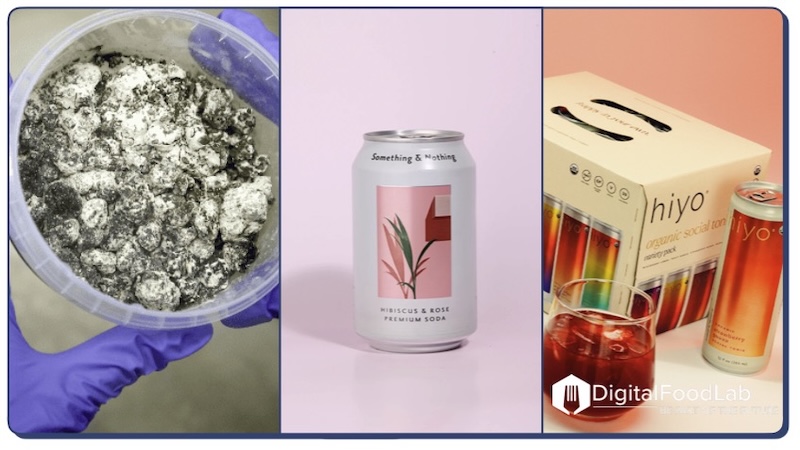
Example-of-GLP-1-boosers-and-biomimetcis

3 – Solutions through innovation?

A massive adoption of GLP-1 drugs in leading markets and growth areas (notably Asian markets) could be a significant blow to many food companies. Many are trying to address this by expanding their range of protein-rich products and creating GLP-1 companion products, but it probably won’t be enough.

To answer this paradigm shift, solutions include:

  • Portfolio modification, notably through acquisitions of health-focused brands (such as Pepsico’s acquisitions of Siete Foods and Poppi earlier this year)
  • GLP-1 companions: development of products aimed at reducing the after effects of the drug through muscle preservation, gut-health… and also at providing a natural booster effect to the drug.
  • Healthy ageing focus: a broader focus on metabolic health rather than just “weight loss” through a combination of “better-for-you” ingredients and eventually of molecules with a positive effect on health.
  • Biomimetics: food-grade molecules created to replicate the effect of GLP-1 drugs. They are only a handful of known companies active on that space, but the excitement around them is a testimony of the appetite of agrifood companies for solutions to the rising challenge.

This is a complex moment to navigate for food companies. On one hand, you have this rising wave of consumers focused on their health (or at least their weight, as their food consumption often doesn’t become ideal as soon as they take GLP-1 drugs). And in the meantime, there is also a growing segment of consumers seeking more indulgent foods (many of whom prefer insurgent, newly established brands for their processed snacks rather than legacy ones).

The question for leading companies is then: where do they want to play and can they afford to be in both markets at the same time? For now, it seems that by not choosing and by reducing their innovation efforts, many are risking being in neither.

You're in a good company

Join the 60+ clients of Digital FoodLab: leading agrifood companies, retailers, banks, investors, startups, and public organisations.

Use case: project for a global F&B company looking to map its AgTech innovation ecosystem and the best startups to partner with

What we did:

  • Mapping of the AgTech ecosystem: startups, research regulators, and other leading companies.
  • Discussion to select areas to focus on.
  • Analysis of the information to reveal the trends and a model to analyse eventual partners.
  • A workshop to validate the opportunities based on our recommendations.
  • Scouting of relevant partners followed by introductions.

Results:

  • Mapping the different categories of innovations in AgTech that should be considered now to create long-term benefits for the business.
  • Identification of key partners (an incubator and a couple of startups).

Use case: project for a CPG company on the healthy ageing ecosystem

What we did:

  • Education of the board through a couple of workshops to define the perimeter
  • Identification of key opportunities and threats created by long-term evolutions (technologies, business models, behavioural changes).
  • Deep dives on each of the priority categories.
  • Co-construction of a vision on how the company should address these challenges.
  • Identification of partners (startups, incubators, funds) to move forward.

Results:

  • Creating a consensus on which categories to prioritise and how to address them.
  • Implementation of an open innovation strategy through the development of partnerships.

Use case: project for a global CPG company to develop a strategy on the healthy ageing ecosystem

What we do (ongoing mission on a subscription model):

  • Kick-off where we present an overview of the AgriFoodTech ecosystem to select with the client the categories to cover and for each, the level of information required.
  • Monthly newsletter: each month we send a newsletter with the articles that we have gathered ranked by relevance, their summaries, and a layer of analysis.
  • Database: we set up a personalised database that will be filled month after month with the information gathered on the companies identified for the watch.
  • Workshops: twice a year with the client’s innovation team and other “innovation curious” team members, we present an overview of the evolutions, key trends and a dashboard of the topics followed by the watch.

Results:

  • A clear, regular and evolutive tool to follow what is happening in terms of innovation on key topics.
  • A forum (through the workshops) to discuss innovation trends and new opportunities.

Use case: opportunity screening for an ingredient company

What we did:

  • Kick-off to define the perimeter of the ecosystem studied.
  • Mapping of the different trends shaping the innovation ecosystem of the client.
  • Analysis of the trends on DigitalFoodLab’s trend curve and other relevant frameworks.
  • Workshop to discuss DigitalFoodLab’s recommendations on key trends to prioritise

Results:

  • Shared view of the innovation ecosystem for the client with a view of the trends to prioritize.
  • Clear document (personalised trend curve) that can be easily shared internaly to explain the company’s innovation choices and which can be then updated each year.

Use case: scouting for an agriculture coop

What we did:

  • Kick-off to define the perimeter of the client, the goals of the scouting (partnerships) and the criteria on which startups should be evaluated.
  • Set-up scouting: we selected the first batch of 20+ key startups following the criteria of the client.
  • On-going scouting: then we set up a quarterly scouting of about ten startups.
  • For each scouted startup, we created an ID card with key information such as the business and technological maturity, funding, and corporate partnerships. We also added an explanation of why we selected this startup.

Results:

  • An ongoing and evolutive scouting are matching the client's criteria and its capabilities in terms of deal flow.

Use case: working on an acquisition process for a CPG company

What we did:

  • Kick-off to define what the client is seeking, notably in terms of maturity.
  • Workshop with the client based on a mapping of the different innovation ecosystems adjacent to its activities to select some priorities and discuss inspiring examples of startup acquisition stories.
  • Identification of 20+ targets.
  • Workshop to select the most relevant to engage with.
  • DigitalFoodLab worked as a sparing partner during the acquisition process, notably to help design how the acquired startup could be integrated into the overall company’s strategy.

Results:

  • Different results from traditional M&A processes with a focus on the client’s innovation strategy.
  • Identification of a good match for an acquisition.

Use case: market due diligence on sugar alternatives

What we did:

  • Kick-off with the client to discuss its interest on this category, its expectations and existing level of information (notably on the target company).
  • Mapping of the ecosystem to analyse the different existing alternatives and technologies to compare them.
  • Interview (calls) with relevant startups made by our internal biotechnology expert.
  • Recommendation on whether to invest or not.

Results:

  • Clear view of the ecosystem and of the reasons to believe (or not) in each sub-category.
  • Enforceable recommendations based on facts and expertise.