Global FoodTech investments saw a dramatic decline in Q1 2025, reaching just $2.2B — the lowest quarterly figure recorded in years. This marks a sharp acceleration of the downward trend we observed throughout 2024.

As shown in the chart above, funding has been in continuous decline since its peak in 2021. After stabilisations in 2023 and 2024, we were observing the first signs of a bounce back in funding in North America and Asia. But the first quarter of 2025 shows a different direction, with yet another phase of smaller rounds, fewer deals, and tougher competition for capital.
How to explain this decline?
As explained in last week’s insight – the plateau we are on since the start of 2022 can be explained by a mix of structural reasons (VC funding unsuited to long-term innovation in food, long time to adopt disruptive innovation, etc.) and contextual ones. This more recent decline seems to be 100% contextual and linked to the current economic uncertainties, notably on tariffs and their impact on the overall agrifood industries. If big players have to adapt, the time and money they’ll have to spend on innovation could shrink considerably in the short term (and hence fewer acquisitions, fewer partnerships and projects). Then, until things get clearer, we can expect a further decline.
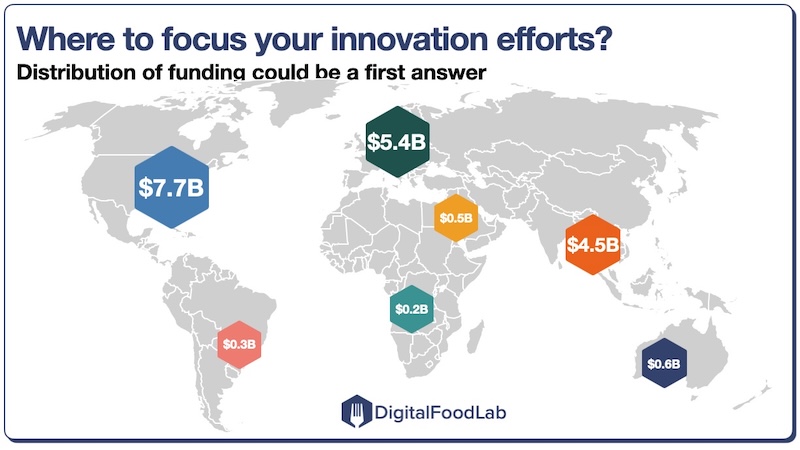
Where is the money going? Despite the overall slowdown, investment distribution offers important signals when compared to previous years (as you can see in our last report on global funding):
- North America retains the main share with 50% of all FoodTech funding, confirming the positive sentiment that I just shared above.
- Europe and Asia each accounted for about 20%, 5 to 10 points below where they stood in the past couple of years, showing that the decline is very noticeable there.
Meanwhile, South America, Oceania, and the Middle East are comparatively performing quite well (the key word being comparatively).

Our key takeaways:
- Flight to quality: Investors are becoming extremely selective. Only mature startups or projects with clear commercial traction can raise significant rounds.
- Structural headwinds: High interest rates, lower VC fundraising activity, and a slower exit environment will maintain a cap on the number of deals.
- America first: North America remains clearly dominant. We will see how Europe’s and Asia’s ecosystems will keep up and if they are resilient enough.
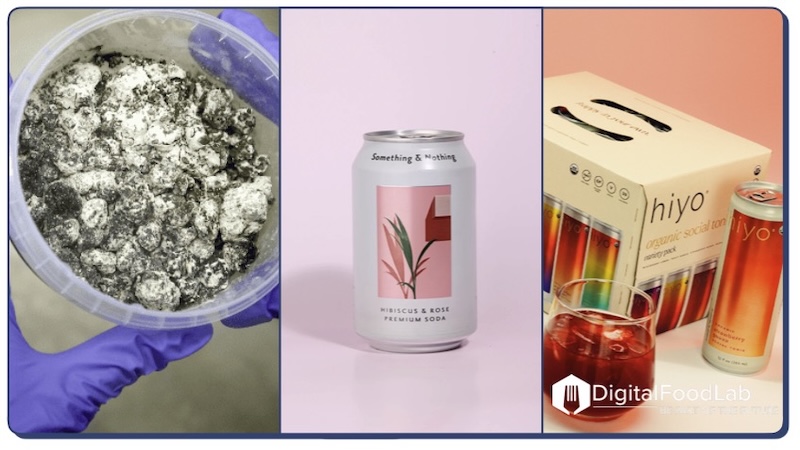
- Niches thrive: some sub-categories are still doing well, and in some instances, exceptionally well. This is noticeably the case of everything that answers an existing or potential uncertainty, such as alternatives to goods whose supply chain has been disrupted by an environmental shock (cacao, eggs, coffee…).
While challenging, we believe that this environment will ultimately benefit the agrifood innovation ecosystem by making it more resilient. As uncertainties won’t disappear, you have to consider how to turn them into an advantage. Also, anticipating shocks and finding innovative answers should be a top priority for any large agrifood business. If that’s your case, let’s discuss how DigitalFoodLab can help.