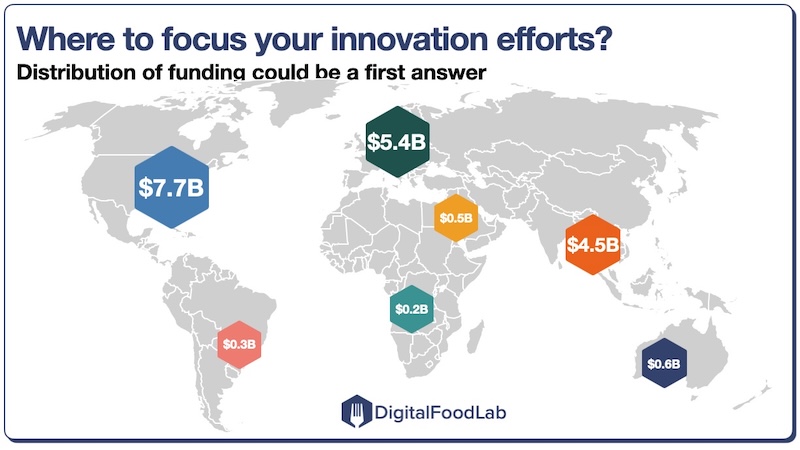
Our latest report shows that while total FoodTech investment remained stable in 2024 compared to 2023 in the overall FoodTech ecosystem (both in Europe and globally), major shifts are reshaping the ecosystem beneath the surface.
📕 And if you haven’t yet, you can download the full 70-page European FoodTech report here.
As you can see on the graph below, the distribution of funding shows a steep decline for seed and series A funding: -25% less money for seed startups and 15% for series A startups (without taking inflation into account). If the same amount of money were invested in the AgriFoodTech ecosystem, it is mostly because more money was put into mature startups.

This is confirmed by this second graph, which shows the number of significant deals registered in our database over the past four years. First, we observe that 2024 was again a year of decline, especially for these early-stage deals.

While this data comes from our European FoodTech report, we’ll share our latest data on the global food tech ecosystem’s first quarter of 2024 next week. It confirms these insights and, unfortunately, even amplifies them.
In a word, there is less money, but there are also fewer startups raising funds. From what we observe, there are at least three factors contributing to this decline:
1 – Contextual risks: a reduced appetite from investors due to their own inability to raise funds in a context of high inflation and now geopolitical risks.
2 – Structural challenges linked to the structure of VC funding in AgriFoodTech and the very limited number of successful exits discourage investments
3 – Decrease in the number of entrepreneurs willing to bet their future on AgriFood innovations.
Now, are these three elements solvable? The first one is contextual and involves elements beyond our ecosystem’s reach. The need for a food system with better outcomes for our health and planet is growing with each passing day, so we shouldn’t be too concerned that people will want to allocate increasing amounts of money to solve these challenges if they can be linked to viable investments.
The second point, about the lack of exits, is a bit trickier. Some of it is linked to inflated valuations during the post-COVID era, where startups received unrealistically high valuations, making them “unsellable” now. Another part, notably for startups betting on the more advanced technologies, is due to what I would call “unreasonable timeline expectations” linked to the way VC funds are structured. Investing in biotech-like technologies and hoping for an exit in a 5 to 7-year timeframe (which is typical for venture capital) is probably unreasonable. Here, the solutions are not yet clear. The emergence of more government-backed research on alternative proteins, new materials and healthy ingredients, combined with the growing maturity of some technologies, will probably help in the medium term.
Finally, the decrease in the number of AgriFoodTech entrepreneurs, which could look like the worst element, doesn’t seem too worrying to me. While there is a decrease in quantity, we don’t really observe a decline in the number of “interesting” startups. When FoodTech was “hot”, notably in 2021 and 2022, we saw too many unrealistic and unviable projects. Innovation requires a certain level of craziness, but it was probably too much. Also, I am pretty sure that a return to growth in funding, combined with successful acquisitions and IPOs, will reverse the trend.
Despite the current slowdown, we remain deeply optimistic. AgriFoodTech will grow, in Europe and globally, both in terms of funding and in relevance. However, we are not yet over the period of funding decline and consolidation. The current uncertainties linked to tariffs and geopolitical tensions will make investors doubt even more, which will signify the end for many startups in the coming months.
At DigitalFoodLab, we believe periods of consolidation are when the next generation of game-changing startups are born. Even in this gloomy context, we are surprised daily by the amount of great innovation coming out of R&D, entrepreneurs and leading companies. Supporting this innovation is more important than ever, notably for agrifood leaders, and we are here to guide you through it.