Last week, I shared the first three signals from my Fi Europe keynote on what the food industry should watch in 2027. All three pointed to the same story: the relationship with the consumer is slipping away from those who used to own it.
This week, let’s move upstream to focus on a question that we are constantly asked by our corporate clients, journalists and even entrepreneurs themselves: who will pay first for innovation?
This question reflects a shift. For years, many AgriFoodTech startups could grow without being profitable at a small scale, because they promised an environmental benefit that is no longer enough. Potential clients now want innovations to provide either an economic benefit or a health one. This evolution was brutal, but among players that survived, many are now ready for the real world and are wondering who will be their first client.
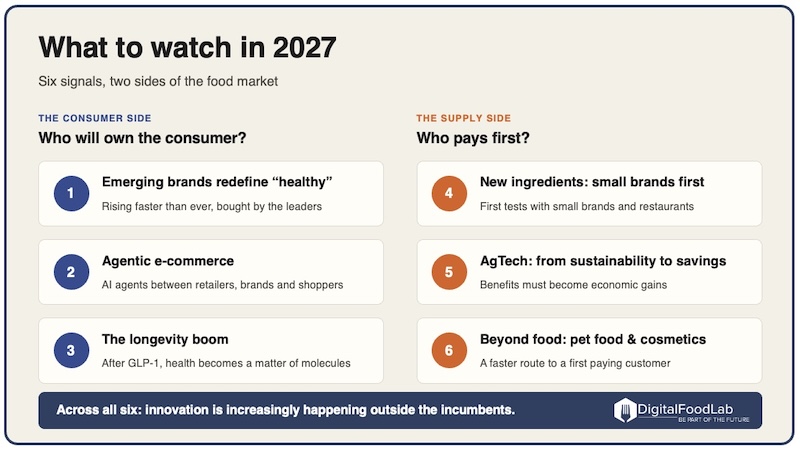
1 – New ingredients face their first commercial tests through small brands & restaurants
As regulation is becoming less of an issue (at least in the US, as we have shown here) for alternative protein technologies, the next barriers are the ability to scale profitably and to meet real-world consumer demands. Things are moving forward on these fronts, with:
Multiple industrialisation deals: in 2026, we observed a wave of industrial and commercial partnerships between leading companies and startups (such as the deals between ADM and Every Co, Ajinomoto and Standing Ovation, or TurtleTree and Novonesis).
Products are finally available to consumers with a succession of recent examples, including:
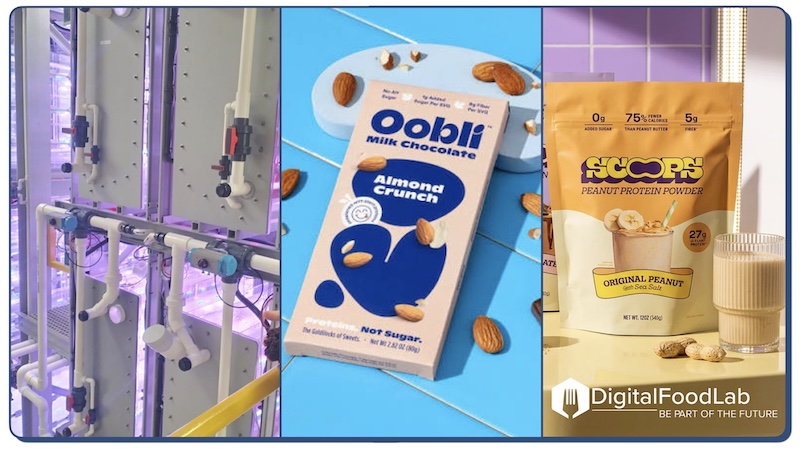
- Solar Foods (biomass fermentation process transforming captured CO2 into a source of protein) is partnering with Ambrosia, a sports nutrition company, on a protein powder
- Onego Bio announced a supply partnership with Zen Waffles for its egg proteins made with precision fermentation.
- Plantible, which produces protein from duckweed, is partnering with two wellness brands
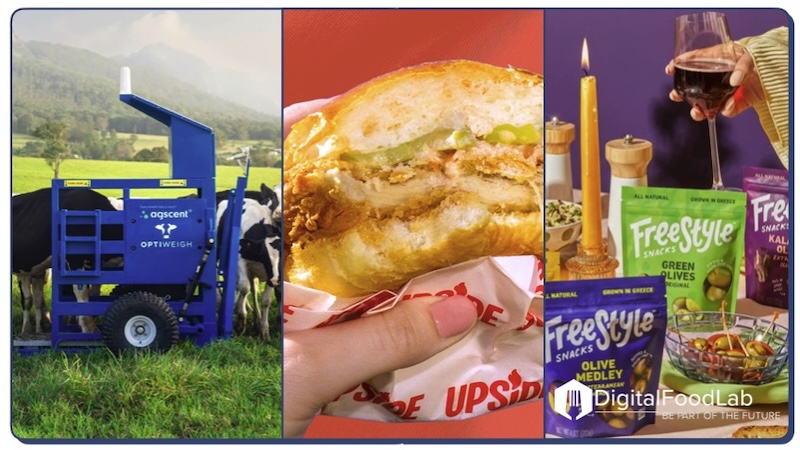
- Upside Foods’ cultivated chicken is now available in several California restaurants.
These launches come after a few years, when it was really hard to get your hands on a consumer product made with innovative ingredients from startups. After an initial wave of experiments between 2020 and 2022 driven by large brands (including Nestlé, Bel, General Mills, and Unilever), most of the products were discontinued. The second key point is the type of partners: now innovative ingredients are being used by small and agile brands instead of large players.
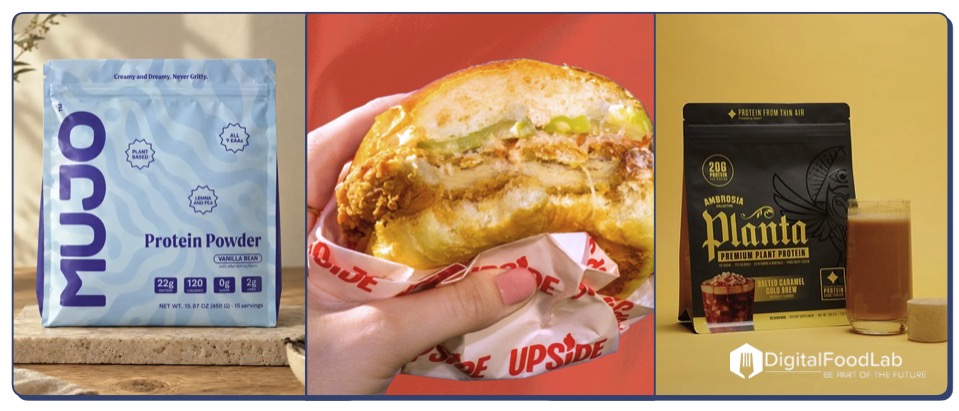
What to watch: we will focus on how and if these partnerships translate into products and meaningful sales. Beyond sales, another key point will be consumer reaction to these innovations and how they can be successfully marketed to them.
2 – AgTech: how to reframe sustainability benefits as economic gains?
Upstream, many players are reaching the pre-commercialisation stage. This is notably the case for bioinputs and methane-reduction solutions, which now face questions about their path from trials to commercial deployment.
As with ingredients, many AgTech players such as Pivot Bio (nitrogen-fixing microbes) have shifted their focus from sustainability towards providing a hedge against volatile fertiliser markets.
What to watch: in the current context of diminished appetite for sustainability, will we see paid deployments beyond pilots? And if not, how far will these ecosystems consolidate?
3 – Beyond food: pet food and cosmetics as the first buyers?
Many startups that struggle to sell to the food industry are finding their first customers next door, in pet food and cosmetics (with the rise of beauty from within). These markets are often seen as less price-sensitive (something entrepreneurs often discover to be wrong) and more open to innovation. Above all, they offer a faster route to a first paying customer.
Pet food benefits from lighter regulation. A good example can be found in Europe: the first cultivated meat on sale was for dogs. Also, as our recent analysis of pet food innovation showed, “pet parents” are willing to pay a premium for healthy solutions.
Cosmetics offers similar advantages combined with a willingness to differentiate through innovation and a strong drive towards sustainability. Players that have moved into cosmetics include Melt&Marble (precision fermentation for fats) and C16 Biosciences (palm oil alternatives).
What to watch: whether these shifts towards adjacent industries multiply, and, more importantly, whether they succeed, with meaningful partnerships and product launches.
Who pays first? Rarely the incumbents
Across the six signals identified in last week’s edition and today’s, two patterns stand out:
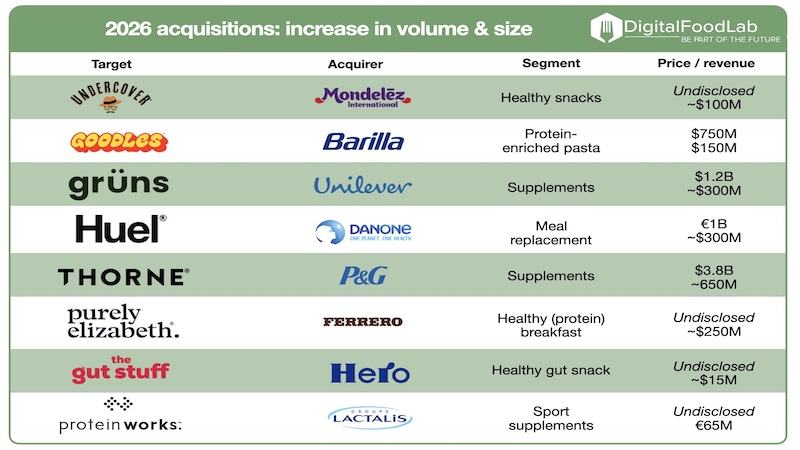
1 – Incumbents remain the main market drivers, but innovation is increasingly happening outside them: in brands, which leads to massive acquisitions, and in innovative ingredients being launched to the market by small players.
2 – The rhythm of innovation is increasing: brands emerge faster, and many technologies are now close to the market.
For established companies, this is less a threat than a window of opportunity. This is where much of our work with clients now sits. We help them decide which opportunities to prioritise, how to leverage them, and whom to work with. If this is on your agenda for 2027, reply to this email and let’s talk.