💸 Funding News
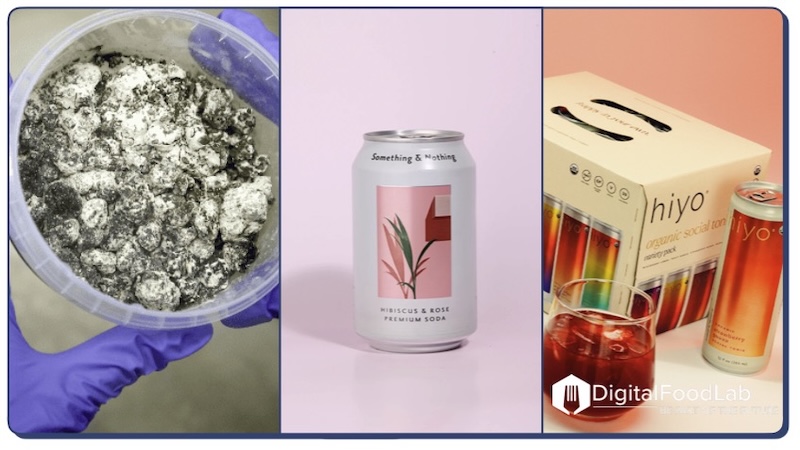
🥤🇬🇧 Something & Nothing, a UK startup, raised $6.4M to expand its premium soda brand in the US. Its positioning relies on distinctive flavours and design, showing that new beverage brands can still attract investment beyond value propositions around functional health claims.
🍹🇺🇸 Hiyo, a US startup, raised $20.8M for its non-alcoholic social tonics, formulated with adaptogens, nootropics and botanicals.
🐄🇺🇸 ArkeaBio, a US startup, raised $15M for its vaccine to reduce livestock methane emissions. It is concentrating on a first product targeting a 10–15% methane reduction (much less than what other products are claiming), with commercialisation starting in 2028.
♻️🇨🇭 Cotierra, a Swiss startup, raised $3M, notably from Paulig’s venture arm PINC, for its decentralised biochar technology. It combines reactors and monitoring software to turn agricultural residues into biochar near farms, aiming to improve soils and store carbon.
🦠🇧🇪 Zymofix, a Belgian startup, secured Series A funding to help finance a €6M microbial production facility. It manufactures microorganisms for agriculture input companies using solid-state fermentation.
🌱🇫🇷 Amoéba, a French biotech startup, raised €10M to support the commercial rollout of its biological crop protection products derived from amoebas.
🌧️🇺🇸 Rainmaker, a US startup, raised $100M to develop its drone-based cloud-seeding technology, designed to increase precipitation from suitable clouds. The funding will expand research and measurement capabilities, with potential applications in agricultural water supply alongside other uses.
🚜🇮🇳 Balwaan Krishi, an Indian company, raised $10.4M for its affordable agricultural machinery business.
🤖🇺🇸 Presto, a US startup, raised $10M for its voice AI technology for restaurant drive-thrus.
🦠🇺🇸 Tiny Health, a US startup, raised $33M for its microbiome testing and personalised guidance platform. Initially focused on babies and families, it is expanding into healthy ageing and scaling its B2B offering for healthcare practitioners and consumer health companies.
🐖🇺🇸 DARO, a US startup, raised $2.5M for its disease surveillance platform for pig farms. It detects pathogens across whole herds, helping producers identify disease earlier without handling and testing individual animals.
🥇 Leading companies
🌱🇺🇸 Corteva completed its split, with seeds and genetics becoming a separate company called Vylor. Corteva retains crop protection, while Vylor focuses on seeds, traits and technologies such as gene editing and hybrid wheat.
☕🇺🇸 Starbucks is scaling back sustainability commitments as it pursues $2B in cost savings. It has dropped or weakened goals covering water, waste and packaging, while reviewing its target to halve emissions by 2030. The retreat is particularly significant for a brand that made sustainability central to its identity.
🛒🇺🇸 Walmart is using its digital shelf labels to help shoppers locate products. Customers can trigger a flashing light through the Walmart app, extending technology already used by staff for restocking and picking online orders.
🍫🇨🇭 Lindt cut its 2026 organic sales growth forecast from 4–6% to 0–2% as higher prices and weaker consumer sentiment reduced demand in several European markets. It maintained its profitability guidance, but the slowdown shows that even premium brands face limits to how much cost inflation they can pass on to consumers.
🎁🇺🇸 Restaurant chains including McDonald’s, Dunkin’ and Starbucks are making loyalty rewards less generous, through higher redemption thresholds, tighter expiry rules and reduced benefits. This “rewards inflation” could erode trust if not well managed. The next phase could be increased personalisation and segmentation.
🤖🇺🇸 DoorDash introduced an AI agent that lets customers order food by text, initially through a US waitlist. It can suggest meals, remember preferences, build a basket and handle checkout after confirmation. For restaurants and brands, this raises a new question: how to remain visible when an assistant increasingly selects what customers see.
📊 Macro trends
♻️🇺🇸 Carbon credits for rescuing surplus food are entering the market. US startup Brightly is working with food rescue organisations to sell credits for avoided emissions, generating funding to recover and redistribute more food.
🍬🇫🇷 France is proposing to extend its sugar tax to sugary processed foods as part of its 2027 budget plans. Potential categories include biscuits, cakes, confectionery, spreads and breakfast cereals, although the detailed scope remains to be clarified and the measure has not been adopted. It could add a financial incentive for sugar reduction across a wider range of packaged foods.