💸 Funding news
🇦🇪🍽️ Kitopi, a UAE startup and cloud-kitchen operator, raised $50M in growth debt to expand its own brands and franchise model across the Gulf countries. The unicorn is said to already be profitable and to operate 200+ locations. Interesting twist to the “original” cloud kitchen model: it increasingly focuses on owning brands rather than just cooking for others.
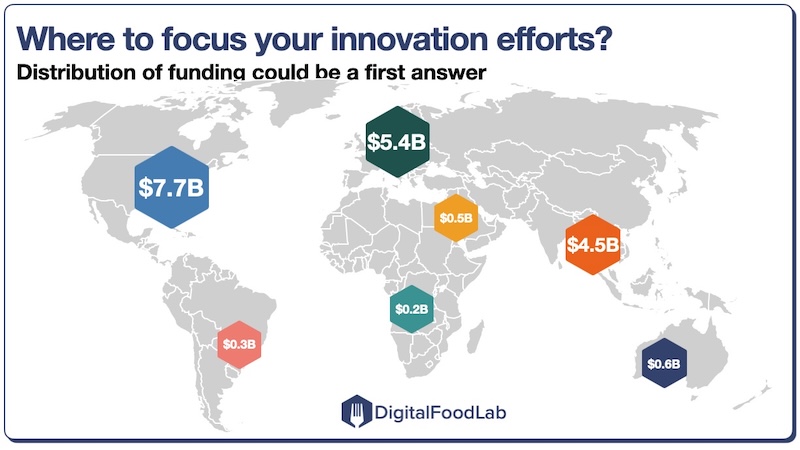
🇺🇸🥗 GrubMarket, a US startup, raised $50M at a $4.5B pre‑money valuation to keep expanding its digital fresh food supply chain platform.
🇮🇳🍪 The Whole Truth, an Indian startup, raised $51M to reach profitability and prepare for an IPO for its clean‑label nutrition brand. It grew revenues from $8M to $26M in 2025, showing again the potential for DTC brands globally.
🇺🇸🌿 Willie’s Remedy+, a US startup, raised $15M to commercialise its hemp‑derived THC drinks in retail stores, after 400,000+ bottles sold online.
🇮🇳🥄 Good Monk, an Indian startup, raised $3.9M for its sprinkle‑on nutritional boosters for everyday meals. This new supplement format is interesting, as it’s been quite some time since anything really new has taken off in the supplement aisle (beyond the gummies and the “whole-in-one” greens like AG1).
🇮🇩🌱 Green Rebel Foods, an Indonesian startup, raised $12.5M to scale its Asian-style plant-based alternatives through partnerships with Starbucks, IKEA, Domino’s and others across Southeast Asia.
🇺🇸🥩 Evergreen (formerly Omeat), a US startup, raised $6M. Originally focused on cellular agriculture, it is now focusing on blended beef products (cultivated + conventional). While we are convinced that hybrids combining cultivated meat with plants are a necessary step for cellular agriculture’s adoption, we have serious doubts about the credibility of blended products using conventional meat, notably in terms of cost and consumer perception.
🇨🇦🚜 Brilliant Harvest, a Canadian startup, raised $4M to build an AI platform that ingests manuals, service logs and conversations to help heavy‑equipment dealers (including agriculture machinery) diagnose and fix issues faster.
🇫🇷🐝 UBEES, a French startup, raised €8M to scale pollination‑as‑a‑service internationally. With connected hives and sensors, the startup optimises pollination, monitors bee health, and quantifies the impacts on yields, biodiversity, and carbon for farmers and food brands.
🇶🇦🌾 Hydrovest, a Qatari startup, raised $275K to commercialise its hydroponic production of fresh produce with minimal water in desert environments.
🇬🇧🎨 Sparxell, a UK startup, raised €4.2M to scale plant‑based colour made from cellulose instead of chemical dyes, with applications in fashion, cosmetics, packaging, food and beverages.
⭐ IPO and acquisitions
🇺🇸🍼 Once Upon a Farm, the US organic children’s food brand, successfully completed its IPO, raising $209M at a $764M valuation.
🇨🇳🛒 Dingdong, an e-commerce grocery company, agreed to sell its China business to Meituan, a Chinese super-app mostly known for its food delivery, hence exiting the hyper‑competitive Chinese grocery‑delivery market after years of heavy losses.
📊 Leading Companies & Macro Trends
🇩🇪📊 Major food groups are dropping Nutri‑Score in Germany after the 2024 algorithm update tightened thresholds for sugar, salt and fat. As the use of Nutri-score remains voluntary, brands whose products suddenly slip from B to D or E are removing the label rather than reformulating.
🇺🇸🍫 Hershey, the US chocolate maker, reported a 59.9% Q4 net income drop despite a 1.7% rise in sales, as record cocoa prices hammered margins. Even as cocoa prices return to more normal levels, the risk of new shocks will likely incentivise companies dependent on cocoa to seek alternatives.
🇺🇸🥤 PepsiCo beat quarterly revenue estimates due to resilient soda demand, while snacks volumes declined by 2% in the quarter. The company plans to cut prices on some snacks, as affordability has become the biggest challenge for attracting low- and middle-income consumers.
🇺🇸💊 Novo Nordisk’s stock dropped after Hims & Hers said it would offer compounded GLP‑1s at a fraction of Wegovy’s list price, exploiting US rules that allow compounding while drugs are officially “in shortage”.
🗞️💭 An interesting opinion article in the New York Times argues industrial food can be greener than local/organic, claiming that large‑scale agriculture’s efficiency and yields make it better for the planet than romantic small‑scale systems.