17 FoodTech insights and deals to know this week (2026 – week #13)

Published on March 23, 2026

💸 Funding news

🏭🇩🇰 Unibio, a Danish startup, signed a $373M joint venture with the Saudi Industrial Investment group to build the world’s largest gas protein factory in Saudi Arabia. The facility will convert methane (a byproduct of gas extraction, often burned) into a source of single-cell protein to be used in aquaculture.


🌾🇬🇷 WikiFarmer, a Greek startup, raised €7.1M for its B2B agriculture marketplace that helps connect producers with food businesses. It also provides a “Wikipedia of farming” available in 17 languages, which it wants to leverage to support farmers in their B2B transactions.


🌿🇸🇬 Virdalis, a Singaporean biotech startup, raised $700K to develop duckweed as a protein ingredient for animal feed, with operations in the Philippines, hence helping reduce Southeast Asia’s dependence on imported feed.


🌿🇺🇸 AgZen, a US startup, raised $10M for its precision spray optimisation system, enabling farmers to cut chemical inputs by up to 50%.


🧪🇨🇦 Solugen, a Canadian startup, raised $50M to scale its low-carbon organic and circular fertiliser.


🤖🇩🇪 Eternal.ag, a German startup, raised €8M to deploy autonomous harvesting robots in European greenhouses, starting with tomatoes.


📱🇺🇸 Eileen, a Pittsburgh-based startup, raised $1M for its retail shelf intelligence platform, which leverages data gathered by a network of “shoppers”, and gives CPG brands instant visibility into out-of-stocks, misplacements and shelf compliance.


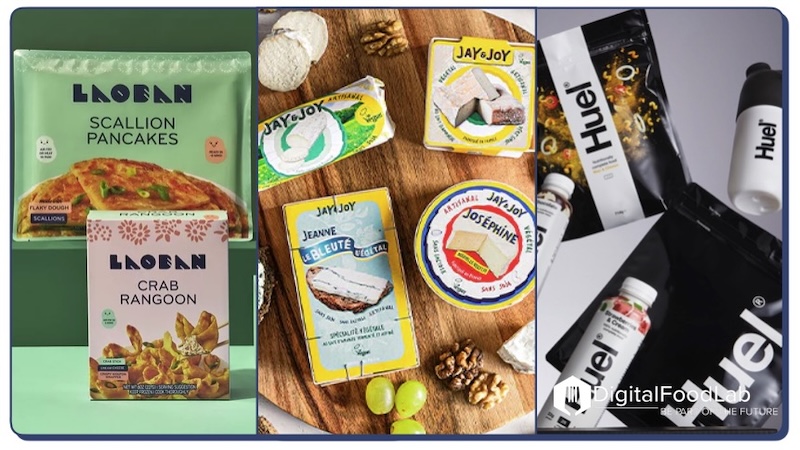
🧀🇫🇷 Jay & Joy, a French startup, raised €2M to scale its plant-based cheese brands across France and Europe.


🥙🇺🇸 Habiza, a US startup, raised $2.5M for its hummus brand targeting Gen Z consumers.


🥟🇺🇸 Laoban, a US-based startup, raised $7.2M to expand its Asian frozen food brand in retail stores.


⭐ Acquisitions, regulation & partnerships

🥛 🇬🇧 Danone is acquiring British meal replacement startup Huel in a deal of €1B. The complete nutrition brand (powders, ready-to-drink shakes, protein bars) has built a strong DTC business with a strong following across the UK, Europe, and the US. This follows Nestlé’s acquisition of Yfood (a German competitor to Huel) a couple of years ago.


🧬🇺🇸 Ingredion is partnering with two foodtech companies, Shiru and Holobiome, to accelerate next-generation prebiotic and functional protein discovery.


⚠️🇺🇸 David Protein, the US protein bar brand with very low calorie counts (150 cal, 28g protein, 0g sugar), is facing a class action lawsuit alleging its bars contain up to 83% more calories and 400% more fat than stated on labels, based on third-party testing. The issue is the fat alternative David used, which isn’t bioavailable and shouldn’t count as digested calories.


📊 Leading Companies & Macro Trends

🌶️🇬🇧🇺🇸 Unilever confirmed it is in talks with McCormick over the potential sale of its €12.9B Foods division. It has also been leaked that Unilever was previously in discussions with Kraft Heinz about merging its food business with Kraft’s condiments division. After listing Magnum as a separate company on the stock market and making two attempts, Unilever appears set on divesting all its food assets to reposition around beauty and home care.


🍫🇺🇸 McDonald’s has launched McValue 2.0 ($3 items and $4 meals), in a move that follows other QSR chains to address the “affordability crisis” felt by many US consumers.


💊🌍 Generic versions of Ozempic and Wegovy began hitting shelves in India this week, with at least a dozen Indian manufacturers launching semaglutide at ~$14/month (88% cheaper than Novo Nordisk’s brand price). China, Brazil, Turkey, South Africa and Canada are expected to follow within months. As explained in our latest insight on the topic, this could be one of the biggest game-changers of the decade, with billions of consumers being able to access these drugs at a very low price.


📦🇩🇪 HelloFresh, the German (and global leader) meal kit company, reported FY25 revenues down 9% to ~€6.7B, with a cautious forward guidance (–3% to –6% revenue in 2026), but the margins are improving. The question remains whether the current reinvestment in the product can help the company reverse the structural subscriber decline.

You're in a good company

Join the 60+ clients of Digital FoodLab: leading agrifood companies, retailers, banks, investors, startups, and public organisations.

Use case: project for a global F&B company looking to map its AgTech innovation ecosystem and the best startups to partner with

What we did:

  • Mapping of the AgTech ecosystem: startups, research regulators, and other leading companies.
  • Discussion to select areas to focus on.
  • Analysis of the information to reveal the trends and a model to analyse eventual partners.
  • A workshop to validate the opportunities based on our recommendations.
  • Scouting of relevant partners followed by introductions.

Results:

  • Mapping the different categories of innovations in AgTech that should be considered now to create long-term benefits for the business.
  • Identification of key partners (an incubator and a couple of startups).

Use case: project for a CPG company on the healthy ageing ecosystem

What we did:

  • Education of the board through a couple of workshops to define the perimeter
  • Identification of key opportunities and threats created by long-term evolutions (technologies, business models, behavioural changes).
  • Deep dives on each of the priority categories.
  • Co-construction of a vision on how the company should address these challenges.
  • Identification of partners (startups, incubators, funds) to move forward.

Results:

  • Creating a consensus on which categories to prioritise and how to address them.
  • Implementation of an open innovation strategy through the development of partnerships.

Use case: project for a global CPG company to develop a strategy on the healthy ageing ecosystem

What we do (ongoing mission on a subscription model):

  • Kick-off where we present an overview of the AgriFoodTech ecosystem to select with the client the categories to cover and for each, the level of information required.
  • Monthly newsletter: each month we send a newsletter with the articles that we have gathered ranked by relevance, their summaries, and a layer of analysis.
  • Database: we set up a personalised database that will be filled month after month with the information gathered on the companies identified for the watch.
  • Workshops: twice a year with the client’s innovation team and other “innovation curious” team members, we present an overview of the evolutions, key trends and a dashboard of the topics followed by the watch.

Results:

  • A clear, regular and evolutive tool to follow what is happening in terms of innovation on key topics.
  • A forum (through the workshops) to discuss innovation trends and new opportunities.

Use case: opportunity screening for an ingredient company

What we did:

  • Kick-off to define the perimeter of the ecosystem studied.
  • Mapping of the different trends shaping the innovation ecosystem of the client.
  • Analysis of the trends on DigitalFoodLab’s trend curve and other relevant frameworks.
  • Workshop to discuss DigitalFoodLab’s recommendations on key trends to prioritise

Results:

  • Shared view of the innovation ecosystem for the client with a view of the trends to prioritize.
  • Clear document (personalised trend curve) that can be easily shared internaly to explain the company’s innovation choices and which can be then updated each year.

Use case: scouting for an agriculture coop

What we did:

  • Kick-off to define the perimeter of the client, the goals of the scouting (partnerships) and the criteria on which startups should be evaluated.
  • Set-up scouting: we selected the first batch of 20+ key startups following the criteria of the client.
  • On-going scouting: then we set up a quarterly scouting of about ten startups.
  • For each scouted startup, we created an ID card with key information such as the business and technological maturity, funding, and corporate partnerships. We also added an explanation of why we selected this startup.

Results:

  • An ongoing and evolutive scouting are matching the client's criteria and its capabilities in terms of deal flow.

Use case: working on an acquisition process for a CPG company

What we did:

  • Kick-off to define what the client is seeking, notably in terms of maturity.
  • Workshop with the client based on a mapping of the different innovation ecosystems adjacent to its activities to select some priorities and discuss inspiring examples of startup acquisition stories.
  • Identification of 20+ targets.
  • Workshop to select the most relevant to engage with.
  • DigitalFoodLab worked as a sparing partner during the acquisition process, notably to help design how the acquired startup could be integrated into the overall company’s strategy.

Results:

  • Different results from traditional M&A processes with a focus on the client’s innovation strategy.
  • Identification of a good match for an acquisition.

Use case: market due diligence on sugar alternatives

What we did:

  • Kick-off with the client to discuss its interest on this category, its expectations and existing level of information (notably on the target company).
  • Mapping of the ecosystem to analyse the different existing alternatives and technologies to compare them.
  • Interview (calls) with relevant startups made by our internal biotechnology expert.
  • Recommendation on whether to invest or not.

Results:

  • Clear view of the ecosystem and of the reasons to believe (or not) in each sub-category.
  • Enforceable recommendations based on facts and expertise.