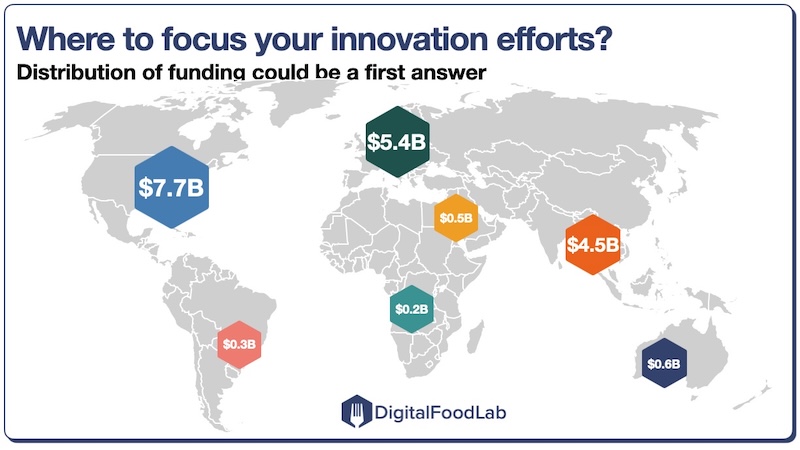
Earlier this week, we released our mapping of the 48 FoodTech unicorns. The term unicorn was coined with the idea that being a valuation of more than one billion was something almost mythical for a startup. On the other hand, 48 unicorns make a crowded pantheon, with new startups joining in regularly. These considerations are compounded by the fact that now we observe deals bigger than 1 billion! In less than a week, GoPuff announced that it had raised $1.15B, and Deliveroo set the amount it wants to raise from its IPO to £1B.
🍫 🚴♂️ 🏡 DARK STORES STARTUPS GOPUFF AND GORILLA RAISE BILLIONS
A couple of weeks ago, I talked about how money was raining over grocery delivery startups. Since then, new startups such as Jiffy, in the UK have raised funding. But, all have been eclipsed by the enormous rounds of $1.15 billion raised by GoPuff and $290M by Gorillas.
Founded in 2013 in the US, GoPuff the leader in this space and is now valued at $9 billion. It operates in more than 650 US cities and delivers convenience items in less than 30 minutes for a $1.95 fee. The startup had already raised $380M last year. With this massive funding, it intends to expand further in the US and internationally.
Founded in 2020 in Germany, Gorillas is already active in multiple countries and cities. It will use the money to expand further.
With billions in their pockets, the competition between all the players in this space will be epic!

🍽️ 🚴♂️ DELIVEROO FAILED ITS PRE-IPO
Deliveroo has long been preparing for its IPO. It expected to raise £1 billion from it to help sustain its growth and expansion. The startup eyed a valuation that has been as high as £8.8 billion. However, things didn’t happen as expected. The stock was priced on the bottom of the range set by the company. And on its first day of trading, it plunged 26%. Some clouds darkened the horizon just before the IPO:
- First, the figures provided by Deliveroo: this valuation comes when Deliveroo announced for 2020 a revenue of £1.2B (which grew 54% from £772M in 2019) and a loss of £226M. This can be compared to DoorDash’s IPO, a big success, which followed huge growth AND the announcement of a profit for 2020.
- Second, some investors have already shared their concerns about its potential profitability and long term social sustainability. Indeed, as the IPO approaches, journalists have compiled the data of thousands of drivers and have found that a third of them earned less than the minimum hourly wage.
This pre-IPO was only opened to institutional investors. Retail investors will be able to invest next week. Will you?
🥚 🥩 🛢️ WHAT IS AS HOT AS GROCERY DELIVERY? ALTERNATIVE PROTEINS!
Alternatives proteins startups don’t (yet) raise billions but they aren’t far away. Some startups have raised hundreds of millions raising over the last couple of weeks:
- Just raised $200M. Primarily known for its range of plant-based alternative to eggs, the startup is now betting a lot on cell-based. It was the first to receive official authorisation to commercialise lab-grown food (in Singapore) last year. Just says it is working with two other regulatory bodies to start selling its lab-grown foods more broadly.
- Dutch startup Meatable raised $47M for its cell-based meat. After the $85M raised recently by MosaMeat, this deal pinpoints the Netherlands as one of the global hubs for lab-grown foods.
- Nourish raised $11M for its lab-grown fat. Based in Australia, the startup uses fermentation to create fats that could be helpful for other alternative proteins products.
- British startup Deep Branch Technology raised €8M for its technology which converts CO2 into feed protein (comparable to SolarFoods which raised €17.5M last year)
SINCE YOU’RE HERE
- How the KitKat went global (and the origins of the Japanese flavoured KitKat – which one is your favourite?)
- Everli raised $100M. This will be Italy’s biggest FoodTech deal ever and will enable the Instacart inspired startup to grow in new countries (notably in France where it is about to launch.
- Do you get lost in all this complicated FoodTech jargon? (I have to admit, I sometimes do when entrepreneurs speak confidently about technologies I have never heard about). Here is a nicely done glossary of the most used terms.
- An Irish app to let you know how much carbon is generated by the foods you buy and that lets you directly offset it (they enable you to pay for trees to be planted)
- Jungle, a French urban farming startup raised €42M (actually €7M in equity and €35M in debt). It revives the debate between giant urban farms (such as Plenty and now Jungle) against smaller, decentralised farms such as Infarm’s.
- Augmenta, founded in Greece and now headquartered in France, raised $8M. It develops equipment that retrofits old tractors into insightful imagery devices.
- Chipotle and Toyota participated in the last $500M funding of Nuro, the unicorn startup developing autonomous cars that deliver groceries to your door.