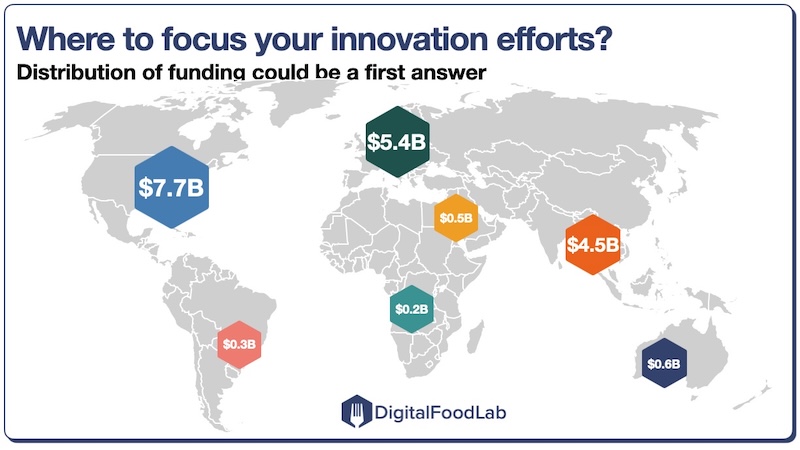
Tipping points on DTC acquisitions and cellular agriculture?

Published on December 4, 2020

Hey,

Finally, we are nearing the end of a year that has been complicated (a big understatement I know) for most of us, both personally and professionally! However, it seems that 2020 can still bring us some surprises. We have observed two trends in the last couple of months which are really eye-catching. Both look like a tipping point, a moment where a growing but small trend just becomes massive and obvious.

First, we are observing a huge increase in the number of DTC (Direct-To-Consumer) acquisitions by large corporations. I don’t think that’s a pure coincidence due to deals delayed by COVID. I rather view this as an indication that after COVID, many big brands want to go beyond physical retail and also look for startups to explore new ventures rather than develop them internally. Here are a few key examples:

  • acquisitions of food delivery startups:

Second, we observe an acceleration in the cellular agriculture market. After the first major financing of an R&D project by the EU, we have had many startups launching their first restaurant experimentations. This week, Singapore has made waves by becoming the first country to approve lab-grown meat sales. (It gets a bit on my nerves that France’s agriculture minister was among the first Luddites to condemn this initiative).

The two trends are interesting to compare in a typical hype versus reality contest (see how we map them on our FoodTech trends analysis and report here). While we observe right now an acceleration of both of them in terms of news flow, their maturity is starkly different. DTC is now a mature and well-understood subject with €1B+ acquisitions while cellular agriculture is still far away. Indeed, if startups talk about “restaurant experiments”, it is mostly for “selected dinners”, and real-world products will not be on the shelves for at least a couple of years (and that is coming from a very optimistic point of view). This communication is understandable for an ecosystem that relies on higher and higher funding rounds to scale its R&D pilots to larger volumes.

We can expect DTC growth and acquisitions to keep going and even increase in 2021 as big corporations look to diversify and reach directly to the final consumer. On the other hand, we can expect a reality check on the cellular agriculture ecosystem as it is setting the expectation too high.

For more information, look at our 2020 FoodTech trends and FoodTech brands reports. Should you want to discuss these trends (as an entrepreneur or larger company) and see how they could shape the future of your business, please contact us!

Have a great week!

Matthieu


TOP INSIGHTS FROM DIGITALFOODLAB

#1 – Flashenpost gets acquired for €1 billion

Flaschenpost, a 4-year old delivery startup, has been acquired by Dr Oeatker for €1 billion. The startup that few knew outside its home country delivers beverages in 2 hours or less in 23 German cities.  It had raised €70M before the acquisition from various investors, including Vorwerk Ventures, the CVC arm of Thermomix’s manufacturer…

More here

#2 – The Protein Brewery, a Dutch fermentation-based alternative protein startup raises €22M

The Protein Brewery, a Dutch startup, raises €22M. The startup has created a new protein, named Fermotein, which can be used both for alternative proteins and as an ingredient. It has already started its application process for the European and US markets and expects to be approved in the next couple of years…

More here

#3 – Dija, a food delivery startup launched by former Deliveroo employees raises $20M before launching

A yet to be launched startup has raised $20M before its launch. The startup was founded in the UK by former senior employees of Deliveroo. Few details are public, it will deliver fresh food, apparently from dark stores…

More here


YOU LIKE THIS CONTENT? SHARE IT WITH SOMEONE WHO MIGHT LEARN SOMETHING FROM IT!Giphy

We grow with your help. So, if you like this content and feel that it might help someone to understand how Ag, Food, and Retail will be disrupted in the incoming years, share this newsletter or subscribe him or her here!


As you can see, FoodTech is indeed moving faster than ever in 2020. But you are not alone. DigitalFoodLab is here to help you :

  • Stay at the top of your domain. We provide exclusive insights and information through talks and our FoodTech watch.
  • Prepare for the future. We help you make plans for long-term trends and their implications on your business and identify the right startup to work on your current issues.
  • Innovate faster. We work with you to define the innovation strategy fitted to your business means and needs.

No matter if you are a startup or a food giant, we are here to work with you and change the world of food! (contact us).

You're in a good company

Join the 60+ clients of Digital FoodLab: leading agrifood companies, retailers, banks, investors, startups, and public organisations.

Use case: project for a global F&B company looking to map its AgTech innovation ecosystem and the best startups to partner with

What we did:

  • Mapping of the AgTech ecosystem: startups, research regulators, and other leading companies.
  • Discussion to select areas to focus on.
  • Analysis of the information to reveal the trends and a model to analyse eventual partners.
  • A workshop to validate the opportunities based on our recommendations.
  • Scouting of relevant partners followed by introductions.

Results:

  • Mapping the different categories of innovations in AgTech that should be considered now to create long-term benefits for the business.
  • Identification of key partners (an incubator and a couple of startups).

Use case: project for a CPG company on the healthy ageing ecosystem

What we did:

  • Education of the board through a couple of workshops to define the perimeter
  • Identification of key opportunities and threats created by long-term evolutions (technologies, business models, behavioural changes).
  • Deep dives on each of the priority categories.
  • Co-construction of a vision on how the company should address these challenges.
  • Identification of partners (startups, incubators, funds) to move forward.

Results:

  • Creating a consensus on which categories to prioritise and how to address them.
  • Implementation of an open innovation strategy through the development of partnerships.

Use case: project for a global CPG company to develop a strategy on the healthy ageing ecosystem

What we do (ongoing mission on a subscription model):

  • Kick-off where we present an overview of the AgriFoodTech ecosystem to select with the client the categories to cover and for each, the level of information required.
  • Monthly newsletter: each month we send a newsletter with the articles that we have gathered ranked by relevance, their summaries, and a layer of analysis.
  • Database: we set up a personalised database that will be filled month after month with the information gathered on the companies identified for the watch.
  • Workshops: twice a year with the client’s innovation team and other “innovation curious” team members, we present an overview of the evolutions, key trends and a dashboard of the topics followed by the watch.

Results:

  • A clear, regular and evolutive tool to follow what is happening in terms of innovation on key topics.
  • A forum (through the workshops) to discuss innovation trends and new opportunities.

Use case: opportunity screening for an ingredient company

What we did:

  • Kick-off to define the perimeter of the ecosystem studied.
  • Mapping of the different trends shaping the innovation ecosystem of the client.
  • Analysis of the trends on DigitalFoodLab’s trend curve and other relevant frameworks.
  • Workshop to discuss DigitalFoodLab’s recommendations on key trends to prioritise

Results:

  • Shared view of the innovation ecosystem for the client with a view of the trends to prioritize.
  • Clear document (personalised trend curve) that can be easily shared internaly to explain the company’s innovation choices and which can be then updated each year.

Use case: scouting for an agriculture coop

What we did:

  • Kick-off to define the perimeter of the client, the goals of the scouting (partnerships) and the criteria on which startups should be evaluated.
  • Set-up scouting: we selected the first batch of 20+ key startups following the criteria of the client.
  • On-going scouting: then we set up a quarterly scouting of about ten startups.
  • For each scouted startup, we created an ID card with key information such as the business and technological maturity, funding, and corporate partnerships. We also added an explanation of why we selected this startup.

Results:

  • An ongoing and evolutive scouting are matching the client's criteria and its capabilities in terms of deal flow.

Use case: working on an acquisition process for a CPG company

What we did:

  • Kick-off to define what the client is seeking, notably in terms of maturity.
  • Workshop with the client based on a mapping of the different innovation ecosystems adjacent to its activities to select some priorities and discuss inspiring examples of startup acquisition stories.
  • Identification of 20+ targets.
  • Workshop to select the most relevant to engage with.
  • DigitalFoodLab worked as a sparing partner during the acquisition process, notably to help design how the acquired startup could be integrated into the overall company’s strategy.

Results:

  • Different results from traditional M&A processes with a focus on the client’s innovation strategy.
  • Identification of a good match for an acquisition.

Use case: market due diligence on sugar alternatives

What we did:

  • Kick-off with the client to discuss its interest on this category, its expectations and existing level of information (notably on the target company).
  • Mapping of the ecosystem to analyse the different existing alternatives and technologies to compare them.
  • Interview (calls) with relevant startups made by our internal biotechnology expert.
  • Recommendation on whether to invest or not.

Results:

  • Clear view of the ecosystem and of the reasons to believe (or not) in each sub-category.
  • Enforceable recommendations based on facts and expertise.