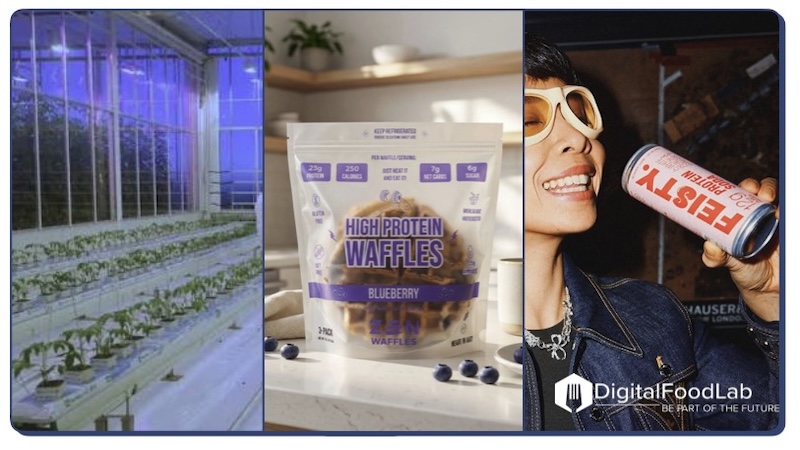
I am often told that I am slightly too pessimistic about the state of the innovation ecosystem. I’d rather say that I try to remain objective and not mix what I’d like to see with the information we gather daily. However, today, I’d like to highlight some news which individually don’t mean much, but which taken collectively point towards a good reason to be optimistic about the future of food.
1 – Multiple alternative protein product launches (finally) coming to your supermarkets
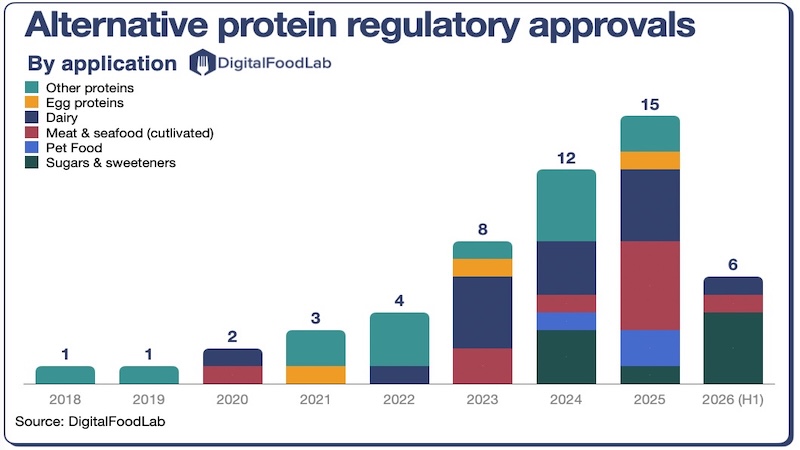
While there have been numerous regulatory approvals for alternative protein products over the last 12 months, these have not yet translated into new products being introduced to the market. This has changed quite suddenly, with multiple new products finally reaching consumers.

The most noticeable examples include:
- Remilk and Imagindairy, two Israeli startups, are partnering respectively with Gad Dairies and Strauss to launch in retail stores milk and cheese products made with precision-fermentation proteins.
- Solar Foods’ ingredient (biomass fermentation, conversion of CO2 into proteins) will be used by Ajinomoto in Singapore and by Fazer in the US, respectively, for coffee alternatives and protein shakes.
- Mission Barns and Vow, two cultivated meat startups, are launching their own products in the US and Australia.
Beyond these, there is an increasing number of cocoa alternatives being used in products available in retail stores, and the first supplements using human lactoferrin are now available on the market. Seeing all these real-world examples being launched is not only a collective show of strength, but it is also a demonstration of the ability to reach the consumer, notably through partnerships. Most of these are limited-scale launches, but they provide:
- Critical consumer data, notably for the most advanced technologies for which it is still unclear how to market it to the consumers.
- A needed boost to the innovation ecosystem, and a potential “FOMO” (fear of missing out) that will entice other food companies to re-engage with disruptive innovation.
2 – Scale up and commercialisation partnerships
On a less consumer-facing, but probably even more important point, we have seen a noticeable increase in the number of “meaningful” corporate and startup partnerships over the past few months, which can be categorised into two broad areas: commercialisation and scale-up support. Recent examples include:
- Cocoa alternatives: Planet A partnering with Barry Callebaut, and Win-Win raising £3M from Oetker and Paulig.
- Sugar alternatives: Oobli (precision fermentation) signing a partnership with Ingredion.
- Colourants: Michroma (precision fermentation) is partnering with CJ CheilJedang to scale its production.
The list could be much longer. As for the product launches, I find one point striking: some company names keep appearing again and again. There is a quite clear four-tiered set of food corporations:
1 – Engaged believers, who are betting on different technologies and categories at the same time
2 – Focused innovators, betting on one or two categories or technologies which are core to their business
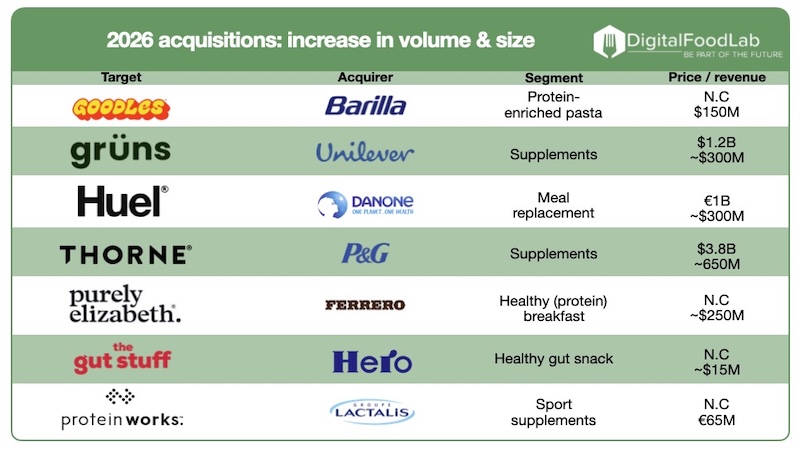
3 – Acqui-followers: companies that don’t really partner at an early stage and wait for innovation to be ready to be incorporated at scale or simply acquired
4 – Non-believers: a large set of companies which are simply not engaged at all in long-term innovation.
As often discussed here, the current downturn the AgriFoodTech innovation ecosystem is going through is very similar to what can be observed in other “tech” areas (everything that is not “AI-related” is doing poorly). Still, there are some elements which are specific to FoodTech, notably an almost absence of exits and a challenging path to scale up. The elements mentioned above represent some positive steps towards addressing this challenge. If FoodTech is the future of food, scaling up innovation will require the engagement of large companies.