Functional brands: the first step toward personalisation? – DFInsights November 18

Published on November 30, 2018

Hi,

We hear a lot of things about personalisation, but what does that mean, especially for food products and how are we going to go there?

The goal is pretty simple to explain: make everyone’s products personalised. And as often with ventures that are simple to explain, there is a considerable amount of effort to go there. Few questions arise immediately:

  • how to define personalisation for each customer: are we going to use genetics to know the person’s needs or are we letting him choose?
  • Where will the personalisation take place? At home with a 3D printer, with supplements or directly in the retail store where products will arrive semi-finished and will be “completed” there?

As much as we like to discuss long-term strategies, we also want to see what is the first step to get there. For personalisation, we call it « functional branding ». More and more new brands are selling products that don’t market their taste but what value they will bring to your lifestyle.

We can divide these functional brands into 3 sub-categories (with some overlapping):

  • heath functional brands: they build products based on natural ingredients (such as turmeric) that may be hard for consumers to add to their diet. Each ingredient having effects on the customer’s health (anti-inflammatory effects for turmeric)
  • nootropics: products (mostly drinks) acting on mental functions for improving your energy or focus
  • CBD (cannabidiol): most CBD-based products (Cannabis) don’t brand the taste but the functions (less oriented toward health or productivity)

DigitalFoodLab

Here are 5 examples of startups building functional brands:

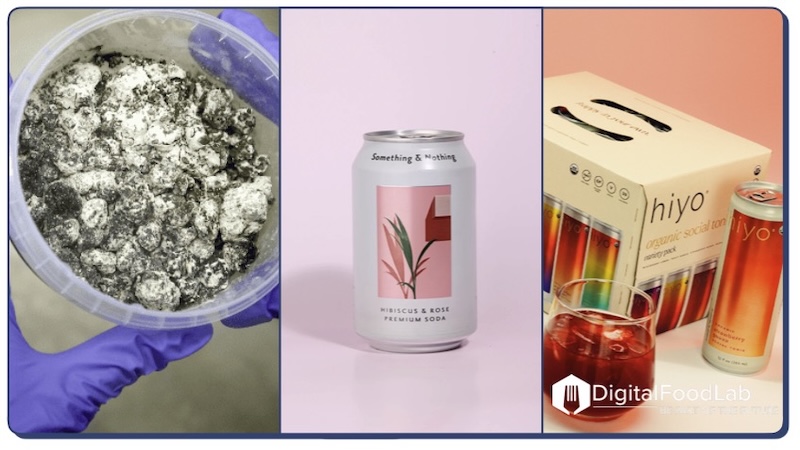
  • Dirty Lemon is a beverage startup with a twist. You don’t buy one of their drinks for the taste but for what it contains. You can choose between the matcha drink for vitality, the charcoal one for detox, CBD to relax, etc. As many DNVBs (Digital Native Vertical Brand) brand has been really successful online with a lot of fans on Instagram and it is now opening its first store in New York.
  • Synapse which defines itself as a “natural cognitive boost”
  • LifeAid has a range of functional drinks, among which one for golfers (however, it is recommended to consume ice cold, even on the course).
  • Olly and OneGum, two startups developing gums. The former is mostly health and beauty oriented (a gum to be more beautiful is a strong promise) and the later helps you get more energy.

And you can see through these examples, this trend can mostly be seen in beverage startups. Few food products currently have functional branding, but that may change. These functional products are more and more seen into larger offers. For example, a meal delivery startups such as Urban Remedy who sells ready-to-eat meals for diets (to kick-start your keto diet in 3 days) is selling anti-inflammatory (with turmeric) juices.

Considering this trend, a major question arises: who will tell customers what functions they need? But this will be the theme for another article.

Have a great week,

Matthieu


Big Deals

Grubmarket

Trace Genomics raised $13m in series A (with AgFunder among the investors). The startup develops combines its tests to AI to improve crops’ yields.

Grubmarket

Data impact, a French retailTech startup raised €8 m fort its data collection and analysis platform (for food e-commerce). The goal is now to grow outside of France, especially in the US.


Top News


Taste can’t be copyrighted but that may change soon. Two Duch cheese companies have made the news last week with the court rule opposing them. The first one (Levola) was accusing the second one (Smilde) of having copied the taste of a cheese. The Court of Justice of the EU (Europe’s highest court) has ruled that a taste can’t be copyright as it’s “an idea” rather than an “expression of an original intellectual creation”. However, things may change in the incoming years with more and more startups (and big players such as IBM) working on making the comparison of tastes accurate.
The Spoon

How food and beverage startups use celebrities: In may, we talked about these startups having well-known football players and tv shows actors partnering with them. The trend is not going to stop there. This article shows how endorsement is a thing of the past and how cool startups are luring the famous to become bot ambassadors while taking some equity as investors.
FoodDive

You're in a good company

Join the 60+ clients of Digital FoodLab: leading agrifood companies, retailers, banks, investors, startups, and public organisations.

Use case: project for a global F&B company looking to map its AgTech innovation ecosystem and the best startups to partner with

What we did:

  • Mapping of the AgTech ecosystem: startups, research regulators, and other leading companies.
  • Discussion to select areas to focus on.
  • Analysis of the information to reveal the trends and a model to analyse eventual partners.
  • A workshop to validate the opportunities based on our recommendations.
  • Scouting of relevant partners followed by introductions.

Results:

  • Mapping the different categories of innovations in AgTech that should be considered now to create long-term benefits for the business.
  • Identification of key partners (an incubator and a couple of startups).

Use case: project for a CPG company on the healthy ageing ecosystem

What we did:

  • Education of the board through a couple of workshops to define the perimeter
  • Identification of key opportunities and threats created by long-term evolutions (technologies, business models, behavioural changes).
  • Deep dives on each of the priority categories.
  • Co-construction of a vision on how the company should address these challenges.
  • Identification of partners (startups, incubators, funds) to move forward.

Results:

  • Creating a consensus on which categories to prioritise and how to address them.
  • Implementation of an open innovation strategy through the development of partnerships.

Use case: project for a global CPG company to develop a strategy on the healthy ageing ecosystem

What we do (ongoing mission on a subscription model):

  • Kick-off where we present an overview of the AgriFoodTech ecosystem to select with the client the categories to cover and for each, the level of information required.
  • Monthly newsletter: each month we send a newsletter with the articles that we have gathered ranked by relevance, their summaries, and a layer of analysis.
  • Database: we set up a personalised database that will be filled month after month with the information gathered on the companies identified for the watch.
  • Workshops: twice a year with the client’s innovation team and other “innovation curious” team members, we present an overview of the evolutions, key trends and a dashboard of the topics followed by the watch.

Results:

  • A clear, regular and evolutive tool to follow what is happening in terms of innovation on key topics.
  • A forum (through the workshops) to discuss innovation trends and new opportunities.

Use case: opportunity screening for an ingredient company

What we did:

  • Kick-off to define the perimeter of the ecosystem studied.
  • Mapping of the different trends shaping the innovation ecosystem of the client.
  • Analysis of the trends on DigitalFoodLab’s trend curve and other relevant frameworks.
  • Workshop to discuss DigitalFoodLab’s recommendations on key trends to prioritise

Results:

  • Shared view of the innovation ecosystem for the client with a view of the trends to prioritize.
  • Clear document (personalised trend curve) that can be easily shared internaly to explain the company’s innovation choices and which can be then updated each year.

Use case: scouting for an agriculture coop

What we did:

  • Kick-off to define the perimeter of the client, the goals of the scouting (partnerships) and the criteria on which startups should be evaluated.
  • Set-up scouting: we selected the first batch of 20+ key startups following the criteria of the client.
  • On-going scouting: then we set up a quarterly scouting of about ten startups.
  • For each scouted startup, we created an ID card with key information such as the business and technological maturity, funding, and corporate partnerships. We also added an explanation of why we selected this startup.

Results:

  • An ongoing and evolutive scouting are matching the client's criteria and its capabilities in terms of deal flow.

Use case: working on an acquisition process for a CPG company

What we did:

  • Kick-off to define what the client is seeking, notably in terms of maturity.
  • Workshop with the client based on a mapping of the different innovation ecosystems adjacent to its activities to select some priorities and discuss inspiring examples of startup acquisition stories.
  • Identification of 20+ targets.
  • Workshop to select the most relevant to engage with.
  • DigitalFoodLab worked as a sparing partner during the acquisition process, notably to help design how the acquired startup could be integrated into the overall company’s strategy.

Results:

  • Different results from traditional M&A processes with a focus on the client’s innovation strategy.
  • Identification of a good match for an acquisition.

Use case: market due diligence on sugar alternatives

What we did:

  • Kick-off with the client to discuss its interest on this category, its expectations and existing level of information (notably on the target company).
  • Mapping of the ecosystem to analyse the different existing alternatives and technologies to compare them.
  • Interview (calls) with relevant startups made by our internal biotechnology expert.
  • Recommendation on whether to invest or not.

Results:

  • Clear view of the ecosystem and of the reasons to believe (or not) in each sub-category.
  • Enforceable recommendations based on facts and expertise.