Hi,
Are we living the comeback of king plastic? During the lockdown, while safety was the priority, we have indeed seen a resurgence of plastic packaging in delivery and grocery retail.
However, in the last couple of weeks, a lot of deals have been announced around the idea of a more sustainable food system. While the examples below are only a handful, a very broad new generation of startups that collectively aim to reduce the impact of food on the environment. A few years ago this ecosystem was heavily focused on the collection and distribution of foods “soon to be thrown away” (with leaders such as Phénix), it has now moved to the use of technology.
- Let’s replace plastic by biodegradable packagings with Lactips, a French startup, which has raised €13M (more below) to grow its water-soluble packaging made of casein.
- Fight foodwaste by avoiding it in the first place with Apeel, a US startup, which has raised $250M and has become the first anti-foodwaste unicorn. Appel markets a biochemical coating for produce such as avocados which slows oxidation and therefore enable retailers to keep them in the aisles for a longer period of time before being forced to throw them away.
- Dishcraft, a US-based startup, raised $20M to develop its AI-driven dish-washing robots. It targets workplaces big enough to put in place a corporate cafeteria but without enough space to install a dedicated zone to washing.
- Make cows’ farts greener with Sweden-based Volta Greentech. The startup has raised €500k to fund a first production of red seaweed. Combined, in small quantities with the animal diet, it could reduce up to 80% of the methane edited by cows.
- Drinking coke will help the environment. Climeworks AG, a Swiss-based startup, raised $76M for its carbon capture machines. It takes the carbon dioxide from the air to stock it in a solid-state underground while delivering a part of into clients such as Coca-Cola for its fizzy drinks.
When reading about this last deal, my imagination has immediately jumped to the huge potential of such technology if combined with startups creating proteins out of CO2. While the period is in many ways complicated for most, let’s not forget to look forward and stay optimistic about the future and all the innovations that entrepreneurs are creating to make the world a better place.
Have a great (and sustainable) week!
Matthieu
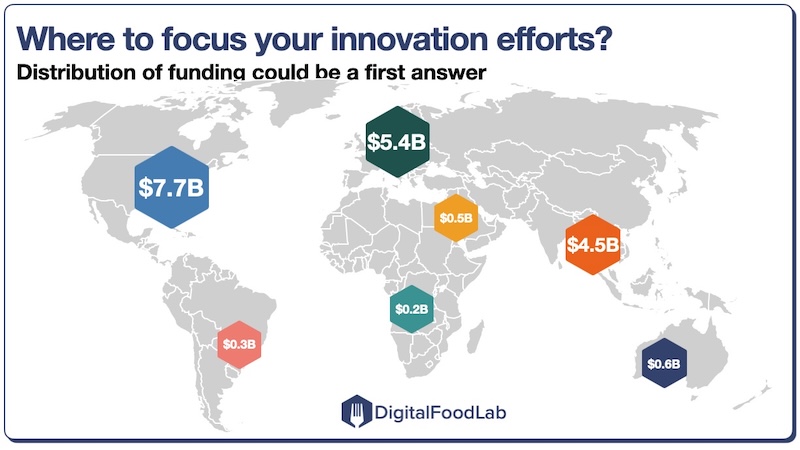
To build the future of food, first you need to understand it. You can start by using our various insights and reports, notably our report on the investments in Europe FoodTech, wrote with the support of Eutopia, Kea&Partners, Nestlé and Vitagora

Too long; didn’t read? We have the answer! Here are two videos, one in English, one in French to go through the main findings of the report.
TOP INSIGHTS FROM DIGITALFOODLAB
#1 – Apeel raises $250M to become the first anti-foodwaste unicorn
Apeel, the startup known for its edible “peal” that slows oxidation on produce, notably avocados, has raised $250M. As mentioned in another DigitalFoodLab post in 2019, the company is now also active in Europe. With this new funding, it would be the first unicorn (valuation > $1B) startup fighting against foodwaste.
Along with more traditional VCs, some celebrities such as Oprah Winfrey and Katy Perry have invested to help the startup grow its presence internationally and develop solutions for new produces.
Appel is not only goodwill for its clients…
#2 – Lactips, the edible French packaging startup raises €13M
Lactips, a French startup raises €13M to sustain its development from BPI and the Corporate VC of Mitsubishi Chemical. The startup has created water-soluble, biodegradable plastic substitute made of casein (a milk protein) that is edible (even if it is not its goal to market edible cutlery) and has a much lower impact on the environment than other plastics. This deal comes just one year after a deal with another major chemical company, the Germany-based BASF, to use Lactips’ products..
#3 – Cubiq Foods raises €5M for its lab-grown fat
In May, Cubiq Foods, a Barcelona-based startup raised €5M for its lab grown fats. While many startups compete in the clean meat and clean dairy spaces (see our mapping here), they rely on plant-based fats to add to their protein production. Cubiq Foods wants to help them go further with cellular fat. Implications could be even bigger…
#4 – Top deals in European FoodTech startups
Looking at the top deals of an ecosystem is much more interesting than what we may think. Indeed, as the ecosystem matures, investments tend to concentrate on a smaller number of startups and then looking at who raises the most gives a clear picture of the trends that investors are betting on right now. It may, however, only reveal short term trends (as more long-term and riskier ones shall attract only smaller amounts of capital). In Europe, comparing 2018 and 2019 top fundings is telling, with amounts growing significantly. Only two of 2018’s top ten would have made it into 2019’s list…
You still want more, here are some of our favourite reads of the last couple of weeks:
- Oops, Nestlé loses against Impossible Foods over the use of “Incredible burger” for its plant-based meat alternative brand. This case can only make us think to the fight of Unilever and Just in 2014 for the use of the word “mayo” on Just’s plant-based alternative. Unilever tried twice (and failed twice) to ban the startup of using its name.
- A deep dive into the companies such as PepsiCo and Unilever that have launched DTC initiatives during the lockdown
- If we can transmit emotions using words and voice, how to do so with taste? Here is a potential answer with a lickable screen
As you can see, FoodTech is indeed moving faster than ever in 2020. But you are not alone. DigitalFoodLab is here to help you :
- Stay at the top of your domain. We prove exclusive insights and information through talks and our FoodTech watch
- Prepare for the future. We help you make plans for long term trends and their implication on your business and to identify the right startup to work on your current issues.
- Innovate faster. We work with you to define the innovation strategy fitted to your business means and needs.
No matter if you are a startup or a food giant, we are here to work with you and change the world of food! (contact us).