18 FoodTech news to know this week (2025 – week #38)

Published on September 15, 2025

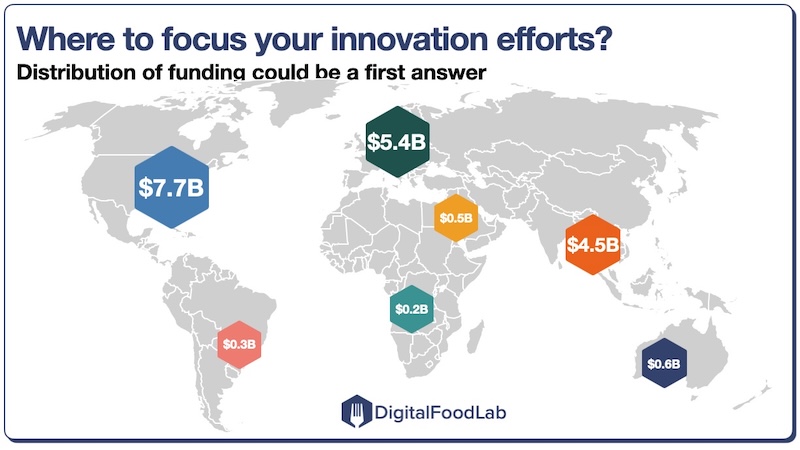
💸 Startup Funding News

🇺🇸 🌿 Nitricity, a US-based startup, raised $50M to produce organic fertiliser using upcycled almond shells.


🇩🇰 🌋 Green Minerals, a Danish startup, raised $6.1M to scale its glacial rock flour for Enhanced Rock Weathering (ERW), enabling carbon sequestration on farmland. Read our recent insight on the fascinating development of ERW here.


🇳🇴 🤖 Saga Robotics (Norway) raised $11.2M for the deployment of its Thorvald robots, used in strawberry farms and vineyards for disease treatment and weeding.


🇮🇸 🧬 ORF Genetics, an Icelandic startup, raised $5M to scale production of growth factors for cultivated meat, using plants as bioreactors (molecular farming).


🇫🇮 🧈 Perfat Technologies, a Finnish startup, raised €2.5M for its alternative fats through its technology that creates oleogels from liquid oils.


🇳🇱 🧠 Brainr, a Dutch startup, raised €11M to build AI-based insights platforms for food and CPG companies.


🇬🇧 🛰 Messium, a UK startup, raised £3.3M to develop hyperspectral crop imagery for precision agriculture.


🇸🇬 🍄 Greenitio, a Singaporean startup, raised $1.5M for its fungus-derived chitosan, a biopolymer used in skincare and food packaging.


🇯🇵 🌿 Nextage, a Japanese startup, raised ¥200M to develop automation tools for hydroponic wasabi cultivation.


🇩🇪 🍄 Pacifico Biolabs (Germany) received €680k in public funding to develop meat alternatives using biomass fermentation.


🤝 Acquisitions, Regulation & Partnerships

🇫🇮 🍄 Enifer, a Finnish startup, secured GRAS status (enabling sales in the US) for its mycoprotein ingredient produced through biomass fermentation.


🇮🇱 🧀 Strauss Group (Israel, leading food group) and Imagindairy (Israel, startup) launched a range of “cow-free” dairy products, leveraging the startup’s whey protein produced through precision fermentation.


🇫🇷 🇺🇸 Innovafeed, the “other” French leading insect startup (beyond Ynsect), is also facing some difficulties: it made only €5M in revenues in 2024 while the development of its US pilot plant has been paused.


📊 Leading Companies & Macro Trends

🇯🇵 🏪 A good read on the reasons behind the success of 7-Eleven, Japan’s leading chain of “konbinis” (convenience stores – and also my favourite food store in the world), which are known for their ability to stock freshly cooked (and delicious) meals and items.


🇬🇧 🍦 Unilever is selling its ice cream business through a separate listing of a new “Magnum” company. It’s a rare opportunity to have a detailed look at the state of the industry and its planned strategy (snacking, market expansion, premiumisation) through the deck shared for the occasion. In a time where many CPG companies are not doing so well, it looks like betting on indulgence is reasonably safe and should attract many investors.


🇺🇸 🍸 Gen Z drinks less alcohol, citing health, wellness, and fewer social occasions.


🇯🇵 🧂 Kirin developed an electric soup cup that enhances salt perception, enabling low-sodium dishes to taste saltier. Excessive sodium consumption and its many adverse health consequences are a top concern in Japan as in many other countries.


🇩🇪 ☕️ The Lap, a Berlin coffee shop chain which bets on low prices, is facing backlash, notably as it creates a very noticeable competition for established, more premium coffee shops.

You're in a good company

Join the 60+ clients of Digital FoodLab: leading agrifood companies, retailers, banks, investors, startups, and public organisations.

Use case: project for a global F&B company looking to map its AgTech innovation ecosystem and the best startups to partner with

What we did:

  • Mapping of the AgTech ecosystem: startups, research regulators, and other leading companies.
  • Discussion to select areas to focus on.
  • Analysis of the information to reveal the trends and a model to analyse eventual partners.
  • A workshop to validate the opportunities based on our recommendations.
  • Scouting of relevant partners followed by introductions.

Results:

  • Mapping the different categories of innovations in AgTech that should be considered now to create long-term benefits for the business.
  • Identification of key partners (an incubator and a couple of startups).

Use case: project for a CPG company on the healthy ageing ecosystem

What we did:

  • Education of the board through a couple of workshops to define the perimeter
  • Identification of key opportunities and threats created by long-term evolutions (technologies, business models, behavioural changes).
  • Deep dives on each of the priority categories.
  • Co-construction of a vision on how the company should address these challenges.
  • Identification of partners (startups, incubators, funds) to move forward.

Results:

  • Creating a consensus on which categories to prioritise and how to address them.
  • Implementation of an open innovation strategy through the development of partnerships.

Use case: project for a global CPG company to develop a strategy on the healthy ageing ecosystem

What we do (ongoing mission on a subscription model):

  • Kick-off where we present an overview of the AgriFoodTech ecosystem to select with the client the categories to cover and for each, the level of information required.
  • Monthly newsletter: each month we send a newsletter with the articles that we have gathered ranked by relevance, their summaries, and a layer of analysis.
  • Database: we set up a personalised database that will be filled month after month with the information gathered on the companies identified for the watch.
  • Workshops: twice a year with the client’s innovation team and other “innovation curious” team members, we present an overview of the evolutions, key trends and a dashboard of the topics followed by the watch.

Results:

  • A clear, regular and evolutive tool to follow what is happening in terms of innovation on key topics.
  • A forum (through the workshops) to discuss innovation trends and new opportunities.

Use case: opportunity screening for an ingredient company

What we did:

  • Kick-off to define the perimeter of the ecosystem studied.
  • Mapping of the different trends shaping the innovation ecosystem of the client.
  • Analysis of the trends on DigitalFoodLab’s trend curve and other relevant frameworks.
  • Workshop to discuss DigitalFoodLab’s recommendations on key trends to prioritise

Results:

  • Shared view of the innovation ecosystem for the client with a view of the trends to prioritize.
  • Clear document (personalised trend curve) that can be easily shared internaly to explain the company’s innovation choices and which can be then updated each year.

Use case: scouting for an agriculture coop

What we did:

  • Kick-off to define the perimeter of the client, the goals of the scouting (partnerships) and the criteria on which startups should be evaluated.
  • Set-up scouting: we selected the first batch of 20+ key startups following the criteria of the client.
  • On-going scouting: then we set up a quarterly scouting of about ten startups.
  • For each scouted startup, we created an ID card with key information such as the business and technological maturity, funding, and corporate partnerships. We also added an explanation of why we selected this startup.

Results:

  • An ongoing and evolutive scouting are matching the client's criteria and its capabilities in terms of deal flow.

Use case: working on an acquisition process for a CPG company

What we did:

  • Kick-off to define what the client is seeking, notably in terms of maturity.
  • Workshop with the client based on a mapping of the different innovation ecosystems adjacent to its activities to select some priorities and discuss inspiring examples of startup acquisition stories.
  • Identification of 20+ targets.
  • Workshop to select the most relevant to engage with.
  • DigitalFoodLab worked as a sparing partner during the acquisition process, notably to help design how the acquired startup could be integrated into the overall company’s strategy.

Results:

  • Different results from traditional M&A processes with a focus on the client’s innovation strategy.
  • Identification of a good match for an acquisition.

Use case: market due diligence on sugar alternatives

What we did:

  • Kick-off with the client to discuss its interest on this category, its expectations and existing level of information (notably on the target company).
  • Mapping of the ecosystem to analyse the different existing alternatives and technologies to compare them.
  • Interview (calls) with relevant startups made by our internal biotechnology expert.
  • Recommendation on whether to invest or not.

Results:

  • Clear view of the ecosystem and of the reasons to believe (or not) in each sub-category.
  • Enforceable recommendations based on facts and expertise.