FoodTech news of the summer

Published on August 25, 2025

15 deals you should know that happened in the past 5 weeks

Quite unusually, the summer was active in terms of deals. Here are the 15 most interesting ones:

🇨🇦 🤖 BinSentry, a Canadian startup, raised an impressive $50M (quite remarkable in the current funding context) to expand its livestock feed monitoring platform, which leverages sensors to enable farmers to make better logistics decisions.

🇺🇸 🍄 The Better Meat Co., a US startup, raised $31M the production of its mycoprotein ingredient to be used in meat and plant-based products. Again, quite an impressive amount, even more in the context of rising doubts on the potential for mycoprotein applications after a succession of failures.

🇮🇳 🏍️ Zepto, an Indian quick-commerce (10 minutes or less) grocery delivery startup, ~$46M. The startup is also rumoured to be planning a larger $400-500M fundraising at a $7B valuation, showing that there is still a large appetite for the growing grocery delivery market in India.

🇺🇸 🍱 Hyphen, a US startup, raised $25M to scale its robotised makeline system for restaurants. After Chipotle, it’s now CAVA, the fast-growing restaurant chain that is joining Hyphen’s list of investors. This is the first time a food robotic solution is gaining significant traction from established market leaders.

🇺🇸 🧬 Geltor, a US startup, raised new funds (about $20M) to scale its collagen production (through precision fermentation), targeting the food and cosmetics markets seeking a non-animal high-quality alternative.

🇮🇪 🔐 Keychain, an Irish startup, raised $30M to expand its platform designed to help CPG manufacturers manage their supply chain.

🇦🇹 🐟 Revo Foods, an Austrian startup, secured €1.6M via crowdfunding to scale its 3D-printed alt-seafood products.

🇮🇳 🧾 Fairdeal, an Indian B2B commerce platform, raised $3M to expand in new areas. It serves small retailers by delivering them inventory.

🇬🇧 🍫 Win-Win, a UK startup, raised £3M to scale its cocoa-free chocolate made with sustainable ingredients.

🇳🇴 🤖 Remora Robotics, a Norwegian startup, raised €13.7M to scale its automated fish health monitoring platform. Its robots clean and monitor aquaculture nets.

🇺🇸 🌾 Farmers Business Network raised $50M to expand its ag services and lending solutions.

🇬🇧 🍞 Modern Baker, a British startup, raised €2.8M to scale healthier ultra-processed foods (UPFs). It licenses its technology to food manufacturers to help them create UPF food products with better nutritional profiles.

🇬🇷 🥡 Stiq, a Greek startup, raised €20M to scale its operating system for virtual restaurants, notably including demand forecasting, inventory and operation optimisation.

🇺🇸 🌿 Bioconsortia, a US biofertilizer startup, raised $15M to scale its nitrogen-fixing microbial seed treatment.

Cascading bankruptcies and failures

First, in the summer, there was a series of bankruptcies. Notably, Planetarians (biomass fermentation) and NovoNutrients (CO2 to protein fermentation) shut down. These two startups, operating in the broad alternative protein ecosystem, received funding in the past but were unable to attract new capital, confirming the ongoing decrease in investments in that space.

We observed a very significant uptick in failures in the past months. Upon reviewing our database, we notice that many startups that should have raised money last year have not done so. As funding is contracting again, this creates the conditions for yet another gloomy semester.

Beyond emerging startups, the current difficulties also affect leaders. The quarterly results of players like Oatly or Beyond Meat were again quite disappointing. So much so that there are now rumours of an eventual bankruptcy of the latter. Being in a situation where you must deny an impending failure is not an enviable position.

Big moves among leaders

In an environment which is far from being ideal for innovators, we could have expected large companies to pause their investments in future technologies. Actually, we are observing the opposite, with an acceleration of the number of announcements of meaningful acquisitions, partnerships and other initiatives.

🇺🇸 🧬 Merck unveiled a new edible membrane tech scaffolding with application in cultivated meat whole-cuts. The technology will be spun out in an independent company.

🇩🇪 🧫 GEA, a German equipment manufacturer, opened a $20M new tech centre to support fermentation and cultivated meat development in the US.

🇺🇸 🚁 Chipotle and Zipline launched “Zipotle,” an aerial food delivery service.

🇺🇸 🇳🇱 🧃 Keurig Dr Pepper will acquire JDE Peet’s, the world’s leading coffee and tea company (with an impressive portfolio of brands), in a $18B deal.

🇫🇷 🇳🇿 🧀 Lactalis (France) acquired Fonterra’s (NZ) consumer business for $2.2B, reinforcing its global leadership in dairy.

🇯🇵 🇹🇭 🐟 Mitsubishi to boost stake in Thai Union, strengthening its global seafood portfolio.

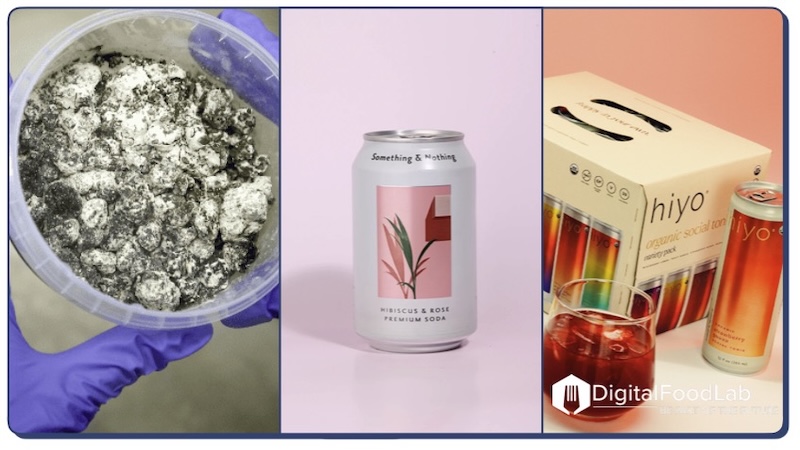
🇺🇸 💧 Health-Ade Kombucha was acquired by Generous Brands for $500M.


You're in a good company

Join the 60+ clients of Digital FoodLab: leading agrifood companies, retailers, banks, investors, startups, and public organisations.

Use case: project for a global F&B company looking to map its AgTech innovation ecosystem and the best startups to partner with

What we did:

  • Mapping of the AgTech ecosystem: startups, research regulators, and other leading companies.
  • Discussion to select areas to focus on.
  • Analysis of the information to reveal the trends and a model to analyse eventual partners.
  • A workshop to validate the opportunities based on our recommendations.
  • Scouting of relevant partners followed by introductions.

Results:

  • Mapping the different categories of innovations in AgTech that should be considered now to create long-term benefits for the business.
  • Identification of key partners (an incubator and a couple of startups).

Use case: project for a CPG company on the healthy ageing ecosystem

What we did:

  • Education of the board through a couple of workshops to define the perimeter
  • Identification of key opportunities and threats created by long-term evolutions (technologies, business models, behavioural changes).
  • Deep dives on each of the priority categories.
  • Co-construction of a vision on how the company should address these challenges.
  • Identification of partners (startups, incubators, funds) to move forward.

Results:

  • Creating a consensus on which categories to prioritise and how to address them.
  • Implementation of an open innovation strategy through the development of partnerships.

Use case: project for a global CPG company to develop a strategy on the healthy ageing ecosystem

What we do (ongoing mission on a subscription model):

  • Kick-off where we present an overview of the AgriFoodTech ecosystem to select with the client the categories to cover and for each, the level of information required.
  • Monthly newsletter: each month we send a newsletter with the articles that we have gathered ranked by relevance, their summaries, and a layer of analysis.
  • Database: we set up a personalised database that will be filled month after month with the information gathered on the companies identified for the watch.
  • Workshops: twice a year with the client’s innovation team and other “innovation curious” team members, we present an overview of the evolutions, key trends and a dashboard of the topics followed by the watch.

Results:

  • A clear, regular and evolutive tool to follow what is happening in terms of innovation on key topics.
  • A forum (through the workshops) to discuss innovation trends and new opportunities.

Use case: opportunity screening for an ingredient company

What we did:

  • Kick-off to define the perimeter of the ecosystem studied.
  • Mapping of the different trends shaping the innovation ecosystem of the client.
  • Analysis of the trends on DigitalFoodLab’s trend curve and other relevant frameworks.
  • Workshop to discuss DigitalFoodLab’s recommendations on key trends to prioritise

Results:

  • Shared view of the innovation ecosystem for the client with a view of the trends to prioritize.
  • Clear document (personalised trend curve) that can be easily shared internaly to explain the company’s innovation choices and which can be then updated each year.

Use case: scouting for an agriculture coop

What we did:

  • Kick-off to define the perimeter of the client, the goals of the scouting (partnerships) and the criteria on which startups should be evaluated.
  • Set-up scouting: we selected the first batch of 20+ key startups following the criteria of the client.
  • On-going scouting: then we set up a quarterly scouting of about ten startups.
  • For each scouted startup, we created an ID card with key information such as the business and technological maturity, funding, and corporate partnerships. We also added an explanation of why we selected this startup.

Results:

  • An ongoing and evolutive scouting are matching the client's criteria and its capabilities in terms of deal flow.

Use case: working on an acquisition process for a CPG company

What we did:

  • Kick-off to define what the client is seeking, notably in terms of maturity.
  • Workshop with the client based on a mapping of the different innovation ecosystems adjacent to its activities to select some priorities and discuss inspiring examples of startup acquisition stories.
  • Identification of 20+ targets.
  • Workshop to select the most relevant to engage with.
  • DigitalFoodLab worked as a sparing partner during the acquisition process, notably to help design how the acquired startup could be integrated into the overall company’s strategy.

Results:

  • Different results from traditional M&A processes with a focus on the client’s innovation strategy.
  • Identification of a good match for an acquisition.

Use case: market due diligence on sugar alternatives

What we did:

  • Kick-off with the client to discuss its interest on this category, its expectations and existing level of information (notably on the target company).
  • Mapping of the ecosystem to analyse the different existing alternatives and technologies to compare them.
  • Interview (calls) with relevant startups made by our internal biotechnology expert.
  • Recommendation on whether to invest or not.

Results:

  • Clear view of the ecosystem and of the reasons to believe (or not) in each sub-category.
  • Enforceable recommendations based on facts and expertise.