DigitalFoodLab’s 2020 state of FoodTech trends

Published on October 9, 2020

Hey,

We had an amazing week following the release of DigitalFoodLab’s French FoodTech top 25. Thanks again for all your feedback (notably for the constructive critiques on making it better). We also had a great time doing a webinar on the Future of French FoodTech with a good talk with two entrepreneurs of our top 25, the CEOs of Gourmey and Foodles. Here is the link for the videos (in French).

Keeping this focus on the food ecosystem’s future, I would like to broaden the focus to the state of FoodTech trends. Indeed, we have just published our FoodTech trends report 2020. As we do each year, we have mapped all the top trends in FoodTech in an innovation curve.

STATE OF FOODTECH TRENDS

Doing this work can be a bit exhausting as we try to put everything we know about what could have a serious impact in the next decade in a single report and graph. However, it provides very interesting insights. First, on what appears (while avoiding fleeting trends and also removing vanishing ones). It is even more interesting to compare each year’s result (here is last year’s report and curve). Here are a couple of such examples:

1- Animal-feed insects. In one name: Ynsect. Yesterday, the French startups announced a new €190M round of capital (with this new funding, it has raised €300M in 18 months). It seems that going B2B first was the right choice for insects (for a potential B2C move in the coming years?).

2- We have observed this year a huge spike in interest for lab-grown foods. This is reflected in enormous valuations for startups that still have no path to profitably and even don’t have any revenue. As these startups, notably those working on cellular agriculture, are still far from supermarket shelves, we may expect some disappointment in the coming years.

Do you think that we have forgotten any trend or misplaced one? Please contact us to talk about the future of food! And ask me for any questions or inquiries about buying the whole report, separate chapters, or webinar presentation of its conclusions personalized to your company.

Have a great week!

Matthieu


TOP INSIGHTS FROM DIGITALFOODLAB

#1 – DigitalFoodLab’s French FoodTech top 25

We mapped the top 25 startups that you should know in 2020 to get an idea about what’s happening in the French FoodTech ecosystem. Feedback has been incredible, and we can’t wait to release new such mappings. And we are already talking about next year’s update.

More Here

#2 – Pernod Ricard invests in the $23M round of Liquid Death (water in a can)

Let’s say that we are skeptical about Liquid Death’s new round. Pernod Ricard’s venture arm (Convivialité ventures) is part of the $23M investment. Started as a joke and rebranded as a somewhat innovative packaging, the company markets Austrian alps water in aluminum cans…

More Here

#3 – Mosameat raises $55M to achieve its goal: a €9 burger in the next couple of years

Mosa Meat, a Dutch startup, just raised $55M for its cellular agriculture technology. The company is known as one of the leaders of this ecosystem. Indeed, its founder, Mark Post, a researcher, was the first to demonstrate cellular agriculture’s feasibility by “producing” a €250,000 burger in 2013…

More Here


YOU LIKE THIS CONTENT? SHARE IT WITH SOMEONE WHO MIGHT LEARN SOMETHING FROM IT!Giphy

We grow with your help. So, if you like this content and feel that it might help someone to understand how Ag, Food, and Retail will be disrupted in the incoming years, share this newsletter or subscribe him or her here!


You still want more, here are some of our favorite reads of the last couple of weeks:

  • A new European plant-based alliance has been formed (with food giants and disruptors such as Nestlé and Beyond Meat). It is calling all leaders to put plant-based foods at the heart of their policies.  (The green queen)
  • French Startup Exotic raised $90M for its warehouse robots. They are notably used for grocery retail for orders’ preparation. (Techcrunch)
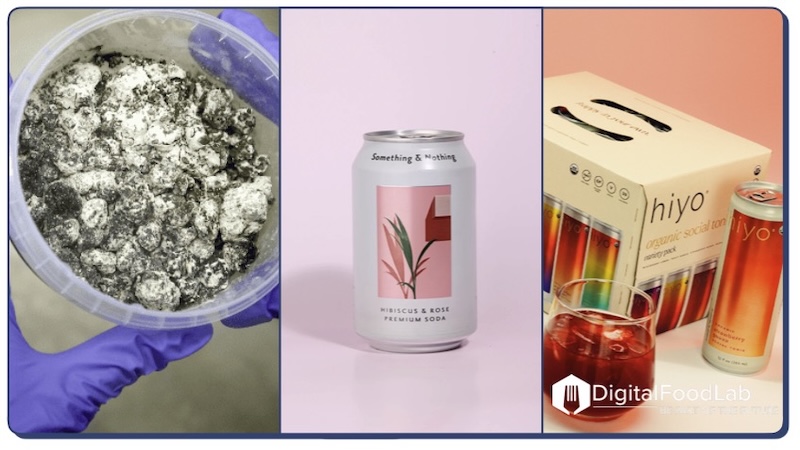
  • Seedlip, a non-alcoholic spirit startup, is launching a mushroom-based (in partnership with a UK-based startup) packaging for its gift set (Beverage Daily)
  • Apeel Sciences (mentioned in June when it raised $250M) partners with Walmart on cucumbers without the plastic (Food Navigator)

As you can see, FoodTech is indeed moving faster than ever in 2020. But you are not alone. DigitalFoodLab is here to help you :

  • Stay at the top of your domain. We provide exclusive insights and information through talks and our FoodTech watch.
  • Prepare for the future. We help you make plans for long-term trends and their implications on your business and identify the right startup to work on your current issues.
  • Innovate faster. We work with you to define the innovation strategy fitted to your business means and needs.

No matter if you are a startup or a food giant, we are here to work with you and change the world of food! (contact us).

You're in a good company

Join the 60+ clients of Digital FoodLab: leading agrifood companies, retailers, banks, investors, startups, and public organisations.

Use case: project for a global F&B company looking to map its AgTech innovation ecosystem and the best startups to partner with

What we did:

  • Mapping of the AgTech ecosystem: startups, research regulators, and other leading companies.
  • Discussion to select areas to focus on.
  • Analysis of the information to reveal the trends and a model to analyse eventual partners.
  • A workshop to validate the opportunities based on our recommendations.
  • Scouting of relevant partners followed by introductions.

Results:

  • Mapping the different categories of innovations in AgTech that should be considered now to create long-term benefits for the business.
  • Identification of key partners (an incubator and a couple of startups).

Use case: project for a CPG company on the healthy ageing ecosystem

What we did:

  • Education of the board through a couple of workshops to define the perimeter
  • Identification of key opportunities and threats created by long-term evolutions (technologies, business models, behavioural changes).
  • Deep dives on each of the priority categories.
  • Co-construction of a vision on how the company should address these challenges.
  • Identification of partners (startups, incubators, funds) to move forward.

Results:

  • Creating a consensus on which categories to prioritise and how to address them.
  • Implementation of an open innovation strategy through the development of partnerships.

Use case: project for a global CPG company to develop a strategy on the healthy ageing ecosystem

What we do (ongoing mission on a subscription model):

  • Kick-off where we present an overview of the AgriFoodTech ecosystem to select with the client the categories to cover and for each, the level of information required.
  • Monthly newsletter: each month we send a newsletter with the articles that we have gathered ranked by relevance, their summaries, and a layer of analysis.
  • Database: we set up a personalised database that will be filled month after month with the information gathered on the companies identified for the watch.
  • Workshops: twice a year with the client’s innovation team and other “innovation curious” team members, we present an overview of the evolutions, key trends and a dashboard of the topics followed by the watch.

Results:

  • A clear, regular and evolutive tool to follow what is happening in terms of innovation on key topics.
  • A forum (through the workshops) to discuss innovation trends and new opportunities.

Use case: opportunity screening for an ingredient company

What we did:

  • Kick-off to define the perimeter of the ecosystem studied.
  • Mapping of the different trends shaping the innovation ecosystem of the client.
  • Analysis of the trends on DigitalFoodLab’s trend curve and other relevant frameworks.
  • Workshop to discuss DigitalFoodLab’s recommendations on key trends to prioritise

Results:

  • Shared view of the innovation ecosystem for the client with a view of the trends to prioritize.
  • Clear document (personalised trend curve) that can be easily shared internaly to explain the company’s innovation choices and which can be then updated each year.

Use case: scouting for an agriculture coop

What we did:

  • Kick-off to define the perimeter of the client, the goals of the scouting (partnerships) and the criteria on which startups should be evaluated.
  • Set-up scouting: we selected the first batch of 20+ key startups following the criteria of the client.
  • On-going scouting: then we set up a quarterly scouting of about ten startups.
  • For each scouted startup, we created an ID card with key information such as the business and technological maturity, funding, and corporate partnerships. We also added an explanation of why we selected this startup.

Results:

  • An ongoing and evolutive scouting are matching the client's criteria and its capabilities in terms of deal flow.

Use case: working on an acquisition process for a CPG company

What we did:

  • Kick-off to define what the client is seeking, notably in terms of maturity.
  • Workshop with the client based on a mapping of the different innovation ecosystems adjacent to its activities to select some priorities and discuss inspiring examples of startup acquisition stories.
  • Identification of 20+ targets.
  • Workshop to select the most relevant to engage with.
  • DigitalFoodLab worked as a sparing partner during the acquisition process, notably to help design how the acquired startup could be integrated into the overall company’s strategy.

Results:

  • Different results from traditional M&A processes with a focus on the client’s innovation strategy.
  • Identification of a good match for an acquisition.

Use case: market due diligence on sugar alternatives

What we did:

  • Kick-off with the client to discuss its interest on this category, its expectations and existing level of information (notably on the target company).
  • Mapping of the ecosystem to analyse the different existing alternatives and technologies to compare them.
  • Interview (calls) with relevant startups made by our internal biotechnology expert.
  • Recommendation on whether to invest or not.

Results:

  • Clear view of the ecosystem and of the reasons to believe (or not) in each sub-category.
  • Enforceable recommendations based on facts and expertise.