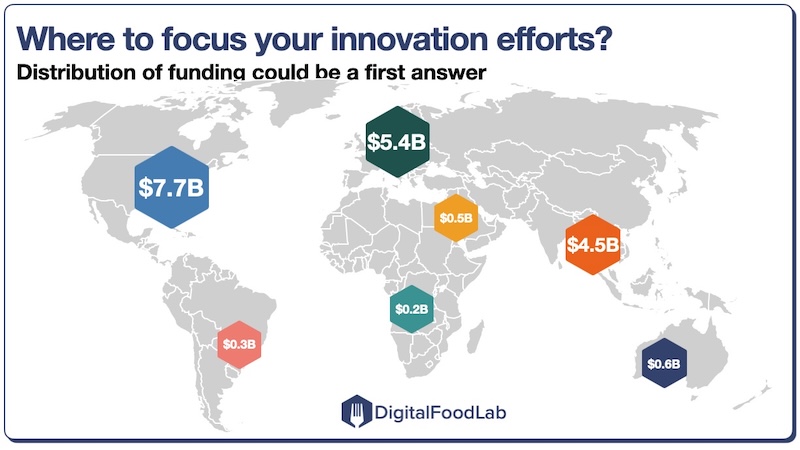
I know I repeat myself when I say that, but we are really living an incredible year. The amount of investments, new great ventures launching every day, and the huge rise of interest from large corporations is just astonishing. While a few years ago, we had a hard time filling a monthly newsletter with relevant news, now the challenge is to choose what to talk about (and don’t get me wrong, that is a much better kind of challenge). One such area of the FoodTech ecosystem is the alternative protein ecosystem (if you need an update on the technologies, we just covered that in our last newsletter). Inside the alternative protein ecosystem, dairy has had a lot of news in the past month. What is happening in this field is really impressive, even if it’s dwarfed in terms of media coverage by the alternatives to meat. We have a strong conviction that if the transition toward a diet based on more alternatives and less animal-based proteins happens, it will start there.agriculture
PLANT-BASED MILK HAVE THE RIGHT TO LOOK LIKE … MILK
The European Parliament has dropped the proposal that would have banned plant-based dairy startups from:
- using dairy-related allegations such as “creamy”
- comparing (positively) the environmental impact of plant-based dairy products to animal-based ones
- using packaging looking too close to the conventional packaging of dairy products
This is great news for the plant-based industry that will be able to keep growing and to compete fairly.
FERMENTATION CHEESE
Westland Cheese, a Dutch cheesemaker, launched a cheese in partnership with Those Vegan Cowboys, a startup notably created by the former co-founder of The Vegetarian Butcher (a plant-based meat alternative startup acquired by Unilever). It’s an interesting partnership where the startup brings the technology (the focus on fermentation notably), and the corporation can help step up the production and distribution.

It also showcases an example of the future of the agrifood industry, with some startups that may replace farmers as ingredient suppliers. The difference with today’s situation will depend on the number of alternatives for big corporations: if only a few startups control the new key alternative ingredients, this could redistribute power and value toward them.
CELLULAR AGRICULTURE MILK
In the past week, we had:
- The launch in Spain of the first incubator dedicated to dairy alternatives produced with cellular agriculture (quite a narrow focus)
- Biomilq, one of the handfuls of startups working on cellular agriculture for milk (actually breastmilk rather than “milk”), just announced this week that they successfully made the first “human milk” outside of the body.
It’s a huge step forward from last year when we talked with the founders when they had just raised $3.5M in funding.
I love this particular category. Beyond the potential for an alternative for baby formula, it will certainly crystallise the debates that will come about protein alternatives. If cellular agriculture breastmilk finds its market, it will be then much easier for other products to do so.
IS CROSSING THE POND THE NEXT BATTLE IN THE GROCERY DELIVERY WAR?
- GoPuff (historical leader in the dark store ecosystem and leader in the US) has completed the acquisition of Fancy, a UK competitor.
- Gorillas, the fast-growing German dark store startup, is launching in New York.
The fact that the competition is becoming global while the ecosystem is still in its infancy is either a very good sign (meaning that the disruption of traditional retail is accelerating) or a very bad one (meaning that there is too much money in an unprofitable ecosystem). What do you think about it?
SINCE YOU’RE HERE:
- AgriProtein, a South Africa based insects-for-humans startup, is in trouble: it seems that this type of alternative protein still has many challenges to overcome.
- Chromologics, a Danish startup using precision fermentation to create food colourings, raised €6M.
- Beyond Meat announced a [partnership](https://www.zonebourse.com/cours/action/TESCO-PLC-4000540/actualite/Tesco-nbsp-s-associe-a-Beyond-Meat-pour-des-plats-sans-viande-33337754/](https://www.zonebourse.com/cours/action/TESCO-PLC-4000540/actualite/Tesco-nbsp-s-associe-a-Beyond-Meat-pour-des-plats-sans-viande-33337754/) with Tesco to create a range of plant-based products under the retailer’s private label.
- Meat producers have filed and (partly) won a lawsuit against the French app Yuka over health allegations.