Building new food habits – DFInsights June 18 #2

Published on June 19, 2018

Here at DigitalFoodLab, we had a great week with a lot of events (cf. below) where we had the opportunity to taste a lot of innovative products. We also received a massive order of disruptive plant-based and insects products.

All these startups are trying to make us change the way we eat, arguably for our own health or the environment. But how do they plan to change the habits we have been accustomed for many years? What caught my attention is how I wonder each time I taste a new product, how it relates to the ones I know. As Charles Doug explains in his book The Power of Habit, it’s a hard thing to break an installed habit loop made of a cue (craving for something calling itself a burger and looking like it), an action (cooking it) and a reward (the smell and taste).

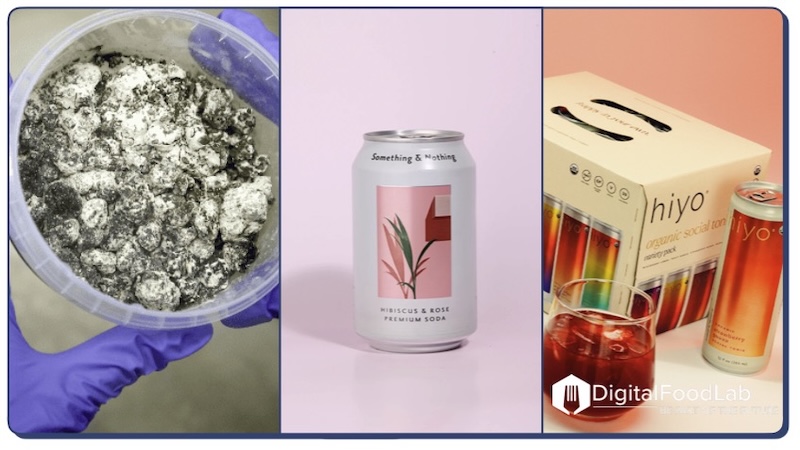
BM, Ripple, RXBar

Cooking and eating all the aforementioned products, even when trying to be unbiased, I wasn’t able to put aside what the “real” product should taste. When we look at all the successful Foodscience products that have emerged recently, we may conclude two things:
– first: do not try to change people habits, fake veggie burgers have failed for years. Those who, like Beyond Meat, thrive right now look, feel, taste (and are priced) close enough to the “real” ones to enter customers’ current habit loop.
– second: if your product can’t enter customers’ habit loops, just build another one. Startups like Soylent and Feed (cue: I don’t have time + I want to have a healthy meal/reward: inexpensive, nutritious and tasty drink) are building their success here.

Matthieu

(should you need any further information please do not hesitate to contact me)


BIG DEAL

Starship Technologies

The delivery robot startup Starship Technologies raised $25 million.

The funding will help the company to take its robots to market . It had announced earlier this year that it was ready to start selling robots througout Europe and the U.S.

Business Insider


TOP NEWS

In our last newsletter, we talked about the 11 million investment made in Lunchr. Here is news about a $70 million investment in Ritual, a Boston located service that enables employees to order food from local restaurants, skip the wait. The app adds a social cue by letting coworkers piggyback on a team member to bring ordered foods.

Techcrunch

Marley Spoon

Marley Spoon announced it’s IPO last week. Despite being located in Berlin and being more known for its association with Martha Stewart in the U.S., the startup will make it’s IPO in Australia ASX. It claims 110,000 customers (5 to 10% of the size of its major competitors Hello Fresh and Blue Apron) across its different markets, 37% of them in Australia (where it aims to be profitable later this year).

Techcrunch

You're in a good company

Join the 60+ clients of Digital FoodLab: leading agrifood companies, retailers, banks, investors, startups, and public organisations.

Use case: project for a global F&B company looking to map its AgTech innovation ecosystem and the best startups to partner with

What we did:

  • Mapping of the AgTech ecosystem: startups, research regulators, and other leading companies.
  • Discussion to select areas to focus on.
  • Analysis of the information to reveal the trends and a model to analyse eventual partners.
  • A workshop to validate the opportunities based on our recommendations.
  • Scouting of relevant partners followed by introductions.

Results:

  • Mapping the different categories of innovations in AgTech that should be considered now to create long-term benefits for the business.
  • Identification of key partners (an incubator and a couple of startups).

Use case: project for a CPG company on the healthy ageing ecosystem

What we did:

  • Education of the board through a couple of workshops to define the perimeter
  • Identification of key opportunities and threats created by long-term evolutions (technologies, business models, behavioural changes).
  • Deep dives on each of the priority categories.
  • Co-construction of a vision on how the company should address these challenges.
  • Identification of partners (startups, incubators, funds) to move forward.

Results:

  • Creating a consensus on which categories to prioritise and how to address them.
  • Implementation of an open innovation strategy through the development of partnerships.

Use case: project for a global CPG company to develop a strategy on the healthy ageing ecosystem

What we do (ongoing mission on a subscription model):

  • Kick-off where we present an overview of the AgriFoodTech ecosystem to select with the client the categories to cover and for each, the level of information required.
  • Monthly newsletter: each month we send a newsletter with the articles that we have gathered ranked by relevance, their summaries, and a layer of analysis.
  • Database: we set up a personalised database that will be filled month after month with the information gathered on the companies identified for the watch.
  • Workshops: twice a year with the client’s innovation team and other “innovation curious” team members, we present an overview of the evolutions, key trends and a dashboard of the topics followed by the watch.

Results:

  • A clear, regular and evolutive tool to follow what is happening in terms of innovation on key topics.
  • A forum (through the workshops) to discuss innovation trends and new opportunities.

Use case: opportunity screening for an ingredient company

What we did:

  • Kick-off to define the perimeter of the ecosystem studied.
  • Mapping of the different trends shaping the innovation ecosystem of the client.
  • Analysis of the trends on DigitalFoodLab’s trend curve and other relevant frameworks.
  • Workshop to discuss DigitalFoodLab’s recommendations on key trends to prioritise

Results:

  • Shared view of the innovation ecosystem for the client with a view of the trends to prioritize.
  • Clear document (personalised trend curve) that can be easily shared internaly to explain the company’s innovation choices and which can be then updated each year.

Use case: scouting for an agriculture coop

What we did:

  • Kick-off to define the perimeter of the client, the goals of the scouting (partnerships) and the criteria on which startups should be evaluated.
  • Set-up scouting: we selected the first batch of 20+ key startups following the criteria of the client.
  • On-going scouting: then we set up a quarterly scouting of about ten startups.
  • For each scouted startup, we created an ID card with key information such as the business and technological maturity, funding, and corporate partnerships. We also added an explanation of why we selected this startup.

Results:

  • An ongoing and evolutive scouting are matching the client's criteria and its capabilities in terms of deal flow.

Use case: working on an acquisition process for a CPG company

What we did:

  • Kick-off to define what the client is seeking, notably in terms of maturity.
  • Workshop with the client based on a mapping of the different innovation ecosystems adjacent to its activities to select some priorities and discuss inspiring examples of startup acquisition stories.
  • Identification of 20+ targets.
  • Workshop to select the most relevant to engage with.
  • DigitalFoodLab worked as a sparing partner during the acquisition process, notably to help design how the acquired startup could be integrated into the overall company’s strategy.

Results:

  • Different results from traditional M&A processes with a focus on the client’s innovation strategy.
  • Identification of a good match for an acquisition.

Use case: market due diligence on sugar alternatives

What we did:

  • Kick-off with the client to discuss its interest on this category, its expectations and existing level of information (notably on the target company).
  • Mapping of the ecosystem to analyse the different existing alternatives and technologies to compare them.
  • Interview (calls) with relevant startups made by our internal biotechnology expert.
  • Recommendation on whether to invest or not.

Results:

  • Clear view of the ecosystem and of the reasons to believe (or not) in each sub-category.
  • Enforceable recommendations based on facts and expertise.