Best deals and top FoodTech news (2022 – week #4)

Published on February 2, 2022

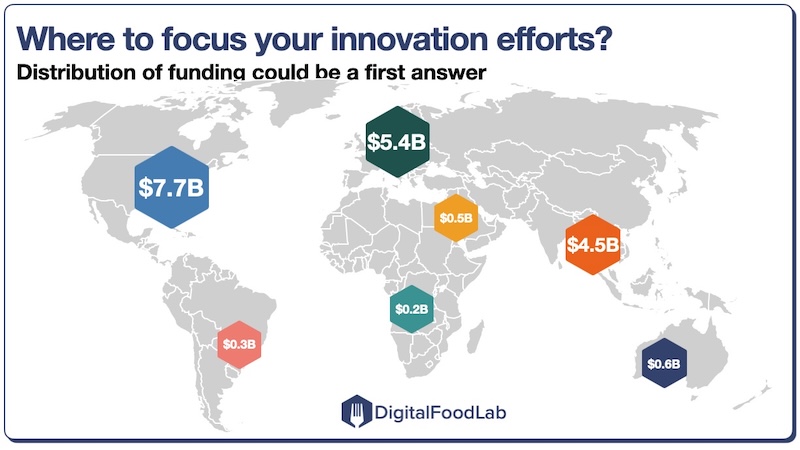
4 NOTABLE DEALS IN EUROPE, 4 IN THE REST OF THE WORLD:

🤖  🚚  🇪🇪 Starship Technologies received €50M in funding from the European investment bank. The startup is known as one of the world leaders for autonomous delivery robots, with many experimentations running on university campuses.
This deal aims to retain Starship’s R&D in the EU (it also operates in the UK, and its robots are mostly active in the US) while helping the startup bridge the gap between closed environments (such as campuses) and open streets.

🦄  🇧🇪  Deliverect raised $150M and became Belgium first FoodTech unicorn (and the country overall third $1B+ startup). Deliverect, only three years old, helps restaurants to manage the different orders coming from delivery platforms. Since it has grown beyond and allows some chains to manage their in-store orders too, and some CPG companies to control their relationships with multiple grocery delivery partners.

🚚  🇬🇧  Zapp, a British quick-commerce (grocery delivery in less than 10 to 30 minutes), raised $200M. It says that two-thirds of its orders are profitable and that the average order is “in the mid-20£” region compared to “sub-£15” for its main (unprofitable) competitors.
With the acquisition of Frichti by Gorillas last week, the push of GoPuff in Europe, Delivery Hero and DoorDash acquisitions, the space is structuring fast. Small players should be worried. Kol, a French legacy player, shut down this week after failing to raise €30M, an amount that may not have been enough to compete in a space where the minimum entry ticket maybe now at $200M.

📦  🇫🇷  Uzaje, a French cleaning startup for reusable packaging raised €4M. While we observe a growing appetite for reusable packaging, both in grocery stores, vending machines replacing canteens inside offices, and of course for meal delivery, one big (though unsexy) question remains: how to safely and efficiently clean these containers. Uzaje addresses this issue with an integrated model that picks up the containers, cleans, and re-dispatches them.

🍣  🇺🇸  Bokksu raised $22M for its Japanese snacks subscription service and marketplace. With more than one million subscriptions since 2016, the startup shows how the huge appetite for the Japanese culture translates into food (notably at $44/box) and can create a significant business.

🧑‍🌾  🇺🇸  Full Harvest raised €23M for its B2B imperfect foods marketplace. In the past year, we have seen considerable deals in the space of imperfect foods (notably with Misfits). It is interesting to see how Full Harvest addresses the issue from another angle by connecting businesses (such as restaurants) directly with farmers with imperfect foods.

🍖 🇮🇱  Redefine Meat raised $135M for its 3D-printing technology for meat. This technology could be the answer to the much-awaited plant-based “whole cuts” (big chunks of meat substitutes that overcome the limitation to small bites or minced meat of the current technology). The startup will use the funding to set up production facilities in Israel and the Netherlands.
We are impressed by Israel-based alternative protein startups, the speed at which they raise money and the size of the deals.

🚜  🇺🇸  Plenty raised $400M for its vertical farms with Walmart as one of the investors. Beyond the staggering amount invested, the participation of a retailer such as Walmart is notable. It shows how much retailers now value the ability on reliable and high-quality products all year round.
This kind of money demonstrates how much investment will be needed to scale the infrastructure behind the future of food.

BEYOND FUNDING, WHAT ELSE HAPPENED?

🥩  🇨🇳  China new 5-year plan includes cellular agriculture and other future foods. This kind of public recognition may help trigger more public funding and research for the sector. Beyond funding, it may also help decision-makers in China and elsewhere look more seriously at these new technologies and accelerate their regulatory path.

🌍 🍫 Nestlé will increase its payouts to African cocoa farmers to remove child labour from its supply chain. In Africa, cocoa is mainly grown by smallholder farmers where children are often employed (1.56M children are engaged in Ivory Coast and Ghana). By paying farming households, Nestlé encourages them to send their children to school and fight poverty.

You're in a good company

Join the 60+ clients of Digital FoodLab: leading agrifood companies, retailers, banks, investors, startups, and public organisations.

Use case: project for a global F&B company looking to map its AgTech innovation ecosystem and the best startups to partner with

What we did:

  • Mapping of the AgTech ecosystem: startups, research regulators, and other leading companies.
  • Discussion to select areas to focus on.
  • Analysis of the information to reveal the trends and a model to analyse eventual partners.
  • A workshop to validate the opportunities based on our recommendations.
  • Scouting of relevant partners followed by introductions.

Results:

  • Mapping the different categories of innovations in AgTech that should be considered now to create long-term benefits for the business.
  • Identification of key partners (an incubator and a couple of startups).

Use case: project for a CPG company on the healthy ageing ecosystem

What we did:

  • Education of the board through a couple of workshops to define the perimeter
  • Identification of key opportunities and threats created by long-term evolutions (technologies, business models, behavioural changes).
  • Deep dives on each of the priority categories.
  • Co-construction of a vision on how the company should address these challenges.
  • Identification of partners (startups, incubators, funds) to move forward.

Results:

  • Creating a consensus on which categories to prioritise and how to address them.
  • Implementation of an open innovation strategy through the development of partnerships.

Use case: project for a global CPG company to develop a strategy on the healthy ageing ecosystem

What we do (ongoing mission on a subscription model):

  • Kick-off where we present an overview of the AgriFoodTech ecosystem to select with the client the categories to cover and for each, the level of information required.
  • Monthly newsletter: each month we send a newsletter with the articles that we have gathered ranked by relevance, their summaries, and a layer of analysis.
  • Database: we set up a personalised database that will be filled month after month with the information gathered on the companies identified for the watch.
  • Workshops: twice a year with the client’s innovation team and other “innovation curious” team members, we present an overview of the evolutions, key trends and a dashboard of the topics followed by the watch.

Results:

  • A clear, regular and evolutive tool to follow what is happening in terms of innovation on key topics.
  • A forum (through the workshops) to discuss innovation trends and new opportunities.

Use case: opportunity screening for an ingredient company

What we did:

  • Kick-off to define the perimeter of the ecosystem studied.
  • Mapping of the different trends shaping the innovation ecosystem of the client.
  • Analysis of the trends on DigitalFoodLab’s trend curve and other relevant frameworks.
  • Workshop to discuss DigitalFoodLab’s recommendations on key trends to prioritise

Results:

  • Shared view of the innovation ecosystem for the client with a view of the trends to prioritize.
  • Clear document (personalised trend curve) that can be easily shared internaly to explain the company’s innovation choices and which can be then updated each year.

Use case: scouting for an agriculture coop

What we did:

  • Kick-off to define the perimeter of the client, the goals of the scouting (partnerships) and the criteria on which startups should be evaluated.
  • Set-up scouting: we selected the first batch of 20+ key startups following the criteria of the client.
  • On-going scouting: then we set up a quarterly scouting of about ten startups.
  • For each scouted startup, we created an ID card with key information such as the business and technological maturity, funding, and corporate partnerships. We also added an explanation of why we selected this startup.

Results:

  • An ongoing and evolutive scouting are matching the client's criteria and its capabilities in terms of deal flow.

Use case: working on an acquisition process for a CPG company

What we did:

  • Kick-off to define what the client is seeking, notably in terms of maturity.
  • Workshop with the client based on a mapping of the different innovation ecosystems adjacent to its activities to select some priorities and discuss inspiring examples of startup acquisition stories.
  • Identification of 20+ targets.
  • Workshop to select the most relevant to engage with.
  • DigitalFoodLab worked as a sparing partner during the acquisition process, notably to help design how the acquired startup could be integrated into the overall company’s strategy.

Results:

  • Different results from traditional M&A processes with a focus on the client’s innovation strategy.
  • Identification of a good match for an acquisition.

Use case: market due diligence on sugar alternatives

What we did:

  • Kick-off with the client to discuss its interest on this category, its expectations and existing level of information (notably on the target company).
  • Mapping of the ecosystem to analyse the different existing alternatives and technologies to compare them.
  • Interview (calls) with relevant startups made by our internal biotechnology expert.
  • Recommendation on whether to invest or not.

Results:

  • Clear view of the ecosystem and of the reasons to believe (or not) in each sub-category.
  • Enforceable recommendations based on facts and expertise.