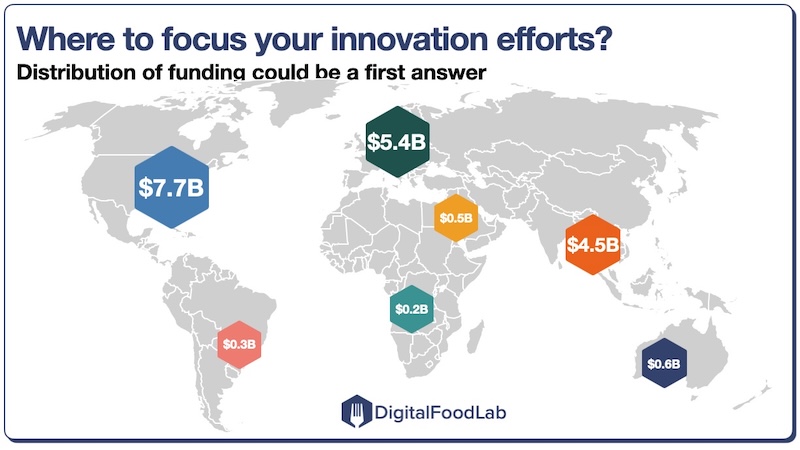
We know that investments have been declining and then stabilising for FoodTech startups. Now, how does this affect the most well-funded startups? That’s what we answer in DigitalFoodLab’s seventh FoodTech unicorns report, which you can download here. The report contains insights on the state of these startups, as well as a list of all the companies, with details on their activities and location, so that’s something you should definitely have a look at.
Welcome to DigitalFoodLab’s Newsletter! I’m Matthieu Vincent, co-founder of DigitalFoodLab, an innovation strategy consultancy specialising in the future of agriculture and food. Each week, I bring you a curated selection of news and my insights on the trends shaping the future of these industries. Curious to take it further? Let’s connect t¨o explore how you can join the 60+ leading companies we’ve helped navigate innovation ecosystems and turn opportunities into actionable strategies.
While the concept of unicorns has lost some of its mystique, these companies still serve as valuable indicators of FoodTech’s evolution. They provide a unique window into the sector’s investment landscap
e, emerging trends, and the broader innovation trajectory.

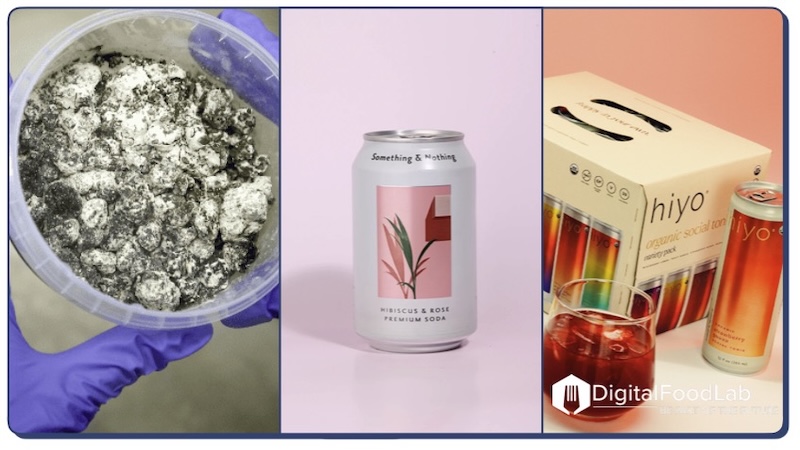
There are now 55 FoodTech unicorns, down from 59 last year. Six startups lost their unicorn status with an unprecedented number of « failures »: four saw their valuation go below the $1B threshold (Flink, Tridge, Plenty, eFishery), one was acquired at a low valuation (Getir), while only one (Swiggy) had a successful IPO. Meanwhile, three new unicorns emerged in 2024 and Q1 2025, all in the US (Inari, Olipop, Liquid Death), two being consumer brands. This highlights a growing diversification in FoodTech, moving beyond its traditional tech-heavy segments.
This decrease is still an “optimist point of view.” Indeed, we only use information shared in public announcements for this mapping. However, we know and hear about numerous downturns (investments at lower valuations) and situations of near bankruptcy that could shrink the already small list even more.

The above graph shows the situation: there has been a steep decline in the number of startups reaching the $1B valuation. If the global amount of funding in FoodTech startups has declined to 2016 levels, the ecosystem generates half as many unicorns.
This tells us of a much more structural change: beyond brands that can be acquired at a high price by leading CPG companies, the idea that agrifood startups will become tomorrow’s leaders had died with the investment hype of 2021 and 2022. Now, the shared belief is that tech-focused companies (even those developing ingredients and food products) end-game are to be acquired by incumbent players at valuations reflecting what additional business they can generate. And in the immense majority, that’s in the order of tens or maybe hundreds of millions, but not billions.

In terms of categories, the delivery sector has definitively stabilised, marking the end of its once-hyped expansion. Vertical farming continues to struggle, with the most recent example being Plenty’s significant setbacks.
In terms of evolutions, we don’t expect much change for 2025 beyond some additional downturns and acquisitions.
Download the report to have a detailed view of all the insights and a list of all the startups and their activities.