Over the past year, we have observed a series of moves in the alternative protein space that caught our attention. Preparing the session has been a useful opportunity to look at what this ecosystem can teach the wider food industry.
Beyond fresh meals and premium brands, pet nutrition is becoming a commercial outlet for new ingredients and a market for increasingly ambitious health propositions. Here are the developments catching our attention, and three lessons for food and ingredient companies.
Pet food innovation goes beyond premium brands
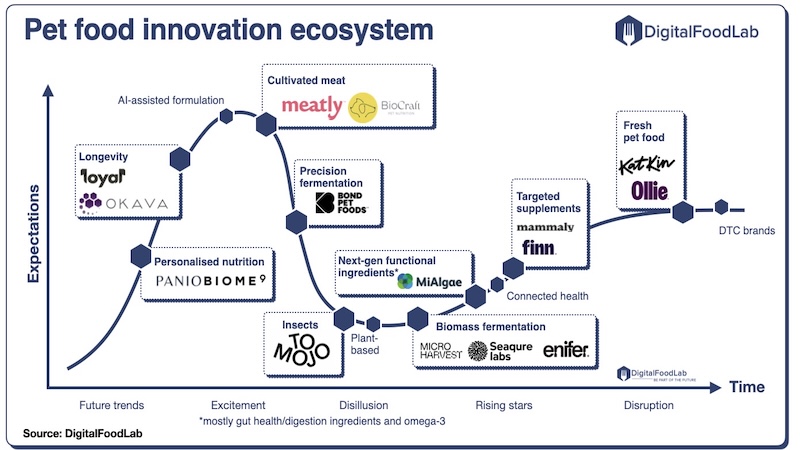
When talking about pet food and innovation, the question is often “Is there anything more than new brands?” Indeed, these have had quite a good time recently with some really successful exits. DigitalFoodLab’s trends curve shows a broader ecosystem, with opportunities at different stages of maturity.
In the short term, there are three key spaces to observe:
- Fresh Pet Food: brands such as KatKin and Ollie combine fresh recipes with subscriptions and recurring purchases. Their proposition centres on the perceived quality of their products compared to leading brands.
- Targeted supplements: players such as Finn organise products around specific needs, including digestion, mobility and skin health, making the intended benefit easy for owners to understand.
- Next-gen functional ingredients: startups like MiAlgae provide ingredients with specific nutritional functions, enabling brands to broaden their health claims.
Other trends focus on longer-term opportunities:
- Biomass Fermentation: a small number of players, often coming from human nutrition, such as Enifer and MicroHarvest, produce ingredients for pet food, with applications recently moving into finished products.
- Insects & plant-based: while both are providing a sustainable alternative to the meat used in traditional pet food, both categories are doing poorly. This remains a bet on the strong pet humanisation trend. But, as for now, pet owners are not themselves really switching to a sustainable diet.
- Precision fermentation: a very small number of players, such as Bond Pet Foods use engineered microorganisms to produce animal proteins through fermentation.
- Cultivated Meat: startups like Meatly or Ivy Farm , use cellular agriculture. Both examples have received regulatory approval in the UK.
- Longevity: solutions developed with the goal of increasing pets lifespan through approaches ranging from supplements to veterinary drugs.
- Personalised nutrition: services such as Nestlé’s Petivity use microbiome analysis to recommend nutrition and supplements, adding a service around the food product.
Four lessons from the pet food innovation ecosystem
Fresh food brands and increasingly specialised offers show how companies are building propositions around food that owners perceive as better.
1 – Premium brands create more room for innovation
Fresh and premium pet food brands have already demonstrated their ability to scale. Recent examples include Butternut Box (UK), which announced £280M in private equity funding, and The Farmer’s Dog (US), with revenues above $1.2B in 2024. New players are, however, looking beyond simply fresh food products. In April, Golden Child (US) announced $37M in funding for its ultra-premium pet food brand. The name of the startup itself reflects the evolution towards a focus on more quality.
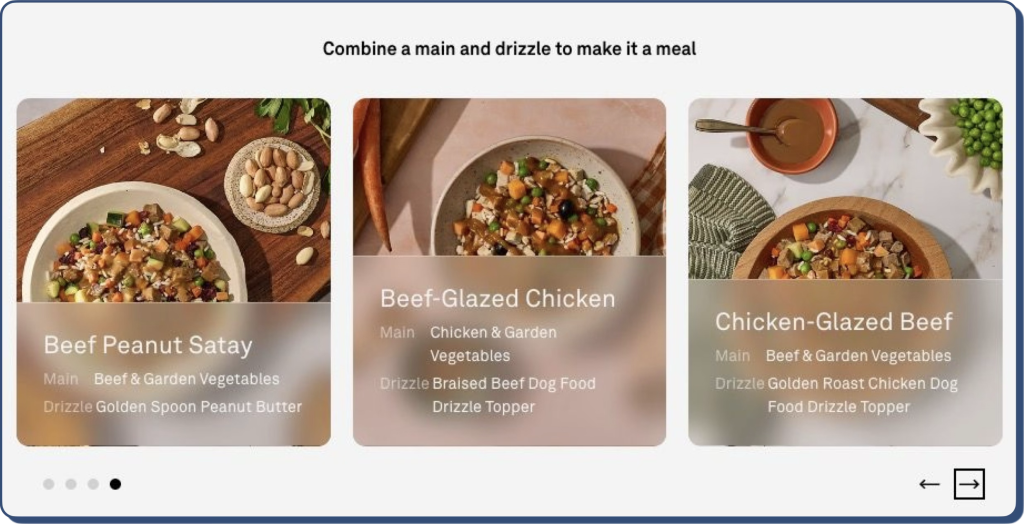
The growth of these brands suggests that some owners are willing to pay a premium for food they perceive as better.
For ingredient suppliers, premium pet food can offer a first market for innovations that struggle to compete on price in human food.
2 – Health is the new value proposition
Recent developments increasingly focus on specific health benefits. MiAlgae’s partnership with Butternut Box illustrates how a new ingredient can contribute a defined nutritional function, supplying omega-3s within an existing recipe.
3 – Corporate partnerships are delivering products to the market much faster than for human food
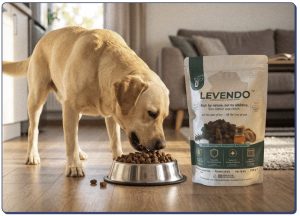
Pet nutrition is already providing some players in the alternative protein space with a path-to-market. In October, HenArt launched a dog food product containing Enifer’s mycoprotein. MicroHarvest’s protein has also reached dog treats through collaborations. These products create opportunities to assess ingredients in manufacturing and to gather experience with customers.
Established companies are also increasingly venturing into this space. Symrise invested in Bond Pet Foods in April, and in May, Hill’s and Bond announced an FDA no-objection letter for their Lamb Protein Yeast ingredient.
4 – Longevity: the next frontier
Longevity is becoming a key topic of research and innovation both for pets and humans. Pets have some “benefits”, making this market more attractive in the short term: owners can control their diets, and shorter lifespans can make some effects of new ingredients on ageing quicker to observe. And owners’ emotional attachment to their pets also creates a potential market for products that support healthy ageing.
A dedicated pet longevity ecosystem is emerging, with some supplements already on the market. A first example is Fera Pets with its longevity supplement containing a NAD+ precursor. Another striking example is Loyal, which raised $100M earlier this year to advance drugs intended to extend dogs’ healthy lifespan towards regulatory approval. This would make its drug the first one to receive approval for lifespan extension.
These approaches involve different evidence requirements. The presence of a longevity-related ingredient in a supplement does not establish that the finished product extends lifespan, and it doesn’t translate into a potential product for humans. However, looking at these products remains a good indication of what could happen.
What’s next for pet food & lessons for the rest of the food industry
Beyond the current economic uncertainties, the future of the pet food industry is bright. This helps support the growth of an exciting innovation ecosystem. In the short term, here are the signals we are watching:
1 – How will recent updates on cultivated meat in the UK (two regulatory approvals, one startup developing production capabilities) translate into products, and how will consumers react to them?
2 – Will the longevity players be able to have clinical proof of the efficacy of their products, and will it attract further investment?
3 – As the gap between increasingly premium and health-focused pet food on one side and consumer affordability concerns keeps growing, how can it be managed by leading companies? Will services become more important?
At DigitalFoodLab, we help food and ingredient companies turn ecosystem and consumer insights into opportunities, innovation priorities and partnerships. If you’re exploring pet nutrition or assessing what these developments mean for your business, let’s discuss where to focus.