19 FoodTech insights and deals to know this week (2026 – week #22)

Published on May 26, 2026

💸 Funding News

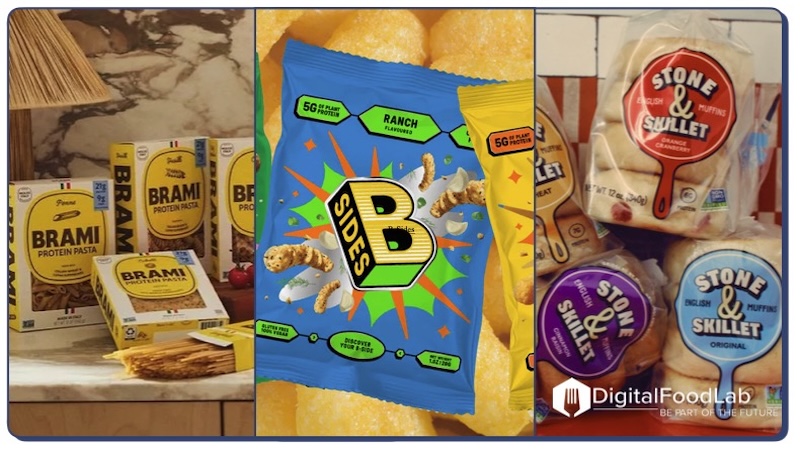
🍝🇺🇸 Brami, a US startup, raised $33M for its protein pasta. Initially, the startup sold lupini snacks but later switched to pasta (with a mix of lupini and wheat, delivering 21g of protein per serving), and hence surfed the high-protein and non-ultraprocessed food waves.


♻️🇫🇷 Dealinka, a French startup, raised €6.5M to scale its redistribution platform for unsold non-food goods, connecting companies sitting on surplus inventory to a network of 1,200 partner associations.


☀️🇩🇪 Feldwerke, a German startup, raised a €12M (in debt) to deploy 100 MW of solar panels above agricultural land (agriphotovoltaic).


♻️🇺🇸 B-Sides, a US startup, raised $500K for its snacks made from upcycled ingredients from the byproducts of oat milk and corn flour production.


🥚🇺🇸 Stone & Skillet, a US startup, raised $5M for its premium muffins made with spent grain from beer brewing.


🐟🇮🇱 Oshi, an Israeli startup, raised $3M to keep expanding its plant-based fish alternatives in the US (where they grew fourfold in 2025) and in Latin America.


🌱🇮🇳 ONO, an Indian startup, raised $1.2M for its digital lending and post-harvest supply chain financing tools for smallholder farmers.


🌿🇬🇧 QuberTech, a British startup, raised £3.4M to develop natural rubber from engineered dandelions, with the goal to reduce the reliance on imports from Southeast Asia.


🐄🇳🇱 Triple Bio, a Dutch startup, raised €1.5M for its lipid-based feed additive platform, which reduces methane emissions and boosts milk yields in dairy cattle.


🧫🇮🇳 StrainX Bioworks, an Indian startup, raised $13M to scale its fully integrated precision fermentation platform. It already has a 10,000-litre capacity operational, designed to reach 100,000 litres by the end of 2027.


🌾🇩🇰 PerPlant, a Danish startup, raised €1M for its tractor-mounted AI precision spraying system, which decides plant-by-plant what gets sprayed, enabling up to 90% herbicide reduction and 30% fertiliser savings per field pass.


⭐ Acquisitions, Regulation & Bankruptcies

🐔🇮🇹 Amadori, Italy’s leading poultry group, has acquired Unconventional, a plant-based meat alternative brand from Granarolo, an Italian dairy company.


🐄🇺🇸🇦🇺 URUS, a leading US beef and dairy genetics, has acquired AgriWebb, an Australian livestock management and supply chain data platform used by beef and sheep producers across Australia, the US and the UK. Interesting vertical integration of breeding genetics with real-time herd management, traceability and market access data.


🌱🇩🇪 Germany’s Federal Ministry of Research published its High-Tech Agenda Biotechnology Roadmap, formally embedding alternative proteins as a national strategic priority.


🚖🇩🇪 Uber is weighing a higher takeover bid for Delivery Hero after two offers were rebuffed: an initial €33/share (~€10bn), and a second approach at €38/share(~€11.5bn). Uber’s rival DoorDash is also circling and making shareholder enquiries.


📊 Macro Trends

🐣🇺🇸 Colossal Biosciences — the de-extinction company behind the project of “recreating” the woolly mammoth has hatched live chicks from fully artificial eggs (3D-printed plastic shells coated with a silicone membrane that mimics natural oxygen exchange). The immediate application is conservation. Long-term, it could be applied to “de-extinction”.


🥛🇪🇺 Whey protein isolate prices have surged fivefold to €28,000/tonne since 2023, outpacing cheese and butter prices by more than 4×. This is driven by the protein megatrend. European majors Arla and FrieslandCampina are sold out of isolates through June or July. The US, formerly a significant exporter, now consumes virtually all of its domestic production. The structural inversion: cheese, once the primary product of dairy manufacturing, risks becoming the byproduct, while whey becomes the primary value driver. At current price levels, manufacturers may begin substituting cheaper plant proteins.


💊🇺🇸 Eli Lilly’s retatrutide (new GLP-1 molecule targeting 3 weight-loss pathways) delivered unprecedented Phase 3 results, with participants losing an average 28.3% of body weight over 80 weeks, going further than any approved obesity drug to date.


🍽️🇮🇹 Carlo Petrini, founder of the global Slow Food movement, recently died. He launched the movement in 1989 as a direct protest against the opening of Italy’s first McDonald’s in Rome, building it around the principle that food should be “good, clean, and fair”, a philosophy that reshaped how millions think about sourcing, biodiversity and culinary culture.

You're in a good company

Join the 60+ clients of Digital FoodLab: leading agrifood companies, retailers, banks, investors, startups, and public organisations.

Use case: project for a global F&B company looking to map its AgTech innovation ecosystem and the best startups to partner with

What we did:

  • Mapping of the AgTech ecosystem: startups, research regulators, and other leading companies.
  • Discussion to select areas to focus on.
  • Analysis of the information to reveal the trends and a model to analyse eventual partners.
  • A workshop to validate the opportunities based on our recommendations.
  • Scouting of relevant partners followed by introductions.

Results:

  • Mapping the different categories of innovations in AgTech that should be considered now to create long-term benefits for the business.
  • Identification of key partners (an incubator and a couple of startups).

Use case: project for a CPG company on the healthy ageing ecosystem

What we did:

  • Education of the board through a couple of workshops to define the perimeter
  • Identification of key opportunities and threats created by long-term evolutions (technologies, business models, behavioural changes).
  • Deep dives on each of the priority categories.
  • Co-construction of a vision on how the company should address these challenges.
  • Identification of partners (startups, incubators, funds) to move forward.

Results:

  • Creating a consensus on which categories to prioritise and how to address them.
  • Implementation of an open innovation strategy through the development of partnerships.

Use case: project for a global CPG company to develop a strategy on the healthy ageing ecosystem

What we do (ongoing mission on a subscription model):

  • Kick-off where we present an overview of the AgriFoodTech ecosystem to select with the client the categories to cover and for each, the level of information required.
  • Monthly newsletter: each month we send a newsletter with the articles that we have gathered ranked by relevance, their summaries, and a layer of analysis.
  • Database: we set up a personalised database that will be filled month after month with the information gathered on the companies identified for the watch.
  • Workshops: twice a year with the client’s innovation team and other “innovation curious” team members, we present an overview of the evolutions, key trends and a dashboard of the topics followed by the watch.

Results:

  • A clear, regular and evolutive tool to follow what is happening in terms of innovation on key topics.
  • A forum (through the workshops) to discuss innovation trends and new opportunities.

Use case: opportunity screening for an ingredient company

What we did:

  • Kick-off to define the perimeter of the ecosystem studied.
  • Mapping of the different trends shaping the innovation ecosystem of the client.
  • Analysis of the trends on DigitalFoodLab’s trend curve and other relevant frameworks.
  • Workshop to discuss DigitalFoodLab’s recommendations on key trends to prioritise

Results:

  • Shared view of the innovation ecosystem for the client with a view of the trends to prioritize.
  • Clear document (personalised trend curve) that can be easily shared internaly to explain the company’s innovation choices and which can be then updated each year.

Use case: scouting for an agriculture coop

What we did:

  • Kick-off to define the perimeter of the client, the goals of the scouting (partnerships) and the criteria on which startups should be evaluated.
  • Set-up scouting: we selected the first batch of 20+ key startups following the criteria of the client.
  • On-going scouting: then we set up a quarterly scouting of about ten startups.
  • For each scouted startup, we created an ID card with key information such as the business and technological maturity, funding, and corporate partnerships. We also added an explanation of why we selected this startup.

Results:

  • An ongoing and evolutive scouting are matching the client's criteria and its capabilities in terms of deal flow.

Use case: working on an acquisition process for a CPG company

What we did:

  • Kick-off to define what the client is seeking, notably in terms of maturity.
  • Workshop with the client based on a mapping of the different innovation ecosystems adjacent to its activities to select some priorities and discuss inspiring examples of startup acquisition stories.
  • Identification of 20+ targets.
  • Workshop to select the most relevant to engage with.
  • DigitalFoodLab worked as a sparing partner during the acquisition process, notably to help design how the acquired startup could be integrated into the overall company’s strategy.

Results:

  • Different results from traditional M&A processes with a focus on the client’s innovation strategy.
  • Identification of a good match for an acquisition.

Use case: market due diligence on sugar alternatives

What we did:

  • Kick-off with the client to discuss its interest on this category, its expectations and existing level of information (notably on the target company).
  • Mapping of the ecosystem to analyse the different existing alternatives and technologies to compare them.
  • Interview (calls) with relevant startups made by our internal biotechnology expert.
  • Recommendation on whether to invest or not.

Results:

  • Clear view of the ecosystem and of the reasons to believe (or not) in each sub-category.
  • Enforceable recommendations based on facts and expertise.