20 FoodTech insights and deals to know this week (2026 – week #29)

Published on July 13, 2026

💸 Funding News


🥬🇺🇸 Hippo Harvest, a US startup, raised $30M to scale its robotic greenhouse production of leafy greens.


🥩🇵🇹 Brainr, a Portuguese startup, raised €1.5M from Portugal Ventures to fuel international expansion of its AI-powered operating system for meat processing facilities, already covering 65% of Portugal’s poultry production. Brainr was among the 50 startups that DigitalFoodLab recently selected in the 2026 European FoodTech 50.


🍽️🇺🇸 inKind, a US startup, raised $320M to expand its restaurant-funding network.


🌱🇳🇱 Aardaia, a Dutch startup, raised €5M for its crop-breeding platform focused on aardaker, a nitrogen-fixing protein tuber crop .


🥛🇸🇬 TurtleTree, a Singaporean precision-fermentation startup, raised undisclosed funding from Danish biotech giant Novonesis, which also signed an exclusive deal to scale and commercialise its cow-free lactoferrin.


🥩🇳🇱 Mosa Meat, a Dutch cultivated-meat pioneer, secured a €875,000 loan from Dutch state investor Invest International to support regulatory expansion into the UK, US, Canada, Australia and Singapore.


🍓🇬🇧 Dogtooth Technologies, a British startup, raised £14M to commercialise its AI fruit-harvesting robots, including deployments with Dyson Farming.


🔬🇧🇪 Polysense, a Belgian startup, raised $10.7M for its AI quality-control platform for food manufacturers.


🍑🇧🇪 Optiflux, a Belgian startup, raised $2.5M for its fruit-quality management tool, from the field to storage.


⭐ Acquisitions, corporate investments and developments


🌱🇪🇸 Kimitec, a Spanish bioinput startup, is getting acquired by a private equity firm (DVC Partners).


🌾🇺🇸 Chipotle, via its Cultivate Next fund, invested in six startups, with topics ranging from soil health and waste reduction to restaurant digital identity.


🚁🇮🇪 Manna, an Irish drone-delivery startup, plans a major US expansion, building a manufacturing hub in Oklahoma, expected to employ ~1,000 people, backed by its April $50M raise and a favourable regulatory push under the Trump administration.


🥇 Leading companies


🥩🇧🇷 JBS, the world’s largest meat group, scraps a key climate goal, dropping its 2040 net-zero target that covered Scope 3 supplier emissions, citing difficulty tracking indirect emissions from the cattle iit’srchases (it’s, however, hard to believe that the complexity suddenly appeared now).


⚡🇺🇸 Nutrabolt, a US energy-drink and supplements company, is preparing for an IPO, that could raise up to $1B.


🧊🇬🇧 M&S is investing in fridges built to withstand 45C heat, after refrigeration units broke down in several stormonth’sng last month’s UK heatwave, with CEO Stuart Machin saying t”e retaileit’s “assuming it’s goin” to get hotter”.


🚜🇺🇸 John Deere, a leading US agricultural machinery company, agreed to a 10-year right-to-repair for farmers following a settlement with the FTC. It will give farmers and independent repair shops the same diagnostic tools, software, and technical manuals it currently reserves for authorised dealers.


📊 Macro trends and leading companies


🥚🇺🇸 US egg producers gamed prices while blaming bird flu, according to an antitrust complaint showing that executives privately colluded via text messages to manipulate the egg price benchmark, while publicly attributing record prices to avian flu.


🍌🇺🇸 Banana flavour is moving intoo new US food and drink territory, with Barebells, MDunkin’arbucks, and Dunkin’ all launching banana-flavoured products this year, as the fruit becomes newly linked to protein and functionaJapan’sages.


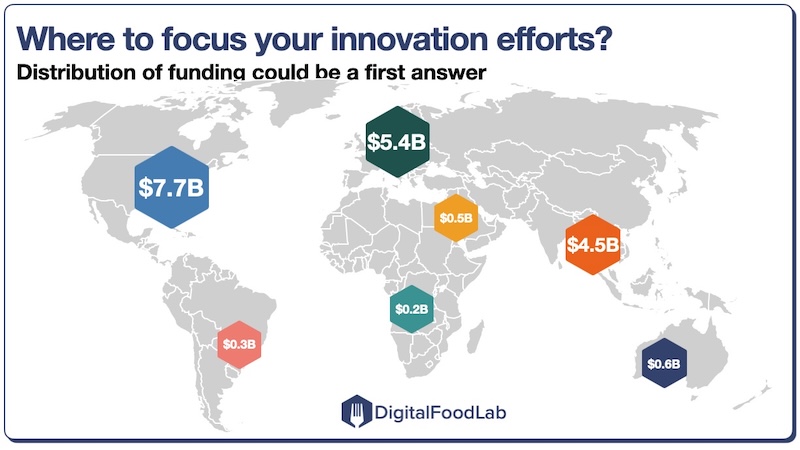
🍱🇯🇵 Japan’s government released a 2040 public-private investment roadmap“allocatin” $6.2B to “new foods”, a national push on alternative proteins and novel food tech.


🌭 🥇 HappyVore established a new record for the biggest plant-based BBQ. The French plant-based meat alternative HappyVore gathered more than 2,000 people to set an official Guinness World Records title for the largest plant-based BBQ, serving over 30,000 vegan sausages and nuggets.

You're in a good company

Join the 60+ clients of Digital FoodLab: leading agrifood companies, retailers, banks, investors, startups, and public organisations.

Use case: project for a global F&B company looking to map its AgTech innovation ecosystem and the best startups to partner with

What we did:

  • Mapping of the AgTech ecosystem: startups, research regulators, and other leading companies.
  • Discussion to select areas to focus on.
  • Analysis of the information to reveal the trends and a model to analyse eventual partners.
  • A workshop to validate the opportunities based on our recommendations.
  • Scouting of relevant partners followed by introductions.

Results:

  • Mapping the different categories of innovations in AgTech that should be considered now to create long-term benefits for the business.
  • Identification of key partners (an incubator and a couple of startups).

Use case: project for a CPG company on the healthy ageing ecosystem

What we did:

  • Education of the board through a couple of workshops to define the perimeter
  • Identification of key opportunities and threats created by long-term evolutions (technologies, business models, behavioural changes).
  • Deep dives on each of the priority categories.
  • Co-construction of a vision on how the company should address these challenges.
  • Identification of partners (startups, incubators, funds) to move forward.

Results:

  • Creating a consensus on which categories to prioritise and how to address them.
  • Implementation of an open innovation strategy through the development of partnerships.

Use case: project for a global CPG company to develop a strategy on the healthy ageing ecosystem

What we do (ongoing mission on a subscription model):

  • Kick-off where we present an overview of the AgriFoodTech ecosystem to select with the client the categories to cover and for each, the level of information required.
  • Monthly newsletter: each month we send a newsletter with the articles that we have gathered ranked by relevance, their summaries, and a layer of analysis.
  • Database: we set up a personalised database that will be filled month after month with the information gathered on the companies identified for the watch.
  • Workshops: twice a year with the client’s innovation team and other “innovation curious” team members, we present an overview of the evolutions, key trends and a dashboard of the topics followed by the watch.

Results:

  • A clear, regular and evolutive tool to follow what is happening in terms of innovation on key topics.
  • A forum (through the workshops) to discuss innovation trends and new opportunities.

Use case: opportunity screening for an ingredient company

What we did:

  • Kick-off to define the perimeter of the ecosystem studied.
  • Mapping of the different trends shaping the innovation ecosystem of the client.
  • Analysis of the trends on DigitalFoodLab’s trend curve and other relevant frameworks.
  • Workshop to discuss DigitalFoodLab’s recommendations on key trends to prioritise

Results:

  • Shared view of the innovation ecosystem for the client with a view of the trends to prioritize.
  • Clear document (personalised trend curve) that can be easily shared internaly to explain the company’s innovation choices and which can be then updated each year.

Use case: scouting for an agriculture coop

What we did:

  • Kick-off to define the perimeter of the client, the goals of the scouting (partnerships) and the criteria on which startups should be evaluated.
  • Set-up scouting: we selected the first batch of 20+ key startups following the criteria of the client.
  • On-going scouting: then we set up a quarterly scouting of about ten startups.
  • For each scouted startup, we created an ID card with key information such as the business and technological maturity, funding, and corporate partnerships. We also added an explanation of why we selected this startup.

Results:

  • An ongoing and evolutive scouting are matching the client's criteria and its capabilities in terms of deal flow.

Use case: working on an acquisition process for a CPG company

What we did:

  • Kick-off to define what the client is seeking, notably in terms of maturity.
  • Workshop with the client based on a mapping of the different innovation ecosystems adjacent to its activities to select some priorities and discuss inspiring examples of startup acquisition stories.
  • Identification of 20+ targets.
  • Workshop to select the most relevant to engage with.
  • DigitalFoodLab worked as a sparing partner during the acquisition process, notably to help design how the acquired startup could be integrated into the overall company’s strategy.

Results:

  • Different results from traditional M&A processes with a focus on the client’s innovation strategy.
  • Identification of a good match for an acquisition.

Use case: market due diligence on sugar alternatives

What we did:

  • Kick-off with the client to discuss its interest on this category, its expectations and existing level of information (notably on the target company).
  • Mapping of the ecosystem to analyse the different existing alternatives and technologies to compare them.
  • Interview (calls) with relevant startups made by our internal biotechnology expert.
  • Recommendation on whether to invest or not.

Results:

  • Clear view of the ecosystem and of the reasons to believe (or not) in each sub-category.
  • Enforceable recommendations based on facts and expertise.