19 FoodTech insights and deals to know this week (2026 – week #36)

Published on August 31, 2026

💸 Funding News


🤖 Signal of the week: automation is coming fast for the food supply chain. This week, we noticed 3 sizeable deals involving different types of food players:

  • 🚁🇮🇳 Airbound, an Indian startup, raised $37M for its autonomous delivery drones. DoorDash participated in the funding, which should enable the startup to scale to 10,000 autonomous flights per day.
  • 🚚🇺🇸 Gatik, a US startup, raised $200M for its autonomous middle-mile delivery trucks, two months after signing a multi-year deal with PepsiCo. It already operates fully driverless trucks commercially, including 41 vehicles that move Frito-Lay products, and says it has secured $600M in contracted revenue.
  • 🚁🇺🇸 SiFly, a US startup, raised $20M to scale production of its long-endurance electric drones. They can carry up to 10 lbs over a 90-mile range

Taken together, these deals show that beyond replacing food delivery drivers, drones and autonomous trucks could have a big impact on the food supply chain.


🍄🇧🇪 MAASH, a Belgian fermentation startup, secured €12.15M to scale its mycoprotein technology, including a demonstration plant in France. Sugar producers Tereos and Nordzucker participated in the equity portion of the financing.


🧫🇪🇪 ÄIO, an Estonian biotech startup, secured €1.94M in public funding for a three-year project to develop a digital platform aimed at reducing the cost of microbial oil and fat production.


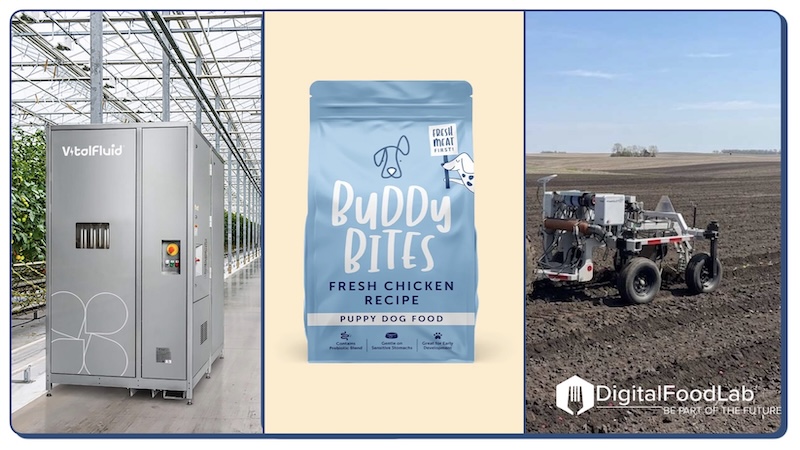
🐶🇭🇰 Buddy Bites, a Hong Kong startup, raised $4.2M for its subscription-based pet food business.


🌱🇳🇱 VitalFluid, a Dutch startup, raised €17.2M for its crop protection technology, which uses electricity, air and water to create a residue-free alternative to chemical fungicides.


🌱🇺🇸 TerraBlaster, a US startup, raised $12.5M to commercialise technology derived from Mars-rover sensing that measures nitrogen, phosphorus, potassium and other soil properties in real time while travelling at tractor speed.


🐄🇬🇧 Breedr, a British startup, raised €23M to expand its livestock management platform globally. Breedr creates a digital record for individual cattle from birth through the supply chain.


🌾🇹🇭 Living Roots, a Thai startup, raised an undisclosed amount to grow its biological crop-input platform across South and Southeast Asia.


⭐ Acquisitions, regulation, bankruptcies & partnerships


🥗🇺🇸 Berry Street merged with Indian healthtech startup Healthify to create a larger metabolic-health platform combining Healthify’s AI nutrition technology with Berry Street’s network of dietitians and insurance-covered care.


🏷️🇪🇺 EU lawmakers are seeking (again) to further restrict plant-based meat labels, proposing to add terms including “burger”, “sausage”, “nuggets” and “ham” to the list of names plant-based products cannot use. This would extend the restrictions agreed earlier this year on 31 other meat-related terms; the proposal is still under discussion, with a parliamentary vote expected later.


🌾🇮🇱 CropX acquired NIR spectroscopy company SCIO. SCIO’s sensors measure crop characteristics such as moisture, protein, oil and sugar, allowing CropX to connect agronomic recommendations during cultivation with measurable harvest outcomes.


🍣🇺🇸 Impact Food is shutting down after more than five years developing plant-based whole-cut tuna and salmon. The startup had raised more than $2M. Its founder highlighted how consumer habits, economics and timing remained major barriers.


🌾🇸🇬 Singapore is considering a $500M climate-adaptation fund for food supply chains, potentially targeting agriculture and aquaculture projects across Southeast Asia that struggle to attract conventional financing.


🥇 Leading companies


🧫🇺🇸 ADM is investing $55.5M to expand precision-fermentation capacity in Iowa. The project received $2.23M in state tax credits and follows ADM’s agreement to manufacture The EVERY Company’s precision-fermented egg proteins.


🐔🇺🇸 Costco has kept its famous rotisserie chicken at $4.99 since 2009 despite US retail chicken prices almost doubling, in part through aggressive vertical integration and automation.


📊 Macro trends


💉🇺🇸 GLP-1 users are spending nearly 4% less on groceries than comparable households, while shifting their baskets away from pasta, bakery products and other carb-heavy staples towards protein, fibre, seafood and functional nutrition. GLP-1 users already represent more than $660B in spending power across CPG, general merchandise, and quick-service restaurants.


🐔🌍 Chicken has become the world’s most produced meat, and its growth is accelerating: the number of chickens produced globally rose from 48.3B in 2006 to 76.2B in 2023, while annual production growth has recently accelerated above 3%. Its low cost, feed efficiency and cultural versatility are helping it gain share from beef and pork, but the next constraint may be the ability to build farms and processing capacity amid disease, pollution and growing opposition to intensive livestock production.

You're in a good company

Join the 60+ clients of Digital FoodLab: leading agrifood companies, retailers, banks, investors, startups, and public organisations.

Use case: project for a global F&B company looking to map its AgTech innovation ecosystem and the best startups to partner with

What we did:

  • Mapping of the AgTech ecosystem: startups, research regulators, and other leading companies.
  • Discussion to select areas to focus on.
  • Analysis of the information to reveal the trends and a model to analyse eventual partners.
  • A workshop to validate the opportunities based on our recommendations.
  • Scouting of relevant partners followed by introductions.

Results:

  • Mapping the different categories of innovations in AgTech that should be considered now to create long-term benefits for the business.
  • Identification of key partners (an incubator and a couple of startups).

Use case: project for a CPG company on the healthy ageing ecosystem

What we did:

  • Education of the board through a couple of workshops to define the perimeter
  • Identification of key opportunities and threats created by long-term evolutions (technologies, business models, behavioural changes).
  • Deep dives on each of the priority categories.
  • Co-construction of a vision on how the company should address these challenges.
  • Identification of partners (startups, incubators, funds) to move forward.

Results:

  • Creating a consensus on which categories to prioritise and how to address them.
  • Implementation of an open innovation strategy through the development of partnerships.

Use case: project for a global CPG company to develop a strategy on the healthy ageing ecosystem

What we do (ongoing mission on a subscription model):

  • Kick-off where we present an overview of the AgriFoodTech ecosystem to select with the client the categories to cover and for each, the level of information required.
  • Monthly newsletter: each month we send a newsletter with the articles that we have gathered ranked by relevance, their summaries, and a layer of analysis.
  • Database: we set up a personalised database that will be filled month after month with the information gathered on the companies identified for the watch.
  • Workshops: twice a year with the client’s innovation team and other “innovation curious” team members, we present an overview of the evolutions, key trends and a dashboard of the topics followed by the watch.

Results:

  • A clear, regular and evolutive tool to follow what is happening in terms of innovation on key topics.
  • A forum (through the workshops) to discuss innovation trends and new opportunities.

Use case: opportunity screening for an ingredient company

What we did:

  • Kick-off to define the perimeter of the ecosystem studied.
  • Mapping of the different trends shaping the innovation ecosystem of the client.
  • Analysis of the trends on DigitalFoodLab’s trend curve and other relevant frameworks.
  • Workshop to discuss DigitalFoodLab’s recommendations on key trends to prioritise

Results:

  • Shared view of the innovation ecosystem for the client with a view of the trends to prioritize.
  • Clear document (personalised trend curve) that can be easily shared internaly to explain the company’s innovation choices and which can be then updated each year.

Use case: scouting for an agriculture coop

What we did:

  • Kick-off to define the perimeter of the client, the goals of the scouting (partnerships) and the criteria on which startups should be evaluated.
  • Set-up scouting: we selected the first batch of 20+ key startups following the criteria of the client.
  • On-going scouting: then we set up a quarterly scouting of about ten startups.
  • For each scouted startup, we created an ID card with key information such as the business and technological maturity, funding, and corporate partnerships. We also added an explanation of why we selected this startup.

Results:

  • An ongoing and evolutive scouting are matching the client's criteria and its capabilities in terms of deal flow.

Use case: working on an acquisition process for a CPG company

What we did:

  • Kick-off to define what the client is seeking, notably in terms of maturity.
  • Workshop with the client based on a mapping of the different innovation ecosystems adjacent to its activities to select some priorities and discuss inspiring examples of startup acquisition stories.
  • Identification of 20+ targets.
  • Workshop to select the most relevant to engage with.
  • DigitalFoodLab worked as a sparing partner during the acquisition process, notably to help design how the acquired startup could be integrated into the overall company’s strategy.

Results:

  • Different results from traditional M&A processes with a focus on the client’s innovation strategy.
  • Identification of a good match for an acquisition.

Use case: market due diligence on sugar alternatives

What we did:

  • Kick-off with the client to discuss its interest on this category, its expectations and existing level of information (notably on the target company).
  • Mapping of the ecosystem to analyse the different existing alternatives and technologies to compare them.
  • Interview (calls) with relevant startups made by our internal biotechnology expert.
  • Recommendation on whether to invest or not.

Results:

  • Clear view of the ecosystem and of the reasons to believe (or not) in each sub-category.
  • Enforceable recommendations based on facts and expertise.