17 notable deals and things to know this week (2024 – week #18)

Published on April 30, 2024

Startup news and deals

🇩🇪 🛒 Who said that quick commerce was dead? Flink, a German startup, raised €100M to expand its operations.  This follows inconclusive discussions of mergers with Just Eat Takeaway and Getir.

🇹🇷 🥶 Ok, quick-commerce is maybe dead. Getir exits Europe and the US and shuts down Gorillas, a company acquired for €1.1B. Getir, once valued at almost $12M, will now only focus on Turkey, its home country. For quick-commerce, it really looks like it’s the end of the hype and that we are just going back (with $5B lost in the journey) to where things stood three years ago.

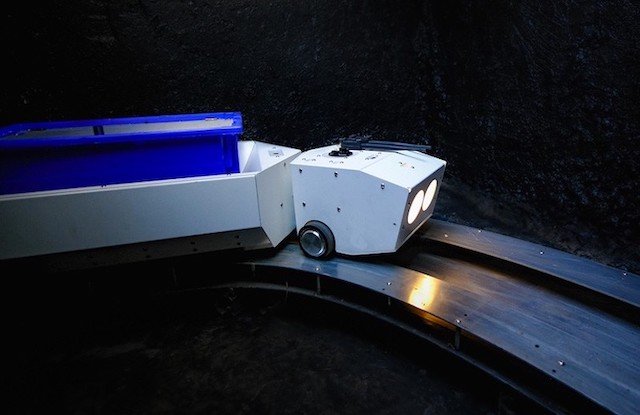
🇺🇸 🚇 Pipedream (I love this name) raised $13M to develop an underground delivery network for urban logistics. Let’s say everything is in the name… I don’t see how underground logistics can be built in city centres as we still have challenges with water pipes in London or garbage management in Paris (not to mention that the undergrounds are often already well-packed in most cities). But who knows? Even logisticians need to dream!

🇳🇱 🍔 Mosa Meat, a Dutch cultivated meat startup, raised €40M to increase production. It also says it is currently seeking regulatory approval in multiple regions.

🇩🇪 🍔 Cultimate Foods, a German startup, raised €2.3M for its cultivated fats that will help to improve the taste of plant-based foods. As it becomes increasingly clear that creating cultivated meat “at scale” will be a long-term challenge, we observe a new focus on “functional ingredients” created through cellular agriculture, which, instead of being the main component of future products, will only be there as flavour enhancers (hence required much less of them). This could be, indeed, the best road to success for the cellular agriculture industry, first small quantities of high-value ingredients and then, eventually, large-scale production.

🇺🇸 🍫 Bite, an American startup, raised $9M for its omnichannel ordering platform for the foodservice industry. It is impressive how deep the “digital restaurant” market is, as wave after wave of new startups emerge to solve increasingly niche problems.

🇰🇪 🌾 Pula, a Kenyan startup, raised $20M to expand its agricultural insurance services to smallholders in emerging markets.

🇩🇰♻️ Aiperia, a Danish startup, raised €7.5M for its AI-powered technology that helps grocery store to optimise their stockes, and ultimately to reduce food waste.

🇨🇦🌱 Growcer, a Canadian startup, raised $3M for its modular vertical farms.

🇺🇸 🤖 Serve Robotics, an American startup, raised $40M for its delivery robots. It plans to soon have 2,000 robots on the streets.

🇺🇸 💥 Foxtrot, a US-based startup, the formerly hype and highly-regarded “future of the corner shop” startup, is shutting down. It was a mix of a high-end convenience store, a café, and an online delivery supermarket. From what we understand from this situation, it seems that having both profitability and high growth while maintaining an upscale image was too complicated.

🇸🇪 🥒 Saveggy, a Swedish startup, raised €1.76M for its plastic-free, edible packaging for cucumbers.

🇳🇱🌱 Meridia, a Dutch startup, raised €5.2M for its data verification platform that helps companies manage agricultural data to ensure compliance with global standards and regulations.

🇫🇷 🌱 Edonia, a French startup, raised 2€M for its technology that microalgae into a texturised ingredient for food applications.

🇺🇸🍟 Wilde, an American startup, raised $20M for its protein-rich chips.

Regulation & public support

🇺🇸 🐷 Moolec, a startup using molecular farming (using plants to grow animal proteins through genetic engineering), received US regulatory approval to plant soy that contains pork.

Industry news & trends

🥤56 companies are responsible for half of the world’s plastic pollution. Danone and Nestlé each account for 3%, Pepsico for 5% and Coca-Cola brands for 11%. This comes from a research study examining the brand names of plastic pollution in 85 countries over 5 years. As plastic production keeps increasing, there is a growing need for alternatives beyond recycling.

You're in a good company

Join the 60+ clients of Digital FoodLab: leading agrifood companies, retailers, banks, investors, startups, and public organisations.

Use case: project for a global F&B company looking to map its AgTech innovation ecosystem and the best startups to partner with

What we did:

  • Mapping of the AgTech ecosystem: startups, research regulators, and other leading companies.
  • Discussion to select areas to focus on.
  • Analysis of the information to reveal the trends and a model to analyse eventual partners.
  • A workshop to validate the opportunities based on our recommendations.
  • Scouting of relevant partners followed by introductions.

Results:

  • Mapping the different categories of innovations in AgTech that should be considered now to create long-term benefits for the business.
  • Identification of key partners (an incubator and a couple of startups).

Use case: project for a CPG company on the healthy ageing ecosystem

What we did:

  • Education of the board through a couple of workshops to define the perimeter
  • Identification of key opportunities and threats created by long-term evolutions (technologies, business models, behavioural changes).
  • Deep dives on each of the priority categories.
  • Co-construction of a vision on how the company should address these challenges.
  • Identification of partners (startups, incubators, funds) to move forward.

Results:

  • Creating a consensus on which categories to prioritise and how to address them.
  • Implementation of an open innovation strategy through the development of partnerships.

Use case: project for a global CPG company to develop a strategy on the healthy ageing ecosystem

What we do (ongoing mission on a subscription model):

  • Kick-off where we present an overview of the AgriFoodTech ecosystem to select with the client the categories to cover and for each, the level of information required.
  • Monthly newsletter: each month we send a newsletter with the articles that we have gathered ranked by relevance, their summaries, and a layer of analysis.
  • Database: we set up a personalised database that will be filled month after month with the information gathered on the companies identified for the watch.
  • Workshops: twice a year with the client’s innovation team and other “innovation curious” team members, we present an overview of the evolutions, key trends and a dashboard of the topics followed by the watch.

Results:

  • A clear, regular and evolutive tool to follow what is happening in terms of innovation on key topics.
  • A forum (through the workshops) to discuss innovation trends and new opportunities.

Use case: opportunity screening for an ingredient company

What we did:

  • Kick-off to define the perimeter of the ecosystem studied.
  • Mapping of the different trends shaping the innovation ecosystem of the client.
  • Analysis of the trends on DigitalFoodLab’s trend curve and other relevant frameworks.
  • Workshop to discuss DigitalFoodLab’s recommendations on key trends to prioritise

Results:

  • Shared view of the innovation ecosystem for the client with a view of the trends to prioritize.
  • Clear document (personalised trend curve) that can be easily shared internaly to explain the company’s innovation choices and which can be then updated each year.

Use case: scouting for an agriculture coop

What we did:

  • Kick-off to define the perimeter of the client, the goals of the scouting (partnerships) and the criteria on which startups should be evaluated.
  • Set-up scouting: we selected the first batch of 20+ key startups following the criteria of the client.
  • On-going scouting: then we set up a quarterly scouting of about ten startups.
  • For each scouted startup, we created an ID card with key information such as the business and technological maturity, funding, and corporate partnerships. We also added an explanation of why we selected this startup.

Results:

  • An ongoing and evolutive scouting are matching the client's criteria and its capabilities in terms of deal flow.

Use case: working on an acquisition process for a CPG company

What we did:

  • Kick-off to define what the client is seeking, notably in terms of maturity.
  • Workshop with the client based on a mapping of the different innovation ecosystems adjacent to its activities to select some priorities and discuss inspiring examples of startup acquisition stories.
  • Identification of 20+ targets.
  • Workshop to select the most relevant to engage with.
  • DigitalFoodLab worked as a sparing partner during the acquisition process, notably to help design how the acquired startup could be integrated into the overall company’s strategy.

Results:

  • Different results from traditional M&A processes with a focus on the client’s innovation strategy.
  • Identification of a good match for an acquisition.

Use case: market due diligence on sugar alternatives

What we did:

  • Kick-off with the client to discuss its interest on this category, its expectations and existing level of information (notably on the target company).
  • Mapping of the ecosystem to analyse the different existing alternatives and technologies to compare them.
  • Interview (calls) with relevant startups made by our internal biotechnology expert.
  • Recommendation on whether to invest or not.

Results:

  • Clear view of the ecosystem and of the reasons to believe (or not) in each sub-category.
  • Enforceable recommendations based on facts and expertise.