Startup news and deals
🇹🇷 🛵 Getir, the Turkish-based quick-commerce startup, raised $250M from Abu Dhabi’s wealth fund which becomes a majority shareholder. Turkey is now its unique market (down from tens of countries only a couple of years ago).
🇨🇿 🛒 Rohlik, a Czech startup, raised $170M for grocery delivery operations. It now delivers more than one million orders per month.

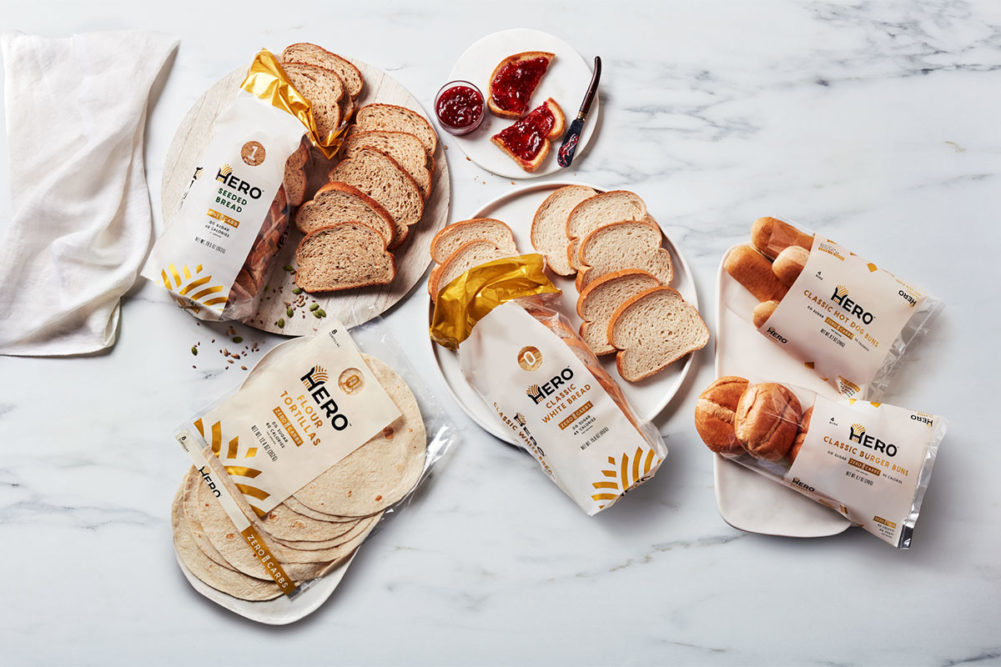
🇺🇸 🍞 Hero Bread, an American startup, raised $21M for its bakery products. It focuses on low-carb, high-fiber, and low-calorie bread and baked goods. Low-carb, and more broadly products with an impact on glucose levels, is one of the biggest trends right now. Winners seem to be products which combine ease of use (like these breads, which look like “normal ones”), taste, a reasonable price, and a health claim.
🇮🇳🥛 Sid’s Farm, an Indian startup, raised $10M for its D2C dairy operations. It provides dairy products to consumers while controlling the entire supply chain by sourcing milk directly from farmers. We observe a growing wave of such delivery players in developing economies, which brings trust in the delivery of fresh produce, meat and dairy products.
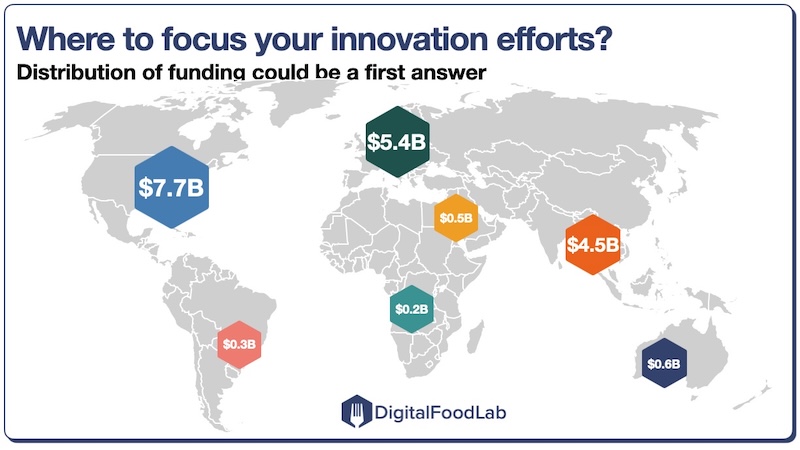
🇸🇬 🥫AI Palette, a Singapore-based startup, raised an additional $1.45M (which brings the funds raised in 2024 to $7.7M) for its artificial intelligence designed to help food companies create new products.
🇪🇸 🍔 Moa FoodTech, a Spanish startup, raised €3M for its upcycling technology, transforming agriculture byproducts into a source of proteins.
🇫🇷 🥚Yumgo, a French startup, raised €3M for its plant-based alternatives to eggs developed for professional use in the foodservice industry.
🇭🇺🦟 Scoutlabs, a Hungarian startup, raised $2M for its digital platform to monitor insect migration and help farmers combat pests more sustainably.
🇿🇦🧬 ImmoBazyme, a South African startup, raised $1.3M for its production (through precision fermentation) of growth factors that can be used in industries such as cellular agriculture.
🇫🇷 🥐 Otami, a French startup, raised €800K for its management platform dedicated to bakeries. It notably helps them to better understand their costs.
Industry news & trends
🇩🇰 🐄 Denmark will become the first country to create a carbon tax on agriculture. Farmers will be taxed €100 per cow and per year (starting 2030). They will receive incentives to receive emissions. While very controversial, a carbon tax on agriculture (and more broadly on food products) is, in our opinion, the best way to achieve a reduction of the impact of our food system on the environment. It should obviously be phased in step by step and linked to incentives to help farmers reduce their emissions, transition to other productions, and also help producers find alternatives to increase their production. Being among the first to implement such a tax creates risks but also significant upsides: for instance, the local plant-based industry could become stronger, contributing to exports.
Industry news & trends
🇺🇸 💥 Care/of, a supplements startup is shutting down. Bayer had acquired it at a valuation of about $225M in 2020. That’s quite a blow to the whole category where Care/of was often looked at as an inspiration.
🇫🇷 💊 Danone, the French dairy and water giant, announced it will be doubling down on health and nutrition to adapt to shifting consumer habits influenced by the rise of weight-loss drugs such as Ozempic. It will notably seek acquisitions while selling underperforming assets. It is fascinating to see that most large food companies are moving in the same direction. It certainly creates opportunities at both ends for:
- Entrepreneurs operating at the frontier between health and food
- Contrarians that will bet on the offloaded assets which will probably be sold quickly and at a low price.
🇺🇸 💳 American Express acquired Tock, a restaurant reservation platform. This is the second such platform it acquires after Resy. It says that restaurants are one of the largest spending categories of its cardholders and that it wants to create unique experiences for them.
🇺🇸 🍔 McDonald’s plant-based burger test in the U.S. did not meet expectations. The experiment was made with Beyond Meat’s burger.