11 notable deals and things to know this week (2024 – week #29)

Published on July 16, 2024

Startup news and deals

🇫🇷🐛 NutriEarth, a French startup, raised €8M for its production of vitamin D3 made from insects. With the funding, it will develop a facility in order to scale the production and meet the demand for sustainable vitamin D3.

🇺🇸 🪰 ByBug, an American startup, raised $1.4M to use black soldier fly larvae as bioreactors. It genetically engineers the larvae to produce proteins for various applications, including food ingredients. It says it is cheaper and more scalable than using engineered microorganisms (what precision fermentation companies are doing). Maybe tomorrow’s cheese protein will come from insects, who knows?

🇺🇸🦠 NovoNutrients, an American startup, raised $18M for its technology that transforms carbon dioxide into protein through biomass fermentation. The protein can be used for human and animal applications. It will use the funds to build a pilot facility. This sub-segment of the alternative protein ecosystem where startups seek to turn CO2 into a source of protein is small (a handful of startups), but it is doing well, with most of the players moving to the industrialisation stage. With cheap, sustainable energy costs (that will inevitably come), incentives to pump CO2 out of the atmosphere, and a neutral-tasting protein (compared to mycelium), they may have a winning business model.


🇪🇸 🛵 La Gran Familia Mediterránea (LGFM), the virtual restaurant startup launched Dani García, a famous Spanish chef, has filed for bankruptcy with a debt of €12.2M. Since its launch in 2020, it was never profitable. It shows how complicated the delivery business can be, how different it is from running a successful restaurant, and, more importantly, that the association with a Michelin-star chef does not always create value when selling hot dogs.

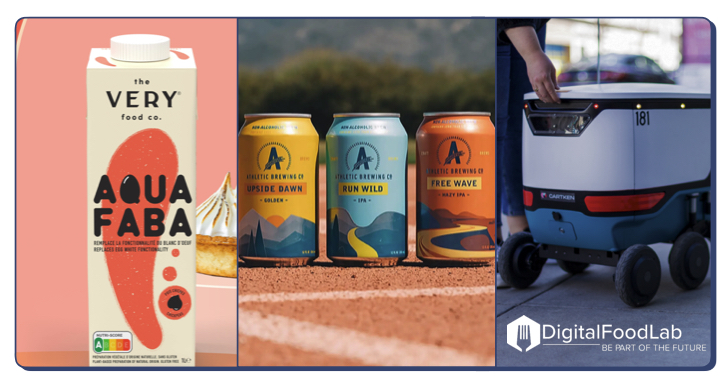
🇫🇷 🥚The Very Food Co, a French startup, raised €1M for its plant-based egg white alternative for professional bakery.

🇺🇸 🤖 Cartken, a US-based startup, raised $22.5M for autonomous delivery robots intended for last-mile delivery and industrial settings.

🇺🇸🍺 Athletic Brewing, an American startup, raised $50M to expand its nonalcoholic beer offerings to meet growing consumer demand for healthier beverage options.

🇩🇪 🍽️ allO, a German startup, raised $5M for its all-in-one restaurant management platform targeted at ethnic restaurants.

🇫🇷 🧀 Bel, a French cheese producer, announced a partnership with Dassault Systèmes. Bel will gain access to its data platform, in order to use artificial intelligence to create new recipes, better for the health and and the enviroment.

🇺🇸 🌾 Alphabet, Google’s parent company, will pivot the model of Mineral, its AI and agriculture-focused startup. It will switch to a licensing model for its technology.

🇺🇸 🍔 AI-assisted drive-thru ordering is on the rise, even if it still come with flaws. When the technical issues will be solved, and as for other technologies (such as QR codes), one challenge will be to manage the generational gap in preferences.

You're in a good company

Join the 60+ clients of Digital FoodLab: leading agrifood companies, retailers, banks, investors, startups, and public organisations.

Use case: project for a global F&B company looking to map its AgTech innovation ecosystem and the best startups to partner with

What we did:

  • Mapping of the AgTech ecosystem: startups, research regulators, and other leading companies.
  • Discussion to select areas to focus on.
  • Analysis of the information to reveal the trends and a model to analyse eventual partners.
  • A workshop to validate the opportunities based on our recommendations.
  • Scouting of relevant partners followed by introductions.

Results:

  • Mapping the different categories of innovations in AgTech that should be considered now to create long-term benefits for the business.
  • Identification of key partners (an incubator and a couple of startups).

Use case: project for a CPG company on the healthy ageing ecosystem

What we did:

  • Education of the board through a couple of workshops to define the perimeter
  • Identification of key opportunities and threats created by long-term evolutions (technologies, business models, behavioural changes).
  • Deep dives on each of the priority categories.
  • Co-construction of a vision on how the company should address these challenges.
  • Identification of partners (startups, incubators, funds) to move forward.

Results:

  • Creating a consensus on which categories to prioritise and how to address them.
  • Implementation of an open innovation strategy through the development of partnerships.

Use case: project for a global CPG company to develop a strategy on the healthy ageing ecosystem

What we do (ongoing mission on a subscription model):

  • Kick-off where we present an overview of the AgriFoodTech ecosystem to select with the client the categories to cover and for each, the level of information required.
  • Monthly newsletter: each month we send a newsletter with the articles that we have gathered ranked by relevance, their summaries, and a layer of analysis.
  • Database: we set up a personalised database that will be filled month after month with the information gathered on the companies identified for the watch.
  • Workshops: twice a year with the client’s innovation team and other “innovation curious” team members, we present an overview of the evolutions, key trends and a dashboard of the topics followed by the watch.

Results:

  • A clear, regular and evolutive tool to follow what is happening in terms of innovation on key topics.
  • A forum (through the workshops) to discuss innovation trends and new opportunities.

Use case: opportunity screening for an ingredient company

What we did:

  • Kick-off to define the perimeter of the ecosystem studied.
  • Mapping of the different trends shaping the innovation ecosystem of the client.
  • Analysis of the trends on DigitalFoodLab’s trend curve and other relevant frameworks.
  • Workshop to discuss DigitalFoodLab’s recommendations on key trends to prioritise

Results:

  • Shared view of the innovation ecosystem for the client with a view of the trends to prioritize.
  • Clear document (personalised trend curve) that can be easily shared internaly to explain the company’s innovation choices and which can be then updated each year.

Use case: scouting for an agriculture coop

What we did:

  • Kick-off to define the perimeter of the client, the goals of the scouting (partnerships) and the criteria on which startups should be evaluated.
  • Set-up scouting: we selected the first batch of 20+ key startups following the criteria of the client.
  • On-going scouting: then we set up a quarterly scouting of about ten startups.
  • For each scouted startup, we created an ID card with key information such as the business and technological maturity, funding, and corporate partnerships. We also added an explanation of why we selected this startup.

Results:

  • An ongoing and evolutive scouting are matching the client's criteria and its capabilities in terms of deal flow.

Use case: working on an acquisition process for a CPG company

What we did:

  • Kick-off to define what the client is seeking, notably in terms of maturity.
  • Workshop with the client based on a mapping of the different innovation ecosystems adjacent to its activities to select some priorities and discuss inspiring examples of startup acquisition stories.
  • Identification of 20+ targets.
  • Workshop to select the most relevant to engage with.
  • DigitalFoodLab worked as a sparing partner during the acquisition process, notably to help design how the acquired startup could be integrated into the overall company’s strategy.

Results:

  • Different results from traditional M&A processes with a focus on the client’s innovation strategy.
  • Identification of a good match for an acquisition.

Use case: market due diligence on sugar alternatives

What we did:

  • Kick-off with the client to discuss its interest on this category, its expectations and existing level of information (notably on the target company).
  • Mapping of the ecosystem to analyse the different existing alternatives and technologies to compare them.
  • Interview (calls) with relevant startups made by our internal biotechnology expert.
  • Recommendation on whether to invest or not.

Results:

  • Clear view of the ecosystem and of the reasons to believe (or not) in each sub-category.
  • Enforceable recommendations based on facts and expertise.