11 notable deals and things to know this week (2024 – week #22)

Published on May 28, 2024

Startup news and deals

🇫🇮 🍄 Enifer, a Finnish startup, raised €36M to build a large-scale mycoprotein facility, which will be completed next year. It says it will be the first commercial plant to use byproducts of the food industry as raw materials.

🇫🇷 🚜 Harvy, a French startup, raised €810k for its platform that connects farmers to buyers (restaurants and grocery shops). While the amounts raised are small (compared to other ecosystems), we observe a growing number of players who aim to reduce the number of middlemen and digitise the relationships between suppliers and buyers of food produce.

🇳🇿🌱 Metrovate, a New Zealand startup, raised $1M for its precision biostimulants, which aim to improve plant growth while being biodegradable and safe.

🇺🇸 🥗 Fay, a U.S. dietitian startup, raised 25€M for its platform connecting dietitians, insurance providers, and patients. The startup is benefiting from the wave of new users of GLP-1 drugs, which are required to see a dietitian while taking the medication.

🇺🇸 🥔 Ohalo, an American startup, emerged from stealth to reveal its ‘boosted breeding’ technology to enhance crop breeding efficiency and outcomes. Using its technology, all the traits of interest are transmitted (instead of half of each parent’s genome) to their offspring. Since 2019, it has already raised over $100M. It could be applied to all major crops, from applications in potatoes, with substantial yield increases.

🇮🇪🍴Nory, an Irish startup, raised $16M for its restaurant “operating system”. It leverages AI to help restaurants manage their operations from inventory to workforce.

🇨🇱🌿 AgroUrbana, a Chilean vertical farming startup, raised $6M to increase its production of leafy greens and expand its facility.


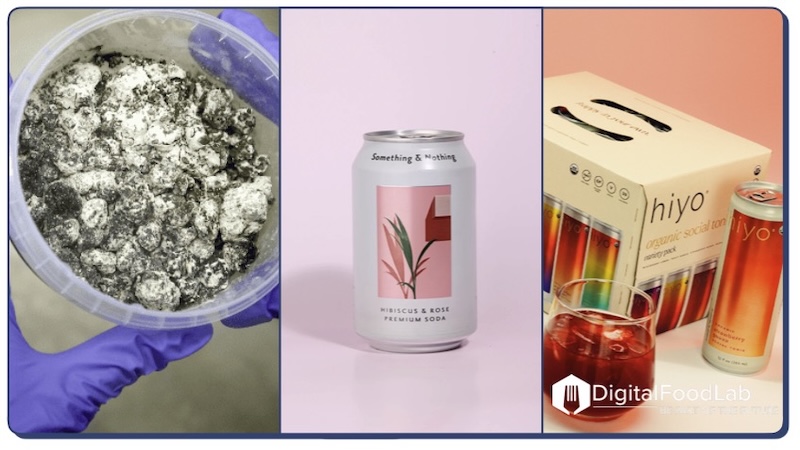
🇳🇱 🍺 Heineken, the beer giant, invested in STËLTZ, a Dutch seltzer (low-alcohol beverage, often seen as a hype alternative to beer for younger generations) startup. Beyond investing, Heineken will help the young brand to develop its presence in retail and hospitality. These kinds of deals between large players and small brands are pretty rare, but if well-executed and with a long-term commitment from the leading company, they can be successful in win-win situations.

Industry news & trends

🇺🇸 💉 Nestlé is ready to launch twelve GLP-1 “companion products” under the band Vital Pursuit. These ready-made meals are here to provide users of drugs such as Wegovy with foods that will help them during and after their treatment.

🇨🇳 🥜 Competition from China is not only coming for EVs and solar panels; it can also reach plant-based ingredients. Merit Functional Foods, a Canada-based company operating a state-of-the-art pea and canola protein facility has been placed in receivership. It mentions the competition from cheap and subsidised pea protein in the Canadian market as the main reason for the company’s failure.

🇹🇼 🛵 Uber will buy Delivery Hero’s Taiwan business for $950M. Both were overwhelming leaders in this market. It will leave Uber with an almost monopoly. Concentration in the restaurant delivery industry is still far from being over, with an ever-decreasing number of players. The “new normal” will be markets dominated by only one or two players and, quite logically, price increases for the consumer.

💧 🛩️ Do you want to win a jet? If you are in the US, you only have to buy a can of Liquid Death water to try your luck.

You're in a good company

Join the 60+ clients of Digital FoodLab: leading agrifood companies, retailers, banks, investors, startups, and public organisations.

Use case: project for a global F&B company looking to map its AgTech innovation ecosystem and the best startups to partner with

What we did:

  • Mapping of the AgTech ecosystem: startups, research regulators, and other leading companies.
  • Discussion to select areas to focus on.
  • Analysis of the information to reveal the trends and a model to analyse eventual partners.
  • A workshop to validate the opportunities based on our recommendations.
  • Scouting of relevant partners followed by introductions.

Results:

  • Mapping the different categories of innovations in AgTech that should be considered now to create long-term benefits for the business.
  • Identification of key partners (an incubator and a couple of startups).

Use case: project for a CPG company on the healthy ageing ecosystem

What we did:

  • Education of the board through a couple of workshops to define the perimeter
  • Identification of key opportunities and threats created by long-term evolutions (technologies, business models, behavioural changes).
  • Deep dives on each of the priority categories.
  • Co-construction of a vision on how the company should address these challenges.
  • Identification of partners (startups, incubators, funds) to move forward.

Results:

  • Creating a consensus on which categories to prioritise and how to address them.
  • Implementation of an open innovation strategy through the development of partnerships.

Use case: project for a global CPG company to develop a strategy on the healthy ageing ecosystem

What we do (ongoing mission on a subscription model):

  • Kick-off where we present an overview of the AgriFoodTech ecosystem to select with the client the categories to cover and for each, the level of information required.
  • Monthly newsletter: each month we send a newsletter with the articles that we have gathered ranked by relevance, their summaries, and a layer of analysis.
  • Database: we set up a personalised database that will be filled month after month with the information gathered on the companies identified for the watch.
  • Workshops: twice a year with the client’s innovation team and other “innovation curious” team members, we present an overview of the evolutions, key trends and a dashboard of the topics followed by the watch.

Results:

  • A clear, regular and evolutive tool to follow what is happening in terms of innovation on key topics.
  • A forum (through the workshops) to discuss innovation trends and new opportunities.

Use case: opportunity screening for an ingredient company

What we did:

  • Kick-off to define the perimeter of the ecosystem studied.
  • Mapping of the different trends shaping the innovation ecosystem of the client.
  • Analysis of the trends on DigitalFoodLab’s trend curve and other relevant frameworks.
  • Workshop to discuss DigitalFoodLab’s recommendations on key trends to prioritise

Results:

  • Shared view of the innovation ecosystem for the client with a view of the trends to prioritize.
  • Clear document (personalised trend curve) that can be easily shared internaly to explain the company’s innovation choices and which can be then updated each year.

Use case: scouting for an agriculture coop

What we did:

  • Kick-off to define the perimeter of the client, the goals of the scouting (partnerships) and the criteria on which startups should be evaluated.
  • Set-up scouting: we selected the first batch of 20+ key startups following the criteria of the client.
  • On-going scouting: then we set up a quarterly scouting of about ten startups.
  • For each scouted startup, we created an ID card with key information such as the business and technological maturity, funding, and corporate partnerships. We also added an explanation of why we selected this startup.

Results:

  • An ongoing and evolutive scouting are matching the client's criteria and its capabilities in terms of deal flow.

Use case: working on an acquisition process for a CPG company

What we did:

  • Kick-off to define what the client is seeking, notably in terms of maturity.
  • Workshop with the client based on a mapping of the different innovation ecosystems adjacent to its activities to select some priorities and discuss inspiring examples of startup acquisition stories.
  • Identification of 20+ targets.
  • Workshop to select the most relevant to engage with.
  • DigitalFoodLab worked as a sparing partner during the acquisition process, notably to help design how the acquired startup could be integrated into the overall company’s strategy.

Results:

  • Different results from traditional M&A processes with a focus on the client’s innovation strategy.
  • Identification of a good match for an acquisition.

Use case: market due diligence on sugar alternatives

What we did:

  • Kick-off with the client to discuss its interest on this category, its expectations and existing level of information (notably on the target company).
  • Mapping of the ecosystem to analyse the different existing alternatives and technologies to compare them.
  • Interview (calls) with relevant startups made by our internal biotechnology expert.
  • Recommendation on whether to invest or not.

Results:

  • Clear view of the ecosystem and of the reasons to believe (or not) in each sub-category.
  • Enforceable recommendations based on facts and expertise.