10 notable deals and things to know this week (2023 – week #39)

Published on September 26, 2023

🇺🇸 🦄 A unicorn no more: Jokr, a US-based quick-commerce startup, raised $50M at a valuation of $800M (previously, it was valued at $1.3B). Interestingly, the startup is now only active in Latin America, even if initially its operations were in the US. It shows how complicated the model of quick grocery deliveries can be in developed economies (where salaries are high while groceries don’t cost much).

🇩🇪🧾 Plan A, a German startup raised $27M for its carbon accounting platform. Unlike other players in this space (Carbon Cloud, Planet FWD…), Plan A is industry agnostic and serves clients as different as KFC and BMW. It is also moving to monitor metrics continuously. Many players have launched carbon accounting platforms over the past few years, each with different angles. Now, they are growing super fast, as is the interest from large companies. We expect a phase of consolidation and maybe of questioning on using all this data to arrive sooner rather than later.

🇩🇪 🐾 Mammaly, a German startup, raised €14M for pet supplements. It is capitalising on the burgeoning European pet wellness space.

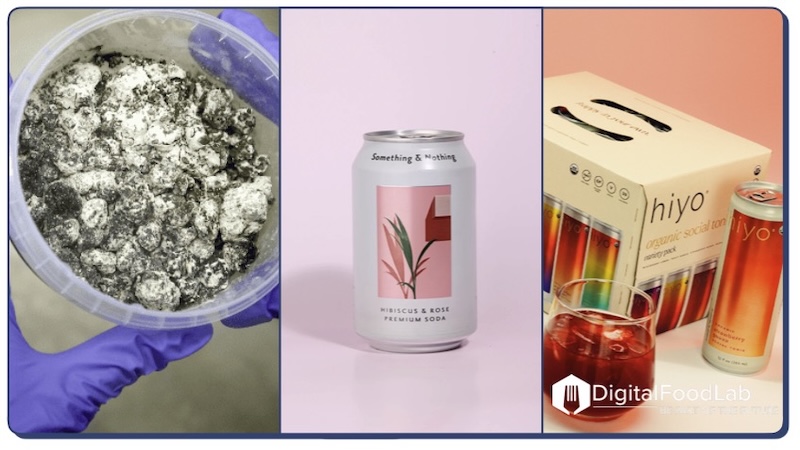
🇮🇱 🗑️ UBQ Materials, an Israeli startup, raised $70M to transform household waste into bio-based thermoplastic. Packaging is one of the parts of the food value chain that has long been the least invested by startups. We are pretty excited to see more investments and innovation here, notably on alternatives to fossil fuel-based plastic.

🇬🇭 🧑‍🌾 Complete Farmer, a Ghanaian startup, raised $10.4M for its agricultural marketplace. It connects farmers to global trade, introducing more sustainable practices and new corps.

🇺🇬💰 Emata, a Ugandan startup, raised $2.4M for its financial services to farmers. The startup lends farmers money and provides them with digital tools to set up their e-commerce operations.

🇮🇱💧 Treetoscope, an Israeli startup, raised $7M for its precision irrigation management platform.

🇺🇸 🤫 Mondelēz is shutting down brands it created in its SnackFutures division. Instead, it will now focus on already established startups. It shows how complicated it can be for a leading company to create and grow new brands. Selling products to thousands of consumers is highly complex when your core expertise reaches millions (and bridging the gap between both worlds is almost impossible). It seems then more straightforward to acquire startups that are big enough to be scaled with the firepower of such companies.

🇮🇪🐄 Micron Agritech, an Irish startup, raised €2.7M for its AI-powered testing kit to reduce the overuse of anti-parasite treatment in animals.

🌎 📈 Several large food and restaurant companies, including McDonald’s, have failed to make significant progress in their goals to reduce greenhouse gas emissions over the past 6 to 8 years. This growth in emissions is often linked to an increase in the business size. However, this data does not help to see how companies will reach their net zero claims by 2040 or 2050.

You're in a good company

Join the 60+ clients of Digital FoodLab: leading agrifood companies, retailers, banks, investors, startups, and public organisations.

Use case: project for a global F&B company looking to map its AgTech innovation ecosystem and the best startups to partner with

What we did:

  • Mapping of the AgTech ecosystem: startups, research regulators, and other leading companies.
  • Discussion to select areas to focus on.
  • Analysis of the information to reveal the trends and a model to analyse eventual partners.
  • A workshop to validate the opportunities based on our recommendations.
  • Scouting of relevant partners followed by introductions.

Results:

  • Mapping the different categories of innovations in AgTech that should be considered now to create long-term benefits for the business.
  • Identification of key partners (an incubator and a couple of startups).

Use case: project for a CPG company on the healthy ageing ecosystem

What we did:

  • Education of the board through a couple of workshops to define the perimeter
  • Identification of key opportunities and threats created by long-term evolutions (technologies, business models, behavioural changes).
  • Deep dives on each of the priority categories.
  • Co-construction of a vision on how the company should address these challenges.
  • Identification of partners (startups, incubators, funds) to move forward.

Results:

  • Creating a consensus on which categories to prioritise and how to address them.
  • Implementation of an open innovation strategy through the development of partnerships.

Use case: project for a global CPG company to develop a strategy on the healthy ageing ecosystem

What we do (ongoing mission on a subscription model):

  • Kick-off where we present an overview of the AgriFoodTech ecosystem to select with the client the categories to cover and for each, the level of information required.
  • Monthly newsletter: each month we send a newsletter with the articles that we have gathered ranked by relevance, their summaries, and a layer of analysis.
  • Database: we set up a personalised database that will be filled month after month with the information gathered on the companies identified for the watch.
  • Workshops: twice a year with the client’s innovation team and other “innovation curious” team members, we present an overview of the evolutions, key trends and a dashboard of the topics followed by the watch.

Results:

  • A clear, regular and evolutive tool to follow what is happening in terms of innovation on key topics.
  • A forum (through the workshops) to discuss innovation trends and new opportunities.

Use case: opportunity screening for an ingredient company

What we did:

  • Kick-off to define the perimeter of the ecosystem studied.
  • Mapping of the different trends shaping the innovation ecosystem of the client.
  • Analysis of the trends on DigitalFoodLab’s trend curve and other relevant frameworks.
  • Workshop to discuss DigitalFoodLab’s recommendations on key trends to prioritise

Results:

  • Shared view of the innovation ecosystem for the client with a view of the trends to prioritize.
  • Clear document (personalised trend curve) that can be easily shared internaly to explain the company’s innovation choices and which can be then updated each year.

Use case: scouting for an agriculture coop

What we did:

  • Kick-off to define the perimeter of the client, the goals of the scouting (partnerships) and the criteria on which startups should be evaluated.
  • Set-up scouting: we selected the first batch of 20+ key startups following the criteria of the client.
  • On-going scouting: then we set up a quarterly scouting of about ten startups.
  • For each scouted startup, we created an ID card with key information such as the business and technological maturity, funding, and corporate partnerships. We also added an explanation of why we selected this startup.

Results:

  • An ongoing and evolutive scouting are matching the client's criteria and its capabilities in terms of deal flow.

Use case: working on an acquisition process for a CPG company

What we did:

  • Kick-off to define what the client is seeking, notably in terms of maturity.
  • Workshop with the client based on a mapping of the different innovation ecosystems adjacent to its activities to select some priorities and discuss inspiring examples of startup acquisition stories.
  • Identification of 20+ targets.
  • Workshop to select the most relevant to engage with.
  • DigitalFoodLab worked as a sparing partner during the acquisition process, notably to help design how the acquired startup could be integrated into the overall company’s strategy.

Results:

  • Different results from traditional M&A processes with a focus on the client’s innovation strategy.
  • Identification of a good match for an acquisition.

Use case: market due diligence on sugar alternatives

What we did:

  • Kick-off with the client to discuss its interest on this category, its expectations and existing level of information (notably on the target company).
  • Mapping of the ecosystem to analyse the different existing alternatives and technologies to compare them.
  • Interview (calls) with relevant startups made by our internal biotechnology expert.
  • Recommendation on whether to invest or not.

Results:

  • Clear view of the ecosystem and of the reasons to believe (or not) in each sub-category.
  • Enforceable recommendations based on facts and expertise.