🔮 2024 in review: how well did we do with our predictions?

Published on January 9, 2025

For today’s insight, we assess DigitalFoodLab’s predictions for 2024 to see how well they fared (the original set of predictions is here for reference).

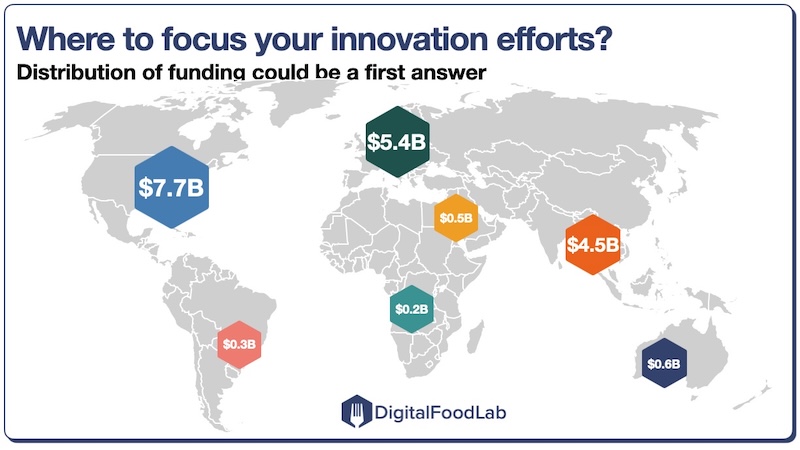
1️⃣  We predicted that investments would keep declining, at least for the first half of the year. However, we expected a rebound in the US by the end of the year.

We’ll have a look at the state of investments in 2024 in a couple of weeks, but indeed, it seems that investments have not done well last year. Also, we observed a bounce back, primarily due to larger deals in the US and Asia.

As predicted last year, the decrease has been eased out by increased funding in AI and sustainability. However, we were a bit too optimistic when expecting that the strong appetite for early-stage companies observed in 2023 would continue. If we look at where the money went in 2024, the opposite happened: a decline in innovation, a lower appetite for exciting new ventures, and a preference for established models, notably in food delivery.

2️⃣ We predicted that many well-known startups would shut down. Failures, or quasi-failures of companies such as Ynsect, have punctuated the year and have outshined the first signs that things are doing better.

3️⃣ We predicted that while plant-based would bounce back, there would be a growing distrust for more advanced technologies.

As a category, plant-based is indeed bouncing back, even if only slowly. There are multiple signs that sales are increasing again in multiple markets as inflation is easing out.

However, as predicted, companies with more “advanced” technologies to create alternatives to meat and dairy products, such as cellular agriculture and precision fermentation, are not doing well. There is a growing doubt about their ability to scale and deliver value. Even if there is a rising hype around applications on sugar or cacao alternatives, this can’t outweigh the whole alternative ingredient ecosystem.

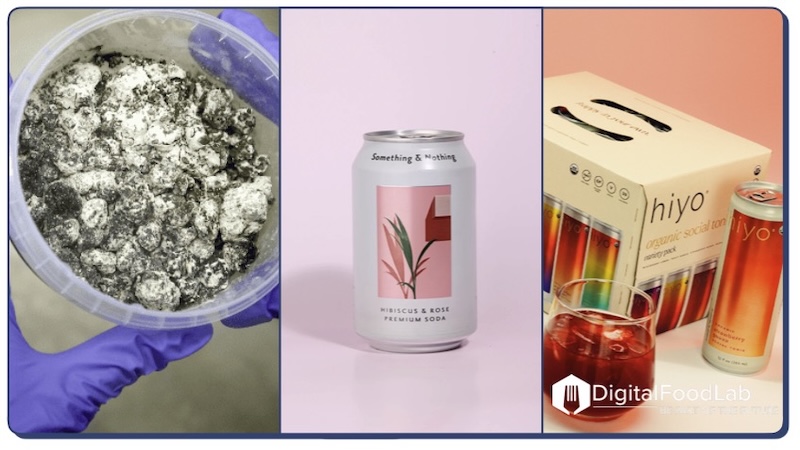
4️⃣ 🍫 We predicted a growing divergence between a focus on health-oriented food products (boosted by GLP-1 drugs) led by established companies and on the other a wave of indulgent food products launched by startups.

With less innovations being released, it is maybe a bit hard to evaluate. However, we indeed observed a focus of new brands launched by entrepreneurs being focused on indulgence instead of health.

On the other side, we indeed saw a growing number of GLP-1 companion foods being launched, mostly by large companies, notably by the end of the year.

5️⃣ 🤖 We predicted that while Artificial Intelligence (AI) would be a key topic, we were not expecting many tangible applications beyond marketing.

We were quite right here. Even if AI is getting mentioned in many announcements, we still have a hard time to measure its real impact in the agrifood value chain. There is a widening gap between where AI can be useful (protein discovery for example) and where the people we talk with would like to see it (in product development).

In a word, that was quite a good set in terms of predictions. If we consider this the other way around, there is maybe a trend that we have not seen and which was quite noticeable in this complicated context: the rising level of involvement of established companies. While funding decreased, we observed more and more meaningful partnerships helping startups to scale up their solutions.

Next week, we’ll come back with our predictions for 2025. If you have any suggestions, please send them directly here!

You're in a good company

Join the 60+ clients of Digital FoodLab: leading agrifood companies, retailers, banks, investors, startups, and public organisations.

Use case: project for a global F&B company looking to map its AgTech innovation ecosystem and the best startups to partner with

What we did:

  • Mapping of the AgTech ecosystem: startups, research regulators, and other leading companies.
  • Discussion to select areas to focus on.
  • Analysis of the information to reveal the trends and a model to analyse eventual partners.
  • A workshop to validate the opportunities based on our recommendations.
  • Scouting of relevant partners followed by introductions.

Results:

  • Mapping the different categories of innovations in AgTech that should be considered now to create long-term benefits for the business.
  • Identification of key partners (an incubator and a couple of startups).

Use case: project for a CPG company on the healthy ageing ecosystem

What we did:

  • Education of the board through a couple of workshops to define the perimeter
  • Identification of key opportunities and threats created by long-term evolutions (technologies, business models, behavioural changes).
  • Deep dives on each of the priority categories.
  • Co-construction of a vision on how the company should address these challenges.
  • Identification of partners (startups, incubators, funds) to move forward.

Results:

  • Creating a consensus on which categories to prioritise and how to address them.
  • Implementation of an open innovation strategy through the development of partnerships.

Use case: project for a global CPG company to develop a strategy on the healthy ageing ecosystem

What we do (ongoing mission on a subscription model):

  • Kick-off where we present an overview of the AgriFoodTech ecosystem to select with the client the categories to cover and for each, the level of information required.
  • Monthly newsletter: each month we send a newsletter with the articles that we have gathered ranked by relevance, their summaries, and a layer of analysis.
  • Database: we set up a personalised database that will be filled month after month with the information gathered on the companies identified for the watch.
  • Workshops: twice a year with the client’s innovation team and other “innovation curious” team members, we present an overview of the evolutions, key trends and a dashboard of the topics followed by the watch.

Results:

  • A clear, regular and evolutive tool to follow what is happening in terms of innovation on key topics.
  • A forum (through the workshops) to discuss innovation trends and new opportunities.

Use case: opportunity screening for an ingredient company

What we did:

  • Kick-off to define the perimeter of the ecosystem studied.
  • Mapping of the different trends shaping the innovation ecosystem of the client.
  • Analysis of the trends on DigitalFoodLab’s trend curve and other relevant frameworks.
  • Workshop to discuss DigitalFoodLab’s recommendations on key trends to prioritise

Results:

  • Shared view of the innovation ecosystem for the client with a view of the trends to prioritize.
  • Clear document (personalised trend curve) that can be easily shared internaly to explain the company’s innovation choices and which can be then updated each year.

Use case: scouting for an agriculture coop

What we did:

  • Kick-off to define the perimeter of the client, the goals of the scouting (partnerships) and the criteria on which startups should be evaluated.
  • Set-up scouting: we selected the first batch of 20+ key startups following the criteria of the client.
  • On-going scouting: then we set up a quarterly scouting of about ten startups.
  • For each scouted startup, we created an ID card with key information such as the business and technological maturity, funding, and corporate partnerships. We also added an explanation of why we selected this startup.

Results:

  • An ongoing and evolutive scouting are matching the client's criteria and its capabilities in terms of deal flow.

Use case: working on an acquisition process for a CPG company

What we did:

  • Kick-off to define what the client is seeking, notably in terms of maturity.
  • Workshop with the client based on a mapping of the different innovation ecosystems adjacent to its activities to select some priorities and discuss inspiring examples of startup acquisition stories.
  • Identification of 20+ targets.
  • Workshop to select the most relevant to engage with.
  • DigitalFoodLab worked as a sparing partner during the acquisition process, notably to help design how the acquired startup could be integrated into the overall company’s strategy.

Results:

  • Different results from traditional M&A processes with a focus on the client’s innovation strategy.
  • Identification of a good match for an acquisition.

Use case: market due diligence on sugar alternatives

What we did:

  • Kick-off with the client to discuss its interest on this category, its expectations and existing level of information (notably on the target company).
  • Mapping of the ecosystem to analyse the different existing alternatives and technologies to compare them.
  • Interview (calls) with relevant startups made by our internal biotechnology expert.
  • Recommendation on whether to invest or not.

Results:

  • Clear view of the ecosystem and of the reasons to believe (or not) in each sub-category.
  • Enforceable recommendations based on facts and expertise.