📦 A nice future for smart packaging

Published on November 8, 2023

Recently, we talked about the state of innovation in the supply chain. We can divide it into three blocks: digitalisation (throughout the supply chain, from marketplaces to the management of the point of sale), food waste management (a fascinating topic that we will have to cover in a dedicated newsletter as many things are happening in that space) and packaging. We will focus on packaging today as, finally, something is happening in this space: we observe a growth in the number of startups specifically addressing food-related packaging challenges and the amount of funding they receive. So, let’s dive in!

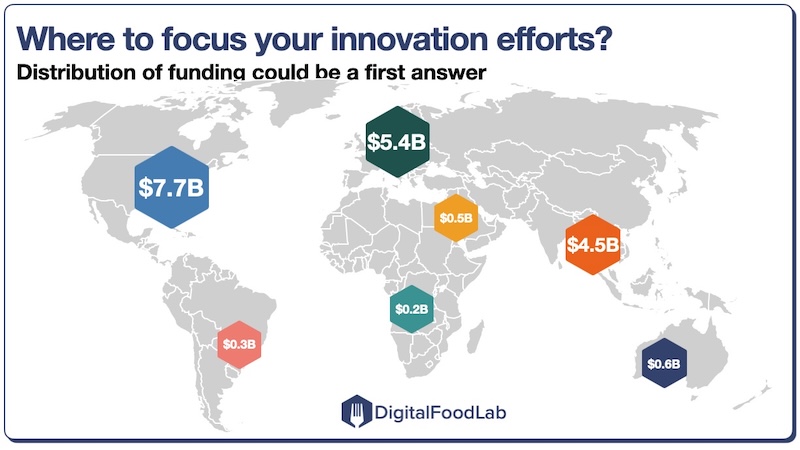
As you can see in the graph above and the mapping below, the packaging ecosystem can be separated into two broad categories. Indeed, this year, we are adding reusable packaging as a separate trend, as the number of players has increased exponentially in recent years. However, this very European ecosystem is currently facing what we could call a “typical maturity crisis”:

  • While the idea of reusable packaging is far from new, its implementation in today’s society is much more complex than it was a few decades ago (when consumers have tried single-use plastic, it will require more than incentives to have them switch back to glass containers).
  • Many startups emerged in Europe as regulations strengthened (at the EU and national levels, such as France’s ban on single-use plastic in food service)
  • Now, as often, it seems that too many startups are competing in the market, with weak business models and weak technological and market differentiation.

We are confident that the market will sort itself out and leaders will emerge, notably through technical and market innovations, but this will take years.

However, the most interesting, in my opinion, is certainly what we call the “smart packaging” ecosystem. Here again, we identify five broad categories:

🍽️ Edible packaging: approximately every three years, we see the resurgence of this idea of edible packaging (notably coffee cups). Let’s say that we have not yet been convinced by either the taste or the practicality of such products beyond some catering use cases. This is not the place to focus your hopes on the future of packaging.

🥑 Biocoatings: we are talking here of startups such as Apeel (the only food packaging unicorn), which develop sprays that will slow down the ripening process of some fruits and vegetables. These biocoatings will be then removed with the peel or through washing. While avoiding waste of valuable fresh products, it also avoids plastic packaging.
These solutions are still much more costly than plastic, but as they are being developed for new products and as regulation on plastic tightens, we can hope to see more of them.

🌡️ Sensors: here, we talk about all the startups such as Innoscentia developing smart sensors which added on the packaging add a new level of information, notably on the freshness of the products. It can better deliver information on the product’s safety than a traditional “use before” date. Again, it can be applied to many types of food products, but notably to meat (which is among the products with the highest levels of waste in retail and in households).
Obviously, there are regulatory and consumer behaviour barriers to the mass adoption of such products. However, there are among the innovations that could have the biggest impact on waste, and incidentally on carbon emissions, linked to the food system.

🥡 Alternatives to plastic: when we talk about foodtech startups focusing on packaging, this is the category everybody thinks about. However, it is not the most well-advanced. And, if there are more interesting startups, most focus on dry products (and applications beyond food, and notably cosmetics and fashion).
Fresh food products must be insulated from oxygen, humidity and light (for example, coffee), which is highly complex to do at scale with the alternatives on the market. We are, however, extremely confident that new packaging will emerge as we have recently observed an uptick in the number of entrepreneurs focusing on this subject combined with a growth in funding.

In a word, we are getting more excited by food packaging startups because there is finally an ecosystem to be considered. For years, we had discussions on this topic but could not observe any significant uptick in the number of startups, deals or funding.

As you can see on the investment chart, just in Europe, the amount of funding is increasing steadily.

This growth should be considered in an otherwise depressed investment environment. Also, many exciting startups in this field are elsewhere globally (notably in the US and Israel).

For established food companies, this is a very tricky innovation ecosystem. It is often safer to use packaging available on the market and to rely on suppliers for innovation. I see at least two opportunities, though:

  • One for suppliers themselves, notably for smaller companies, to differentiate themselves through packaging innovation (even if it is only at first on premium products).
  • Another is on the upstream part of the supply chain, where tons of plastic are used in places that require less complex materials than food products. Alternatives and reusable packaging could substitute part of it.

You're in a good company

Join the 60+ clients of Digital FoodLab: leading agrifood companies, retailers, banks, investors, startups, and public organisations.

Use case: project for a global F&B company looking to map its AgTech innovation ecosystem and the best startups to partner with

What we did:

  • Mapping of the AgTech ecosystem: startups, research regulators, and other leading companies.
  • Discussion to select areas to focus on.
  • Analysis of the information to reveal the trends and a model to analyse eventual partners.
  • A workshop to validate the opportunities based on our recommendations.
  • Scouting of relevant partners followed by introductions.

Results:

  • Mapping the different categories of innovations in AgTech that should be considered now to create long-term benefits for the business.
  • Identification of key partners (an incubator and a couple of startups).

Use case: project for a CPG company on the healthy ageing ecosystem

What we did:

  • Education of the board through a couple of workshops to define the perimeter
  • Identification of key opportunities and threats created by long-term evolutions (technologies, business models, behavioural changes).
  • Deep dives on each of the priority categories.
  • Co-construction of a vision on how the company should address these challenges.
  • Identification of partners (startups, incubators, funds) to move forward.

Results:

  • Creating a consensus on which categories to prioritise and how to address them.
  • Implementation of an open innovation strategy through the development of partnerships.

Use case: project for a global CPG company to develop a strategy on the healthy ageing ecosystem

What we do (ongoing mission on a subscription model):

  • Kick-off where we present an overview of the AgriFoodTech ecosystem to select with the client the categories to cover and for each, the level of information required.
  • Monthly newsletter: each month we send a newsletter with the articles that we have gathered ranked by relevance, their summaries, and a layer of analysis.
  • Database: we set up a personalised database that will be filled month after month with the information gathered on the companies identified for the watch.
  • Workshops: twice a year with the client’s innovation team and other “innovation curious” team members, we present an overview of the evolutions, key trends and a dashboard of the topics followed by the watch.

Results:

  • A clear, regular and evolutive tool to follow what is happening in terms of innovation on key topics.
  • A forum (through the workshops) to discuss innovation trends and new opportunities.

Use case: opportunity screening for an ingredient company

What we did:

  • Kick-off to define the perimeter of the ecosystem studied.
  • Mapping of the different trends shaping the innovation ecosystem of the client.
  • Analysis of the trends on DigitalFoodLab’s trend curve and other relevant frameworks.
  • Workshop to discuss DigitalFoodLab’s recommendations on key trends to prioritise

Results:

  • Shared view of the innovation ecosystem for the client with a view of the trends to prioritize.
  • Clear document (personalised trend curve) that can be easily shared internaly to explain the company’s innovation choices and which can be then updated each year.

Use case: scouting for an agriculture coop

What we did:

  • Kick-off to define the perimeter of the client, the goals of the scouting (partnerships) and the criteria on which startups should be evaluated.
  • Set-up scouting: we selected the first batch of 20+ key startups following the criteria of the client.
  • On-going scouting: then we set up a quarterly scouting of about ten startups.
  • For each scouted startup, we created an ID card with key information such as the business and technological maturity, funding, and corporate partnerships. We also added an explanation of why we selected this startup.

Results:

  • An ongoing and evolutive scouting are matching the client's criteria and its capabilities in terms of deal flow.

Use case: working on an acquisition process for a CPG company

What we did:

  • Kick-off to define what the client is seeking, notably in terms of maturity.
  • Workshop with the client based on a mapping of the different innovation ecosystems adjacent to its activities to select some priorities and discuss inspiring examples of startup acquisition stories.
  • Identification of 20+ targets.
  • Workshop to select the most relevant to engage with.
  • DigitalFoodLab worked as a sparing partner during the acquisition process, notably to help design how the acquired startup could be integrated into the overall company’s strategy.

Results:

  • Different results from traditional M&A processes with a focus on the client’s innovation strategy.
  • Identification of a good match for an acquisition.

Use case: market due diligence on sugar alternatives

What we did:

  • Kick-off with the client to discuss its interest on this category, its expectations and existing level of information (notably on the target company).
  • Mapping of the ecosystem to analyse the different existing alternatives and technologies to compare them.
  • Interview (calls) with relevant startups made by our internal biotechnology expert.
  • Recommendation on whether to invest or not.

Results:

  • Clear view of the ecosystem and of the reasons to believe (or not) in each sub-category.
  • Enforceable recommendations based on facts and expertise.