🎃 🍫 Our Halloween chocolate is changing

Published on October 30, 2024

In a few days, it will be Halloween. Children (and adults, too) will eat too much sugary candies and chocolate. In a word, there is no better time to look at the future of chocolate. Also, and more interestingly, in the context of this newsletter, the evolution we can see for chocolate is also highly revealing of the evolution of the alternative protein ecosystems towards higher-end ingredients, often with health benefits.

1- Price, social and environmental challenges

In terms of price, as you can see on the graph below, it was already highly volatile depending on the evolution of the production, but it rose quite dramatically in 2023, and it remains at high levels.

This price increase is due to a shortage, which itself can be directly linked to climate change. West Africa (where about 2/3 of cocoa beans are grown) has been plagued with severe droughts, which have severely impacted cacao. Increased adverse climate events will continue to impact prices.
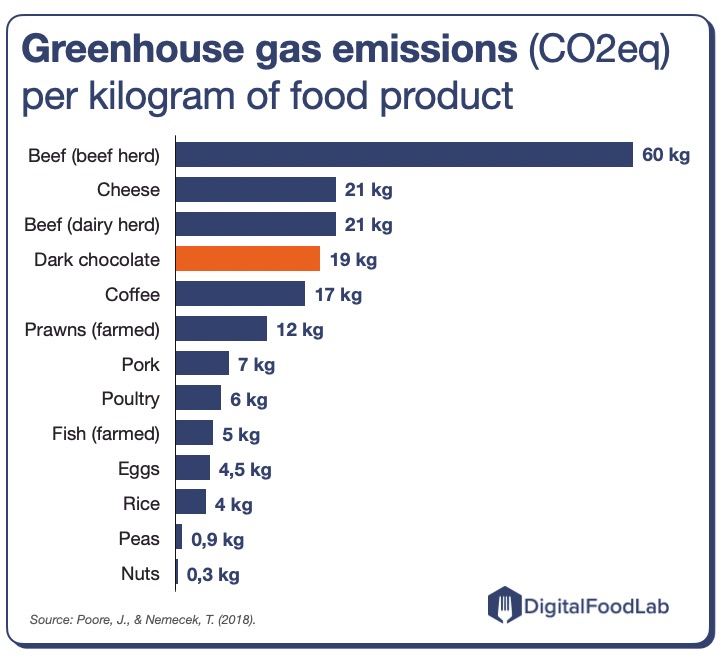
Also, due to deforestation and current farming techniques, cacao is one of the highest-emitting products that we consume. It is even worse than most meat and dairy products.

Last, but definitely not least, about 1.6 to 2 million children are still working in cocoa farms, with numerous documented cases of slavery or trafficking.

2 – FoodTech answers

Investors, entrepreneurs, and large companies have not missed the current price increase. In the past year alone, we have seen the emergence of a great number of new ventures and a very noticeable increase in terms of funding.

If we use DigitalFoodLab’s usual future of food trends approach, we can identify four main groups of players. The most striking point is that we have players all alongside the curve, from short-term, already on-the-shelves solutions to very long-term ones.

DTC brands, or just “innovative branding” are an easy way to answer some of the challenges, notably by adding an extra layer of social and environmental responsibility to the products created by mainstream brands. The most obvious example is the already well-developed Tony’s Chocolonely which raised €20M last year to keep expanding its “slave-free” confectionery (if you’d like to send me a gift for this newsletter, please note that it’s my favourite snack brand).

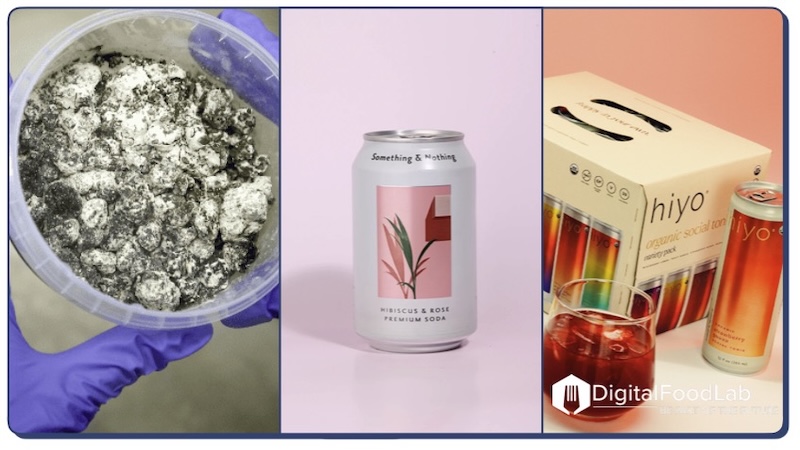
Upcycling is a small but emerging ecosystem with numerous startups trying to solve the challenge of all the waste created by the cocoa value chain by creating products, notably beverages.

Plant-based cacao alternatives are at the top of the hype right now. There are startups from all over the world, but with a strong presence of European startups, which is quite logical, Europe’s ecosystem has always been skewed toward sustainability and social issues, and many of the biggest cocoa players are based there.

There are different levels of innovations (so take into account that this point on the curve is the average position of a much diverse ecosystem), from companies simply using carob without much innovation to more advanced approaches through fermentation (such as Planet A foods). Some products are already on the market, with light partnerships with large companies.

Finally, multiple companies are now applying cellular agriculture to cultivate cocoa cells. That’s part of the broader boom on plant cell culture that we mentioned in a previous insight. The high prices and limited quantity required, at least compared to meat, are making cocoa highly appealing as an application for cellular agriculture. Some companies, notably in Japan or Europe (Puratos, a bakery giant invested recently in California Cultured) are already betting on this space.

Let’s also keep in mind that we are not predicting that this hype is fake: the journey along the curve is not linear, and something hype can move really quickly into disruption, even if the probability is high that there will be a phase of disillusion in the middle. Indeed, if cocoa prices were to stabilise again at reasonable levels, the appetite from larger companies would certainly cool down.

All this innovation is quite exciting. It is not there to replace high-end chocolate but to become a partial or complete substitute for the chocolate used in confectionery goods and, indeed, in Halloween snacks.

You're in a good company

Join the 60+ clients of Digital FoodLab: leading agrifood companies, retailers, banks, investors, startups, and public organisations.

Use case: project for a global F&B company looking to map its AgTech innovation ecosystem and the best startups to partner with

What we did:

  • Mapping of the AgTech ecosystem: startups, research regulators, and other leading companies.
  • Discussion to select areas to focus on.
  • Analysis of the information to reveal the trends and a model to analyse eventual partners.
  • A workshop to validate the opportunities based on our recommendations.
  • Scouting of relevant partners followed by introductions.

Results:

  • Mapping the different categories of innovations in AgTech that should be considered now to create long-term benefits for the business.
  • Identification of key partners (an incubator and a couple of startups).

Use case: project for a CPG company on the healthy ageing ecosystem

What we did:

  • Education of the board through a couple of workshops to define the perimeter
  • Identification of key opportunities and threats created by long-term evolutions (technologies, business models, behavioural changes).
  • Deep dives on each of the priority categories.
  • Co-construction of a vision on how the company should address these challenges.
  • Identification of partners (startups, incubators, funds) to move forward.

Results:

  • Creating a consensus on which categories to prioritise and how to address them.
  • Implementation of an open innovation strategy through the development of partnerships.

Use case: project for a global CPG company to develop a strategy on the healthy ageing ecosystem

What we do (ongoing mission on a subscription model):

  • Kick-off where we present an overview of the AgriFoodTech ecosystem to select with the client the categories to cover and for each, the level of information required.
  • Monthly newsletter: each month we send a newsletter with the articles that we have gathered ranked by relevance, their summaries, and a layer of analysis.
  • Database: we set up a personalised database that will be filled month after month with the information gathered on the companies identified for the watch.
  • Workshops: twice a year with the client’s innovation team and other “innovation curious” team members, we present an overview of the evolutions, key trends and a dashboard of the topics followed by the watch.

Results:

  • A clear, regular and evolutive tool to follow what is happening in terms of innovation on key topics.
  • A forum (through the workshops) to discuss innovation trends and new opportunities.

Use case: opportunity screening for an ingredient company

What we did:

  • Kick-off to define the perimeter of the ecosystem studied.
  • Mapping of the different trends shaping the innovation ecosystem of the client.
  • Analysis of the trends on DigitalFoodLab’s trend curve and other relevant frameworks.
  • Workshop to discuss DigitalFoodLab’s recommendations on key trends to prioritise

Results:

  • Shared view of the innovation ecosystem for the client with a view of the trends to prioritize.
  • Clear document (personalised trend curve) that can be easily shared internaly to explain the company’s innovation choices and which can be then updated each year.

Use case: scouting for an agriculture coop

What we did:

  • Kick-off to define the perimeter of the client, the goals of the scouting (partnerships) and the criteria on which startups should be evaluated.
  • Set-up scouting: we selected the first batch of 20+ key startups following the criteria of the client.
  • On-going scouting: then we set up a quarterly scouting of about ten startups.
  • For each scouted startup, we created an ID card with key information such as the business and technological maturity, funding, and corporate partnerships. We also added an explanation of why we selected this startup.

Results:

  • An ongoing and evolutive scouting are matching the client's criteria and its capabilities in terms of deal flow.

Use case: working on an acquisition process for a CPG company

What we did:

  • Kick-off to define what the client is seeking, notably in terms of maturity.
  • Workshop with the client based on a mapping of the different innovation ecosystems adjacent to its activities to select some priorities and discuss inspiring examples of startup acquisition stories.
  • Identification of 20+ targets.
  • Workshop to select the most relevant to engage with.
  • DigitalFoodLab worked as a sparing partner during the acquisition process, notably to help design how the acquired startup could be integrated into the overall company’s strategy.

Results:

  • Different results from traditional M&A processes with a focus on the client’s innovation strategy.
  • Identification of a good match for an acquisition.

Use case: market due diligence on sugar alternatives

What we did:

  • Kick-off with the client to discuss its interest on this category, its expectations and existing level of information (notably on the target company).
  • Mapping of the ecosystem to analyse the different existing alternatives and technologies to compare them.
  • Interview (calls) with relevant startups made by our internal biotechnology expert.
  • Recommendation on whether to invest or not.

Results:

  • Clear view of the ecosystem and of the reasons to believe (or not) in each sub-category.
  • Enforceable recommendations based on facts and expertise.